Banded Jawfish Care Guide
Opistognathus macrognathus · Saltwater Jawfish
What Banded Jawfish look like
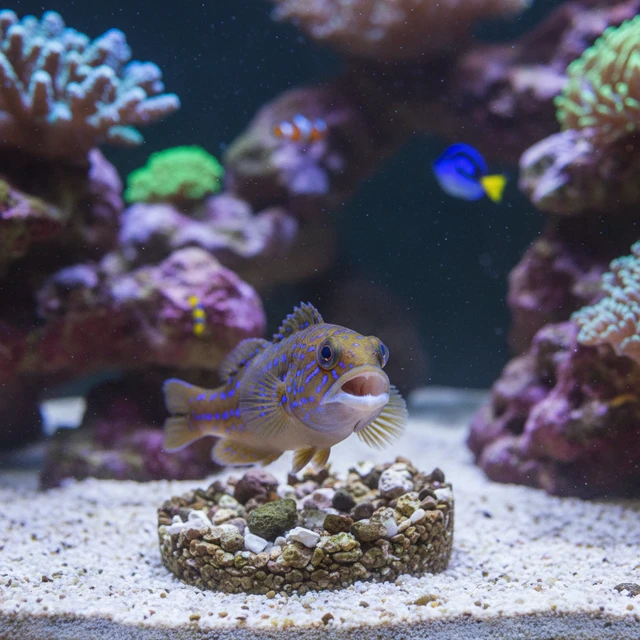
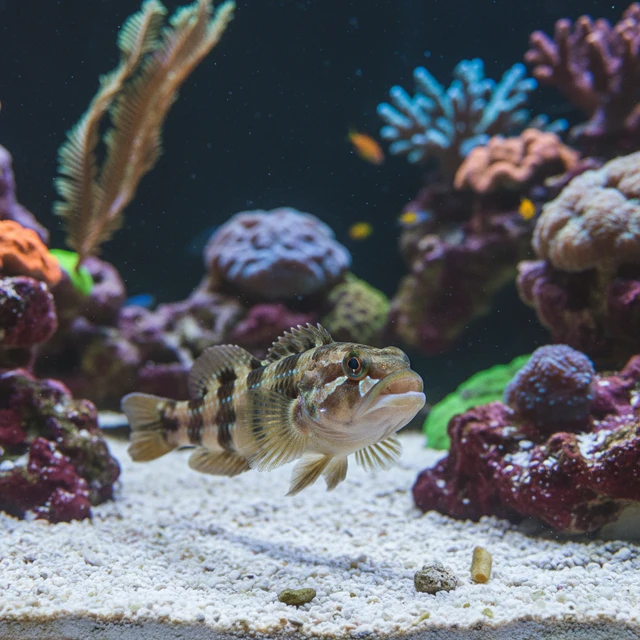
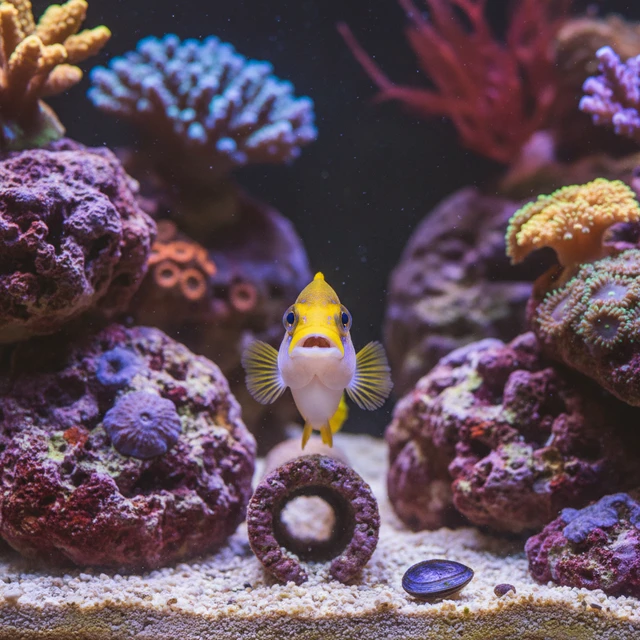
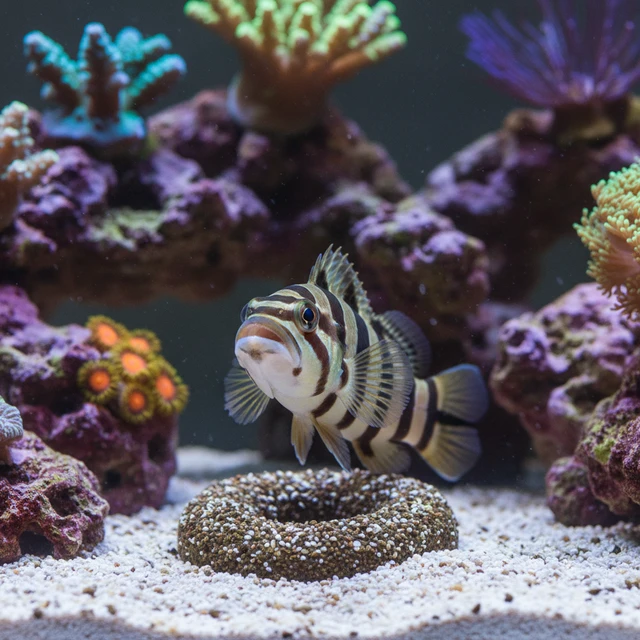
The Banded Jawfish (Opistognathus macrognathus) exhibits a distinctive morphology characterized by a robust, elongated body that can reach a maximum adult size of approximately 6 inches (15 cm). This species displays sexual dimorphism, with males typically exhibiting more vibrant coloration and larger fins compared to females. The head is notably large, equipped with a pronounced jaw that houses small, sharp teeth adapted for capturing prey. The body is adorned with horizontal bands of blue and yellow that provide camouflage among the sandy substrates of its habitat. A unique feature of this species is its elongated pectoral fins, which aid in maneuverability and stability while hovering above the substrate. Additionally, the Banded Jawfish possesses a lateral line system that enhances its ability to detect vibrations in the water, an essential adaptation for both predation and evasion from predators.
Behavior & temperament
Banded Jawfish are known for their unique behavioral traits, often exhibiting a solitary lifestyle with a defined territory. They are primarily bottom-dwelling fish, frequently found hovering just above the substrate. During breeding, males engage in elaborate courtship displays, which include fin flaring and swimming in circles around the female. Their temperament is generally shy and non-aggressive, preferring to retreat into their burrows when threatened. These fish are also known for their interesting burrowing behavior, where they excavate sandy substrates to create protective shelters, which they use for both hiding and nesting.
Diet & feeding
In the wild, Banded Jawfish primarily feed on small crustaceans and zooplankton. In captivity, they require a diet of high-quality frozen or live foods, such as brine shrimp and mysis shrimp, supplemented with finely crushed pellets to ensure proper nutrition.
Behind the name
The genus name 'Opistognathus' is derived from the Greek words 'opistho' meaning 'behind' and 'gnathos' meaning 'jaw', referring to the position of the jaw in relation to the head. The species name 'macrognathus' comes from the Greek 'macro' meaning 'large' and 'gnathos', indicating the species' characteristic large jaw.
Plan your tank
Check the numbers before you buy: tank volume, salinity, salt mix, water changes, and your ongoing care routine. Keeping reef? Start from the Saltwater & Reef hub.
Keep reading
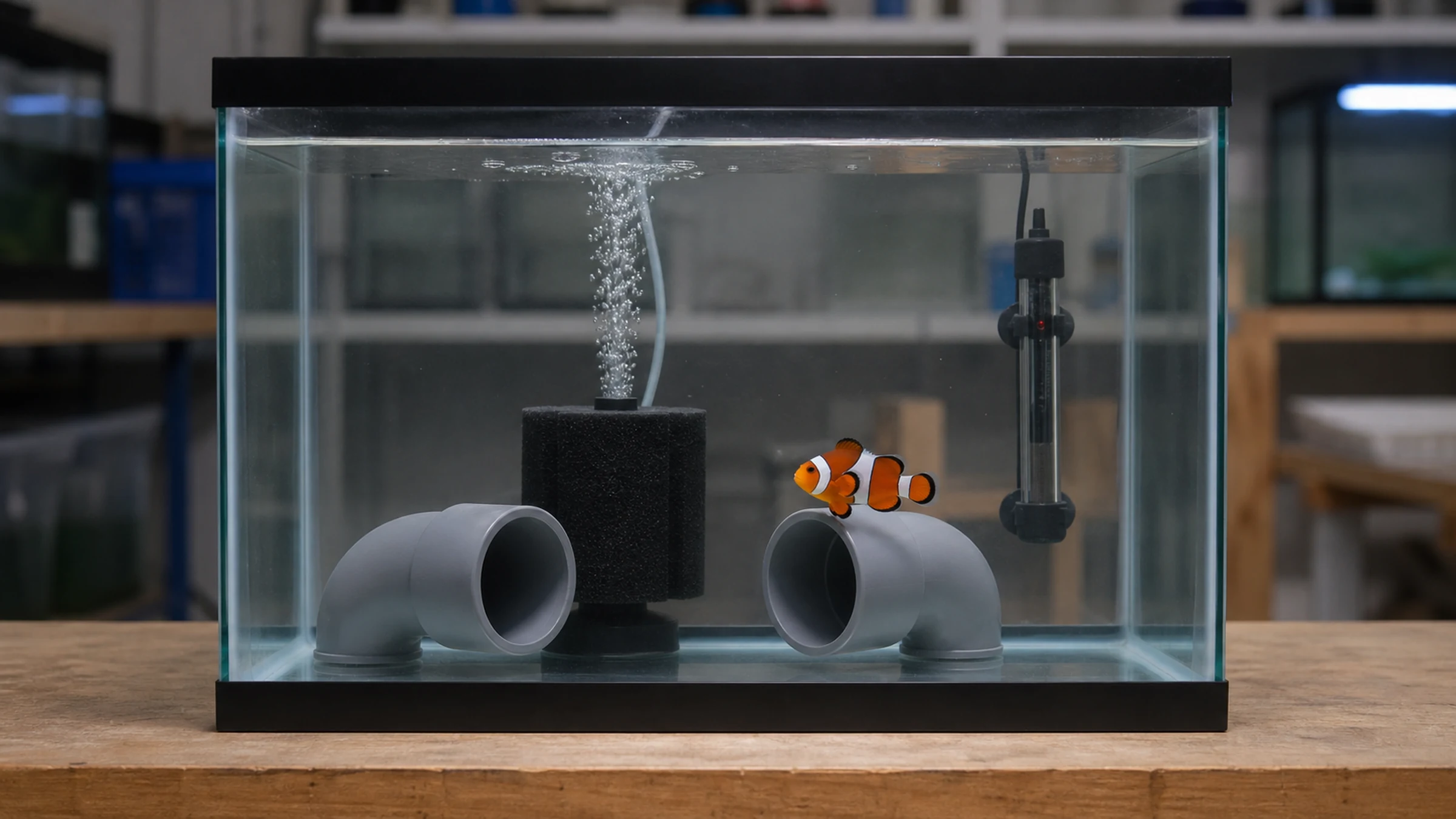
How to quarantine new saltwater fish against marine ich, velvet, and brooklynella: the QT tank, treatments, timelines, and the buy-clean shortcut.

What every reef parameter means and where to keep it: salinity, temperature, pH, alkalinity, calcium, magnesium, nitrate, and phosphate.

Choose compatible fish: school sizes, swimming zones, aggression, temperature and hardness matching, and honest bioload math for a peaceful community.
Keeping Banded Jawfish?
AquaLens identifies your fish and plants from a photo, tracks water chemistry, and flags health issues early — free on iOS and Android.