
Fish gasping or hanging at the surface
Treat this as urgent: it usually means the water is hurting the fish right now, either through toxins or low oxygen.
- Test ammonia and nitrite immediately. Any reading above zero is a likely cause and needs action today.
- Do a water change today. A large partial change is the fastest safe way to dilute toxins — see the water change guide for how much and how.
- Planted tank with CO₂ injection? Gasping fish plus healthy readings points at CO₂ overdose. Turn the gas off, increase surface agitation, and check your rate against the CO₂ guide.
Cloudy or smelly water
- Check where the tank is in its cycle. Milky-white haze in a newer tank is usually a bacterial bloom — the cycle guide explains what's happening and why patience beats products.
- Look at feeding. Uneaten food rotting in the substrate is the most common cause of smell and haze in established tanks. Feed less, remove leftovers.
- Confirm the filter is actually moving water. A clogged or undersized filter lets waste accumulate — check turnover against the filter flow guide.
Algae everywhere
Algae is a symptom of imbalance, not an invader — it wins when light and nutrients outrun your plants and maintenance.
- Count your light hours. More than 8 hours a day, or a tank in direct sunlight, feeds algae faster than most setups can absorb. Try shortening the photoperiod first.
- Rebalance nutrients. Rising nitrate and phosphate between maintenance days are algae fuel; heavy feeding and overstocking accelerate both.
- Get back on a water-change rhythm. Regular changes export the nutrients algae depends on — the water change guide covers a sustainable routine.
- Not sure which algae you have? Diatoms, green spot, black beard, cyanobacteria, and hair algae each call for a different fix — the algae ID & control guide shows what each one looks like.
Fish hiding, clamped fins, or losing color
These are stress signals. Before assuming disease, rule out the environment — it's the cause far more often than pathogens.
- Schooling species in too small a group stay stressed permanently. Check minimum group sizes in the schooling guide.
- Compare your parameters against the species' needs. Temperature, pH, and hardness outside a species' comfort range cause exactly these symptoms — look up your fish in the species care guides.
- Stocking stress. Aggression, territory disputes, and overcrowding show up as hiding and clamped fins — the stocking guide covers what a balanced community looks like.
New tank and the readings won't settle
That's normal — a new tank spends its first weeks growing the bacteria colony that will process waste, and readings swing until it's established. Follow the nitrogen cycle guide, keep testing, and don't add fish yet. Adding livestock to an uncycled tank is the single most common way new keepers lose fish.
Still not sure what you're looking at?
Some warning signs are easier to recognize by shape than by description. Here is what a few of the most common ones look like:
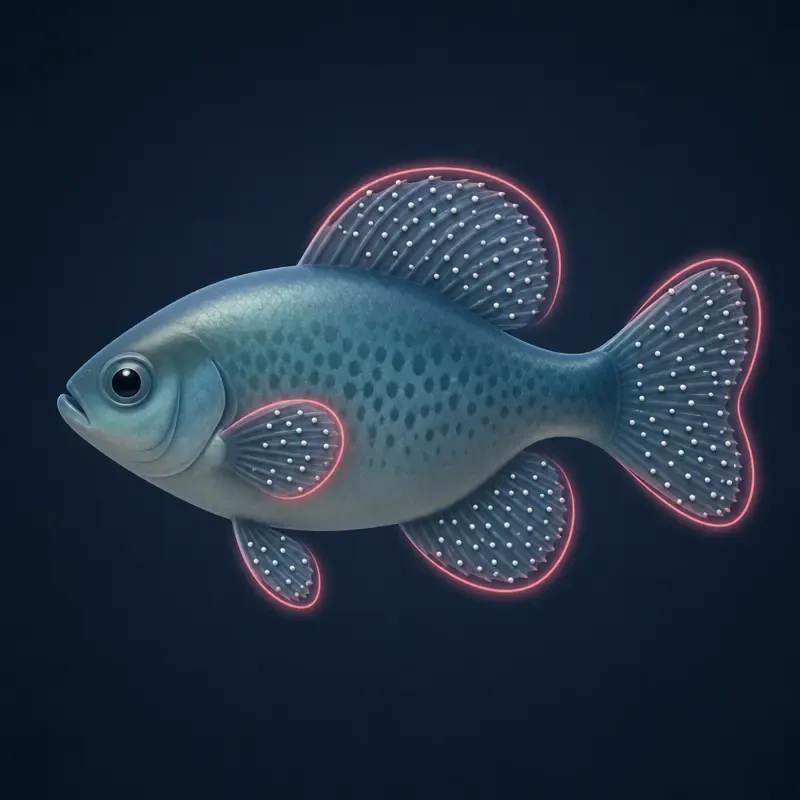
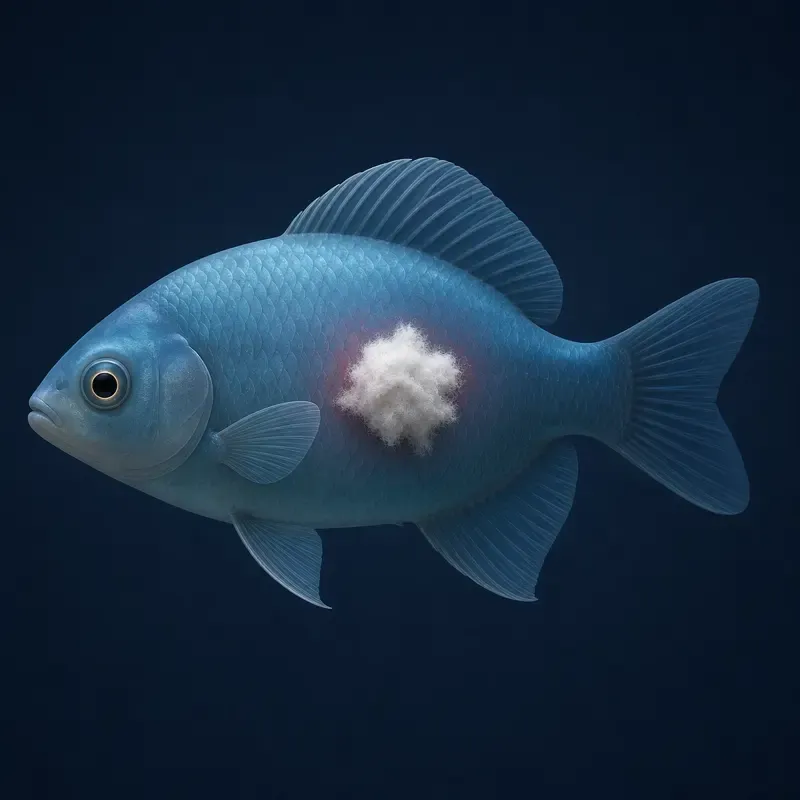
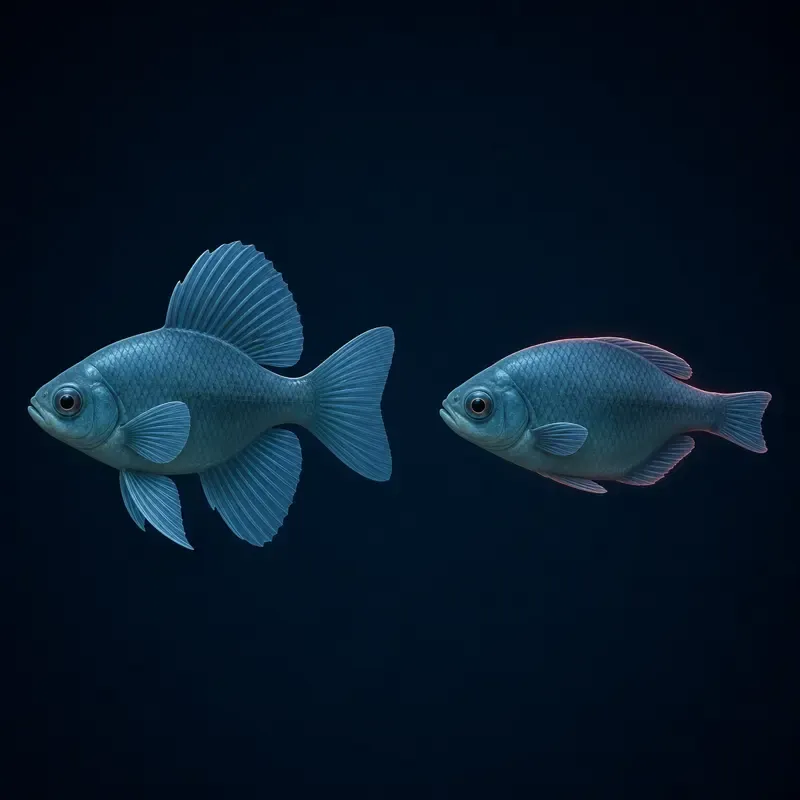
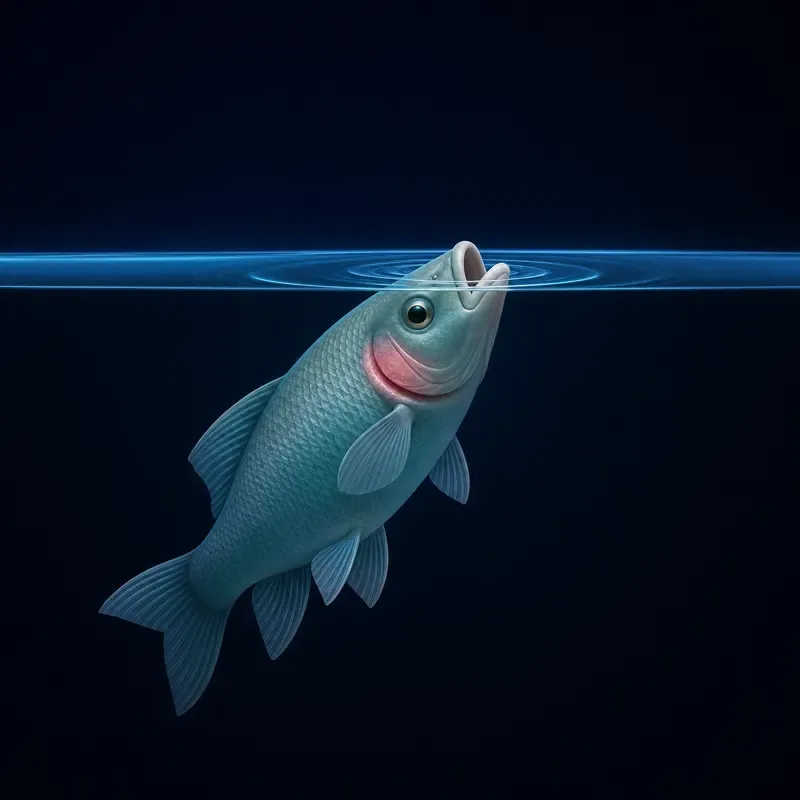
Stylized illustrations for recognition only — not diagnostic photos. When in doubt, match against a real photo of your own fish.
A symptom list can only take you so far — many conditions look alike in text but different in a photo. For a photo-based diagnosis, the AquaLens app's health scan is the right tool: it analyzes a picture of the affected fish or plant alongside your logged parameters. Get AquaLens free. If you're already signed in, you can also ask AquaGuide on the web.
Whatever the cause turns out to be: test your water before treating anything, change water when in doubt, and never dose medication without a confident identification of the problem.