
Nitrogen Cycle Helper
A new tank has to grow two bacterial colonies before it can process fish waste: one that turns ammonia into nitrite, and one that turns nitrite into nitrate. Enter today's readings to see which stage you're in.
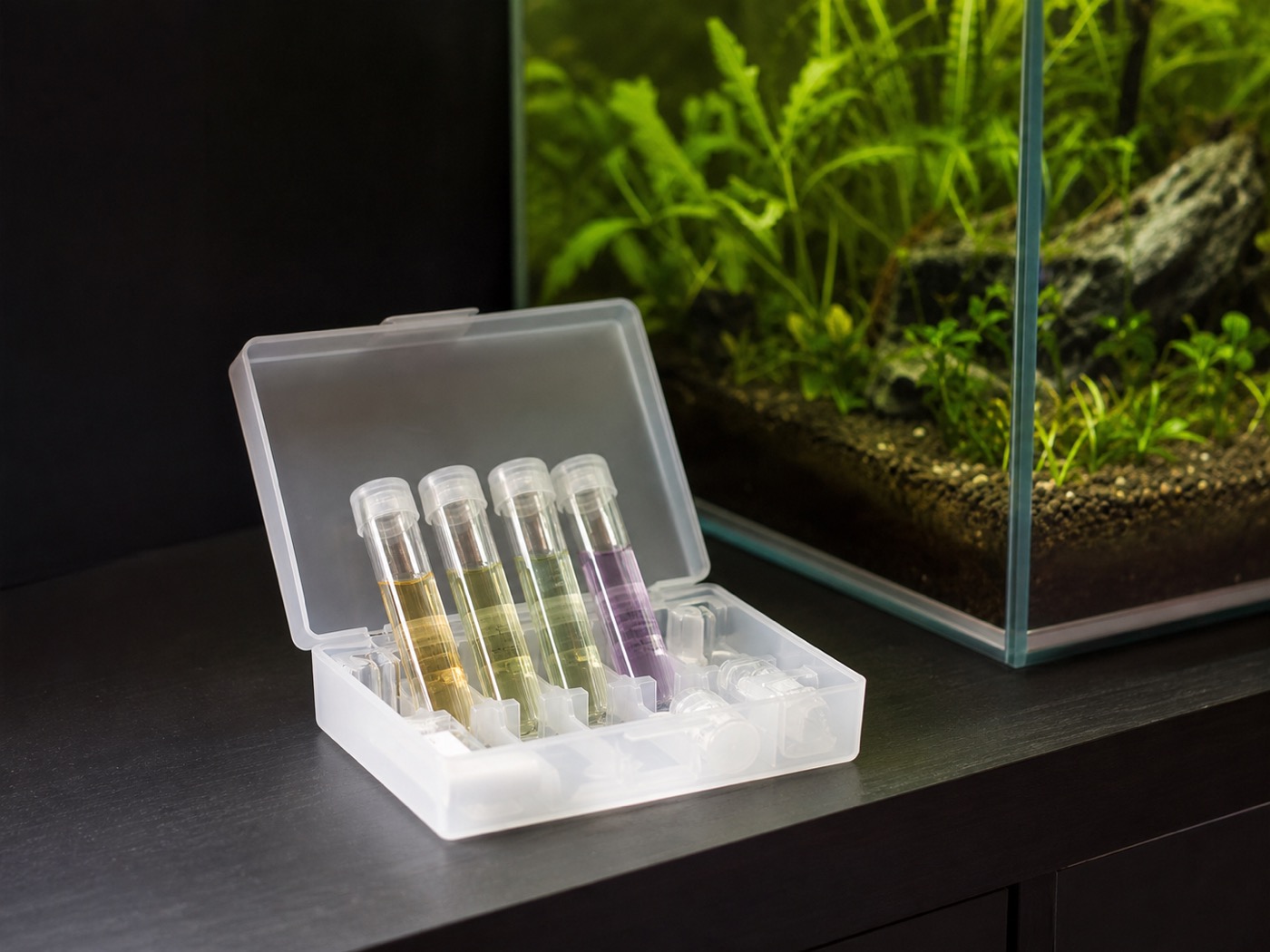
Phase thresholds match the AquaLens app's cycle tracker: any ammonia above 0.25 ppm marks the ammonia stage, any measurable nitrite marks the nitrite stage, and "cycled" means a repeated ammonia-and-nitrite zero pair. One reading is a snapshot — the app tracks the trend across your test log, which is what actually confirms a cycle.
Want the why behind the numbers? Read the fishless cycling guide.
Reading the stages honestly
The cycle almost always runs ammonia first, then nitrite, then nitrate — but a single test can't tell you the trend, only the snapshot. Nitrate in your very first reading might come from your tap water rather than your filter, and a zero-everything reading the day after a big water change proves nothing about the bacteria. Test at the same time each day and judge the direction of travel, not one number. A fishless cycle typically takes four to eight weeks; seeded media or bottled bacteria can honestly shorten that.
The stakes differ enormously between fishless and fish-in cycling. In a fishless cycle, a 5 ppm nitrite spike is just progress. With fish in the tank, ammonia and nitrite are both toxic — 0.5 ppm warrants close attention and 1 ppm warrants a water change the same day. Water changes don't restart the cycle: the bacteria live on your filter media and surfaces, not in the water column, which is also why over-cleaning the filter is one of the most common ways a cycle stalls.