
Filter Flow & Turnover Calculator
Turnover is how many times per hour your filter cycles the full tank volume. Pick your tank type, enter your filter's rated GPH, and see whether its real-world output actually hits the target.
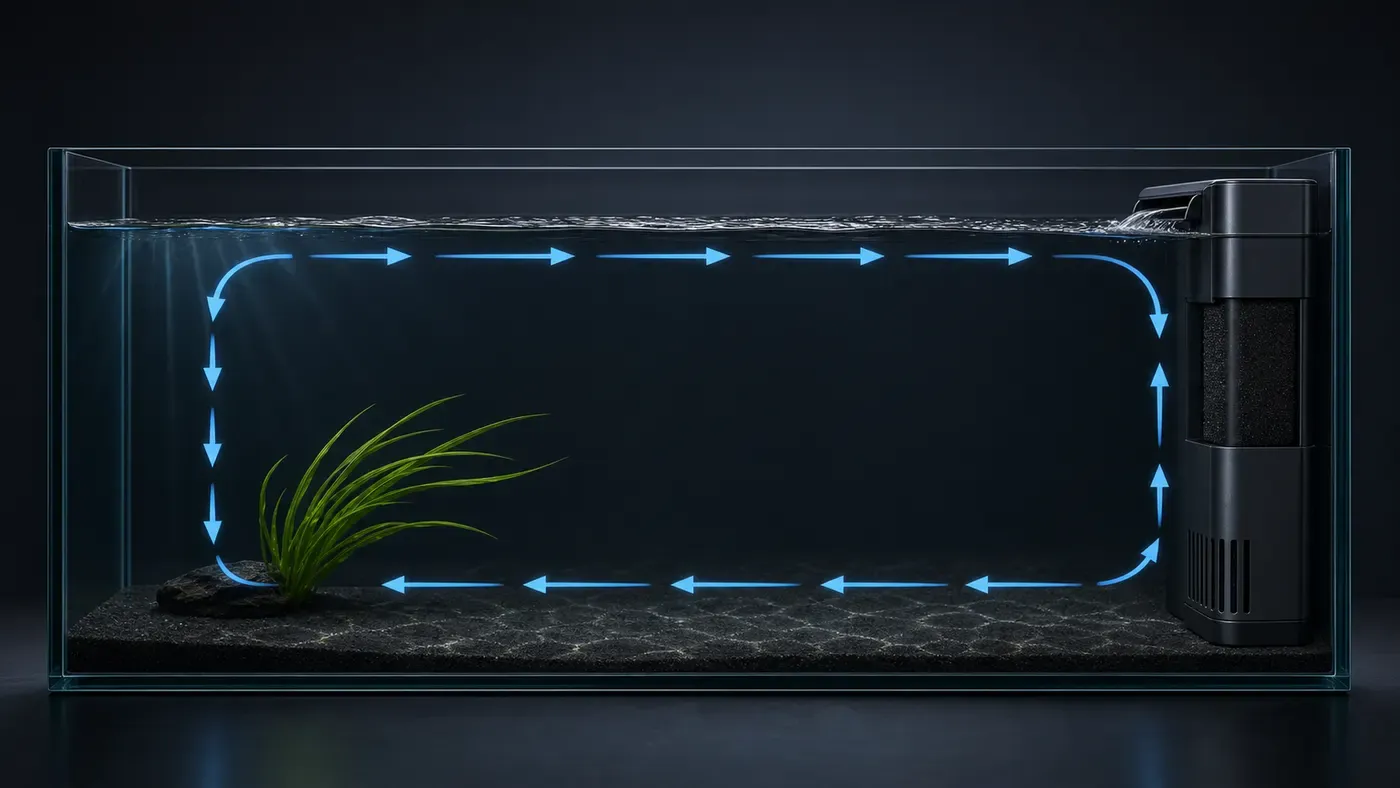
Manufacturers rate flow with no media and zero head height. The AquaLens app applies the same ~35% real-world reduction when it evaluates your equipment, so the comparison here matches what you'd see against your actual tank.
Want the why behind the numbers? Read the filtration guide.
Why rated GPH overstates real flow
The gallons-per-hour number on a filter box is measured under ideal lab conditions: empty chambers, no filter media, and zero head height. In a running aquarium, media restricts flow, biofilm builds up between cleanings, and canister filters lose output pushing water up to the tank rim. A realistic estimate is around 65% of the rated figure — a "300 GPH" canister typically delivers closer to 195 GPH once it's actually filtering. That's why sizing a filter to exactly match the minimum turnover usually leaves you short.
Turnover targets differ by bioload and tank style. A lightly stocked freshwater community does well at 4–6× per hour, planted tanks benefit from 5–8× to move CO₂ and nutrients, and goldfish or other messy eaters need 8–10× to keep up with waste. Reef numbers look wildly higher (20–40×) because they describe total in-tank circulation — powerheads and wavemakers included — not just filtration. The AquaLens app tracks your actual equipment and applies the same real-world derating automatically.