Beaded Sea Anemone Care Guide
Heteractis aurora · Saltwater Anemone
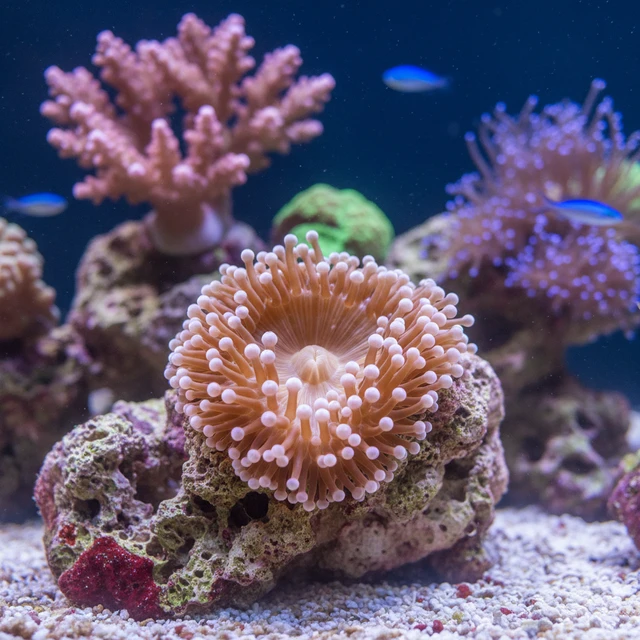
What Beaded Sea Anemone look like
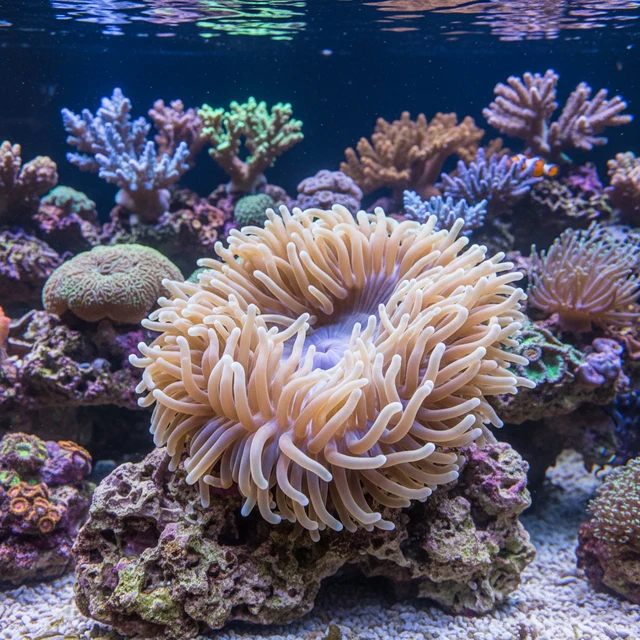
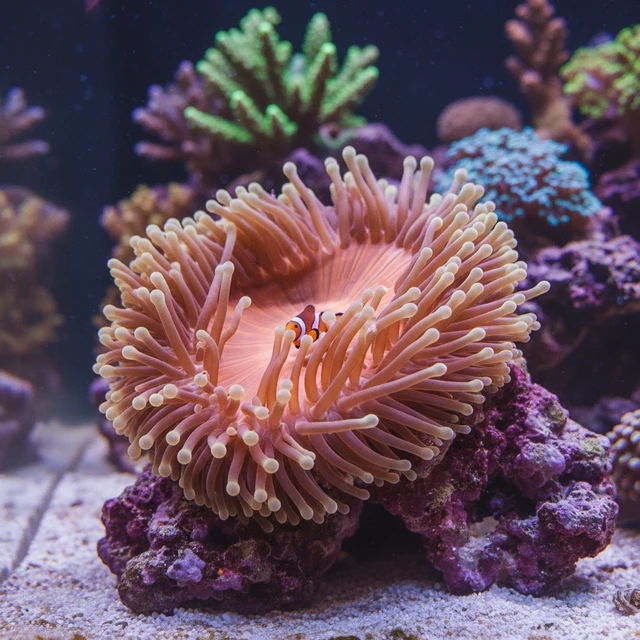
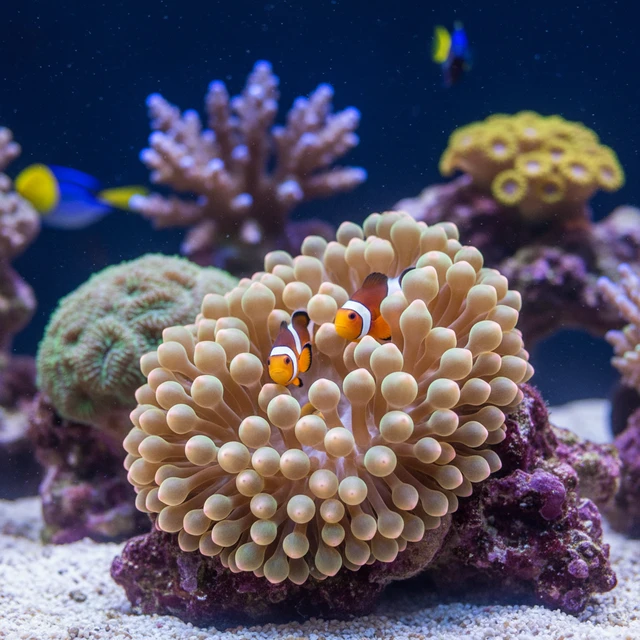
The Beaded Sea Anemone (Heteractis aurora) exhibits a distinctive morphology characterized by its elongated, cylindrical body that can reach up to 12 inches (30 cm) in diameter when fully expanded. Its body is adorned with numerous bead-like structures, or tubercles, that provide a textured appearance, enhancing its camouflage among the substrate. The anemone's tentacles are long and slender, often exhibiting a gradient of colors ranging from green to brown, with tips that may display a contrasting hue. These tentacles are equipped with specialized nematocysts, which serve as both a defensive adaptation and a means of capturing prey. The anemone's basal disc is broad and adherent, allowing it to anchor securely to rocky substrates or coral surfaces, while its oral disc is centrally located and surrounded by the tentacles, facilitating feeding and interaction with symbiotic organisms, such as clownfish.
Behavior & temperament
Heteractis aurora displays a primarily sessile lifestyle, remaining anchored to its substrate while extending its tentacles to capture prey. It exhibits a mutualistic relationship with certain species of clownfish, which provide protection from predators in exchange for shelter among the anemone's tentacles. The anemone's tentacles exhibit rhythmic pulsations, enhancing the capture of planktonic food items. In terms of aggression, it can exhibit territorial behavior towards other anemones and may engage in combat through tentacle retraction and stinging. This species is generally non-aggressive towards its clownfish partners, allowing them to coexist within its tentacles without harm.
Diet & feeding
Heteractis aurora is a carnivorous predator, primarily feeding on zooplankton, small fish, and other marine invertebrates in its natural habitat. In captivity, it requires a diet of meaty foods such as shrimp, fish, and specialized anemone food to thrive.
Behind the name
The genus name 'Heteractis' derives from the Greek words 'heteros,' meaning 'different,' and 'aktis,' meaning 'ray,' referring to the varied structure of its tentacles. The species name 'aurora' is Latin for 'dawn,' possibly alluding to its vibrant coloration.
Plan your tank
Check the numbers before you buy: tank volume, salinity, salt mix, water changes, and your ongoing care routine. Keeping reef? Start from the Saltwater & Reef hub.
Keep reading
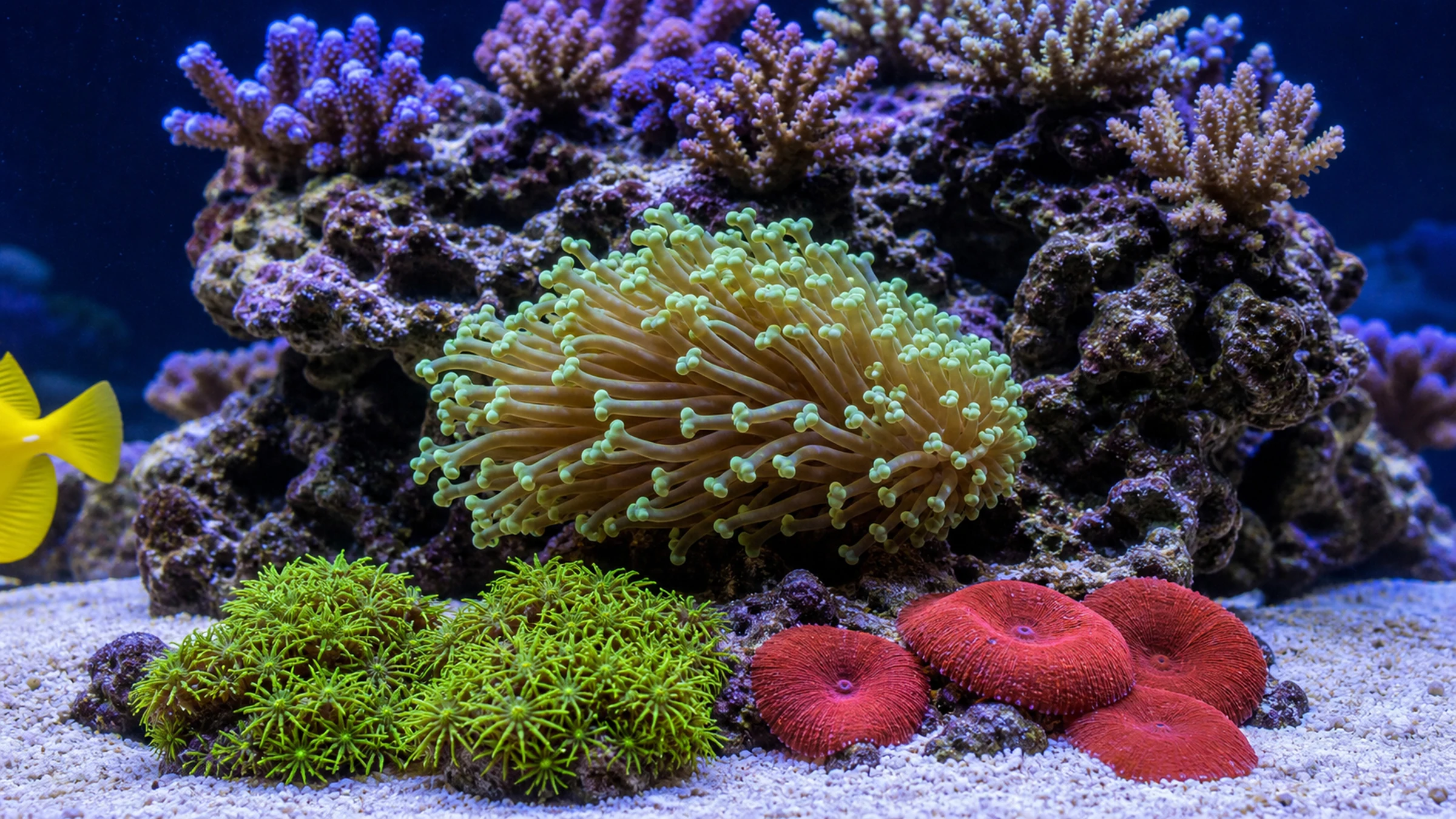
How to place corals by light and flow, PAR targets for softies, LPS, and SPS, dipping new corals for pests, and acclimating them without bleaching.
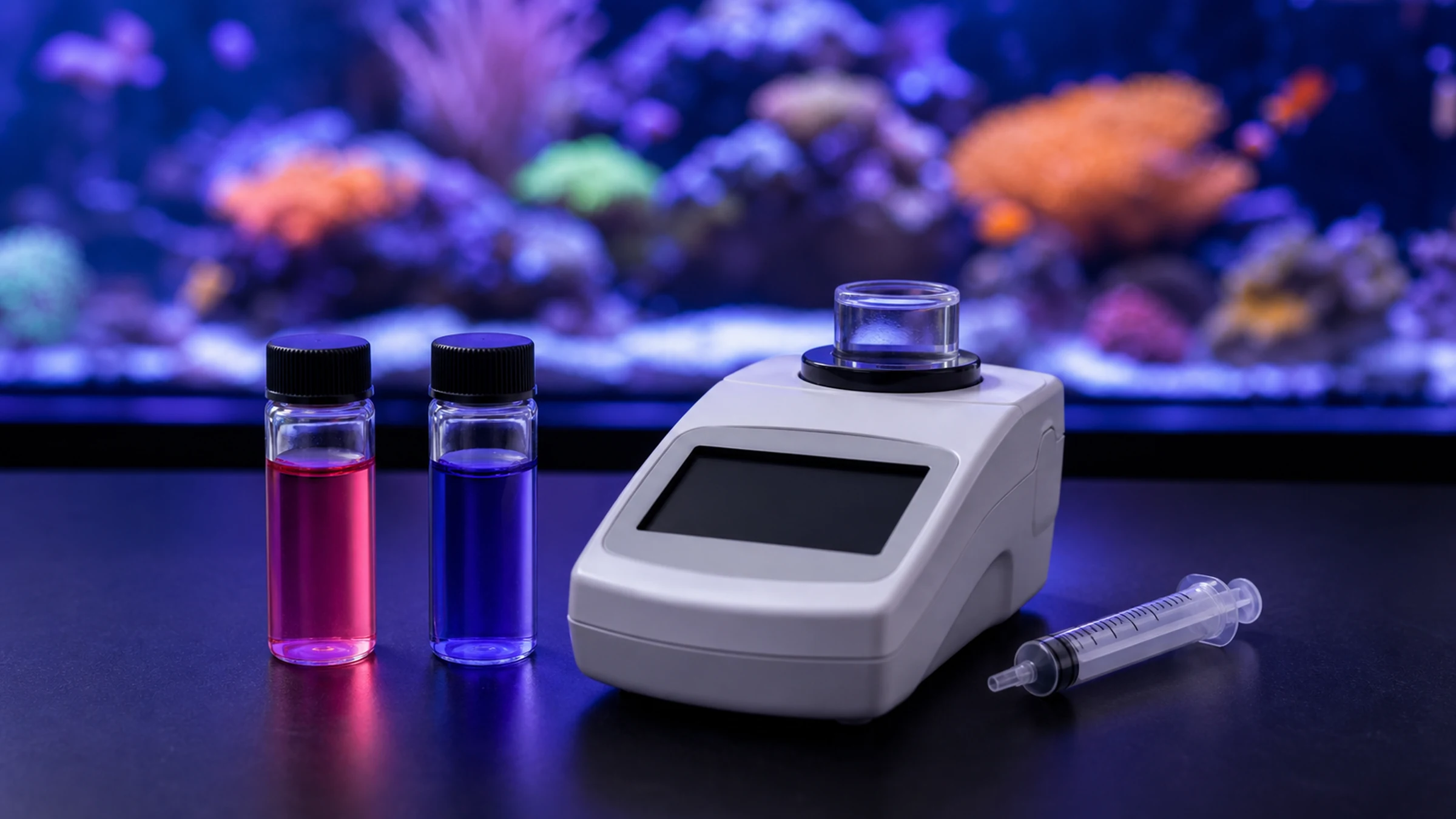
What every reef parameter means and where to keep it: salinity, temperature, pH, alkalinity, calcium, magnesium, nitrate, and phosphate.
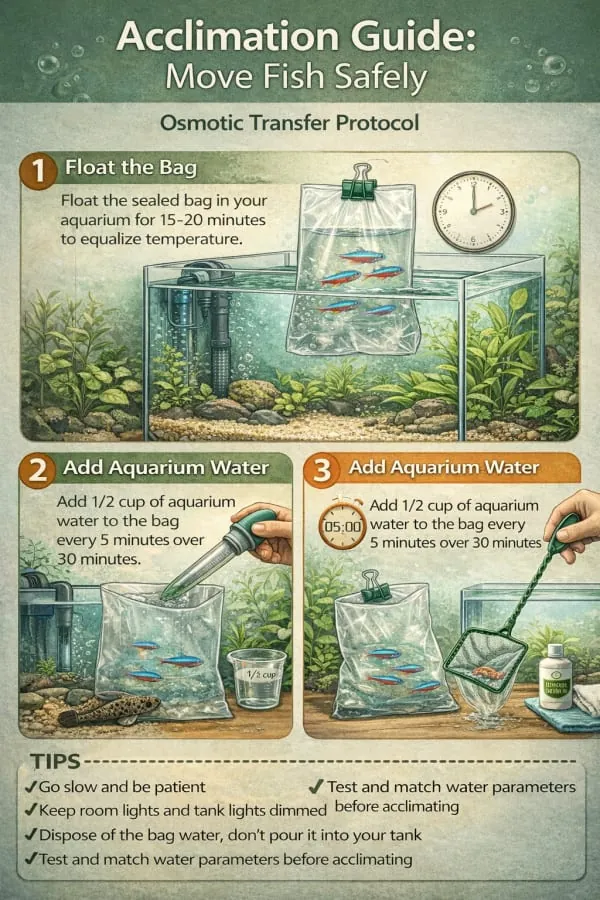
Acclimate new fish, shrimp, and coral safely: temperature floating, drip acclimation, plop-and-drop for shipped livestock, and the first 24 hours.
Keeping Beaded Sea Anemone?
AquaLens identifies your fish and plants from a photo, tracks water chemistry, and flags health issues early — free on iOS and Android.