Blueline Triggerfish Care Guide
Pseudobalistes fuscus · Saltwater Triggerfish
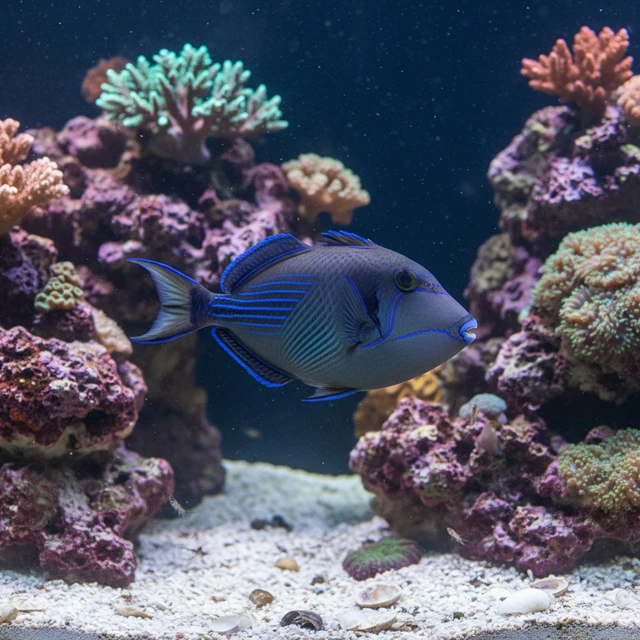
What Blueline Triggerfish look like
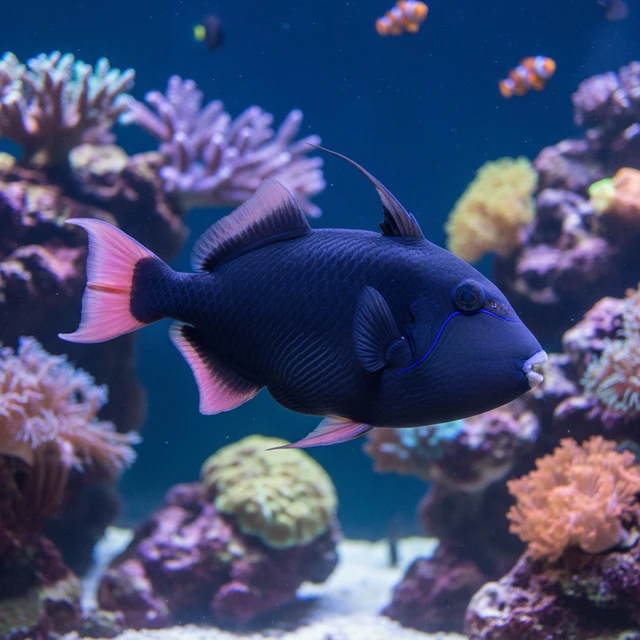
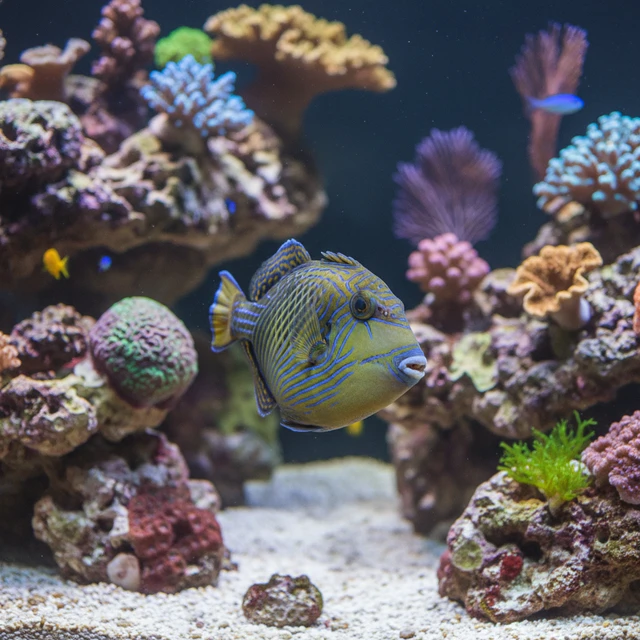
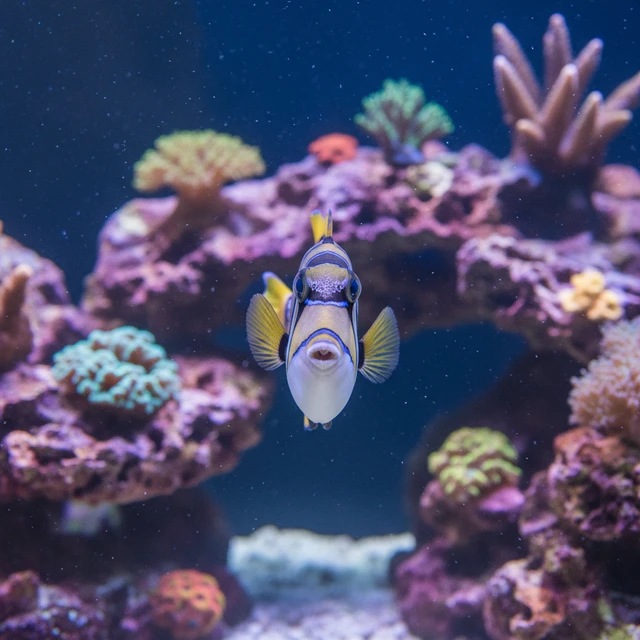
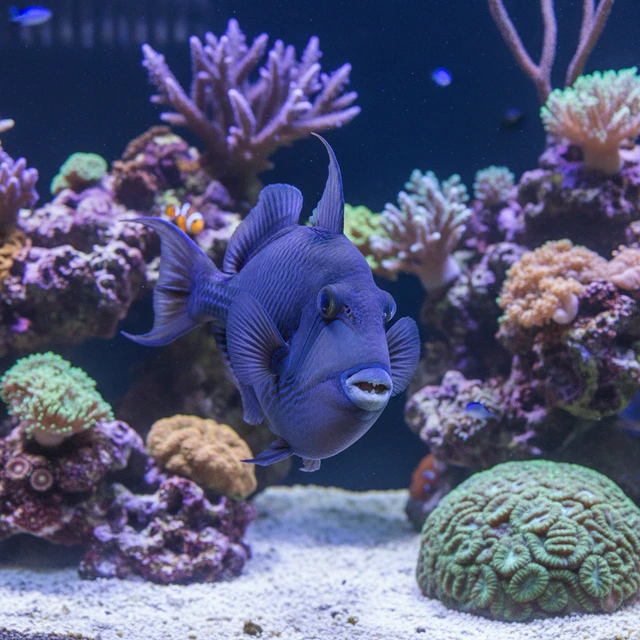
The Blueline Triggerfish (Pseudobalistes fuscus) exhibits a robust, laterally compressed body that can reach a maximum adult size of approximately 12 inches (30 cm). Its coloration is characterized by a striking combination of deep blue and yellow hues, with prominent blue lines running horizontally across its body, which serve as a distinguishing feature. The head is large and angular, equipped with strong, fused teeth adapted for crushing hard-shelled prey. Sexual dimorphism is subtle, with males typically displaying more vibrant coloration and larger dorsal fins compared to females. This species possesses a unique defensive adaptation in the form of a locking mechanism in its dorsal fin, allowing it to wedge itself into crevices when threatened, thus becoming difficult for predators to extract. Additionally, the presence of a lateral line system enhances its ability to detect vibrations in the water, aiding in navigation and predator avoidance.
Behavior & temperament
Blueline Triggerfish are generally solitary or found in pairs, exhibiting a territorial nature, particularly during breeding seasons. They are known to inhabit reef environments, typically swimming at mid to lower levels of the water column. Their breeding behavior involves elaborate courtship displays, where males perform a series of aggressive postures and color changes to attract females. While they can exhibit aggressive tendencies, especially when defending their territory or during spawning, they are also known to display curiosity towards divers and other tank mates. Their temperament can vary, with some individuals being more docile than others, but caution is advised when introducing them to community tanks due to their potential for aggression.
Diet & feeding
In the wild, Blueline Triggerfish are primarily carnivorous, feeding on a diet consisting of crustaceans, mollusks, and various invertebrates. In captivity, they require a varied diet that includes high-quality pellets, frozen or live foods such as shrimp, clams, and other meaty offerings to maintain optimal health.
Behind the name
The genus name 'Pseudobalistes' is derived from the Greek words 'pseudo' meaning 'false' and 'balistes' meaning 'to throw' or 'a thrower', referring to the triggerfish's ability to rapidly change direction. The species name 'fuscus' is Latin for 'dark' or 'dusky', likely referencing the overall coloration of the fish.
Plan your tank
Check the numbers before you buy: tank volume, salinity, salt mix, water changes, and your ongoing care routine. Keeping reef? Start from the Saltwater & Reef hub.
Keep reading
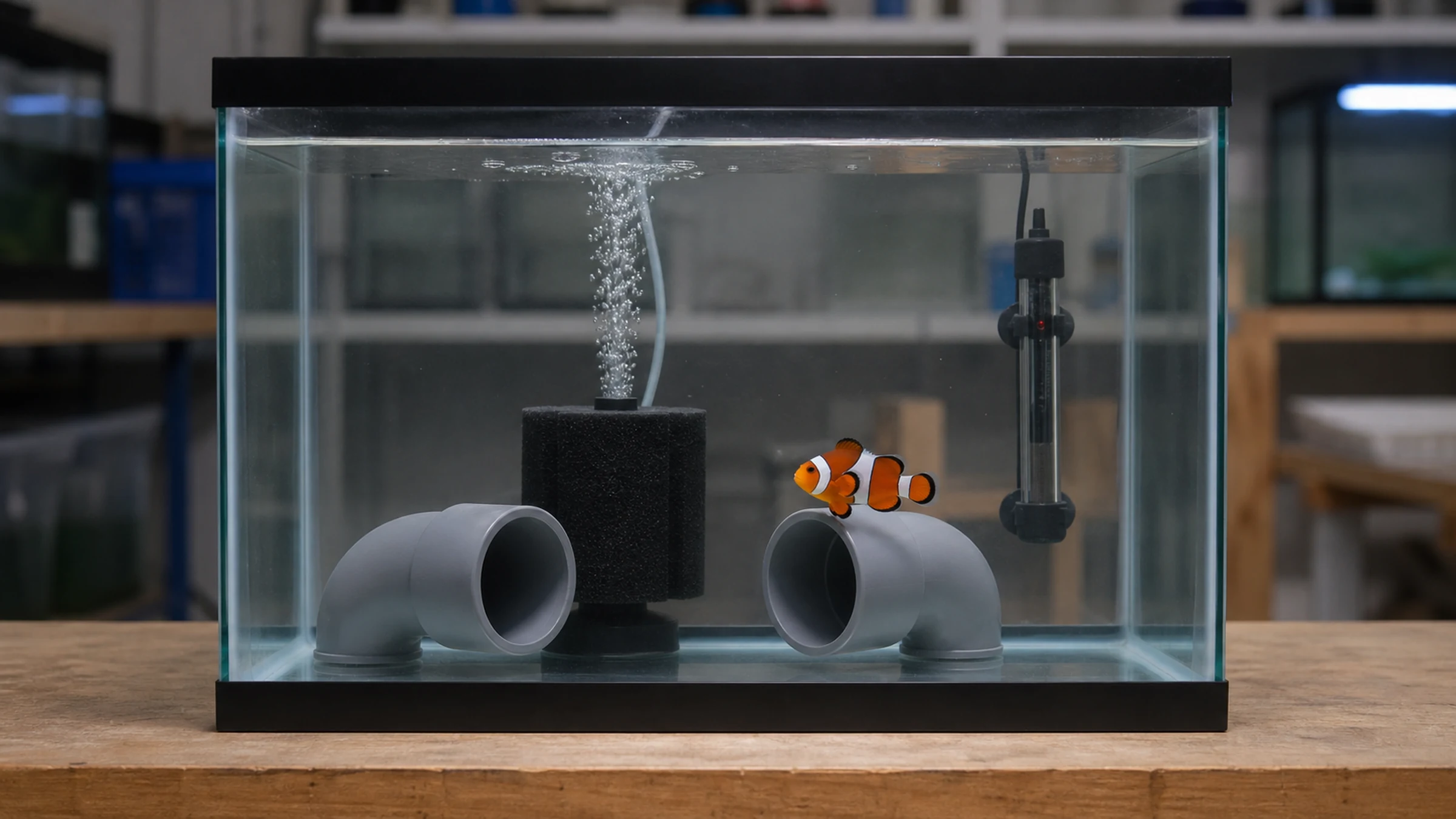
How to quarantine new saltwater fish against marine ich, velvet, and brooklynella: the QT tank, treatments, timelines, and the buy-clean shortcut.

What every reef parameter means and where to keep it: salinity, temperature, pH, alkalinity, calcium, magnesium, nitrate, and phosphate.

Choose compatible fish: school sizes, swimming zones, aggression, temperature and hardness matching, and honest bioload math for a peaceful community.
Keeping Blueline Triggerfish?
AquaLens identifies your fish and plants from a photo, tracks water chemistry, and flags health issues early — free on iOS and Android.