Candy Cane Coral Care Guide
Caulastrea furcata · Saltwater LPS Coral
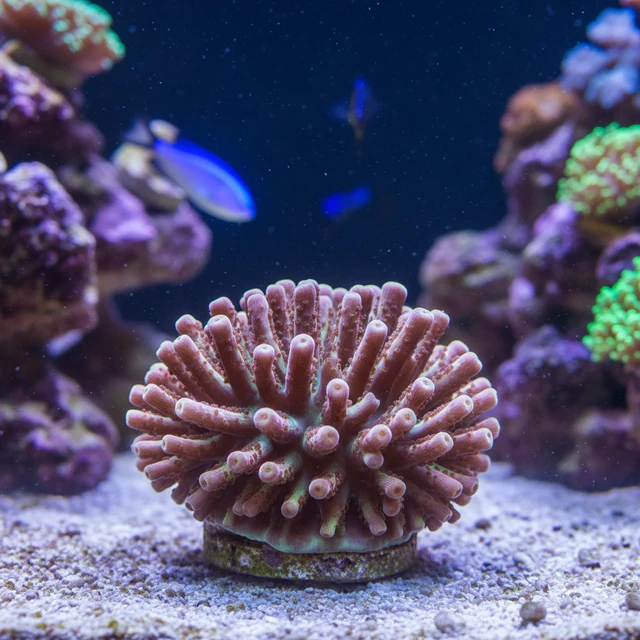
What Candy Cane Coral look like
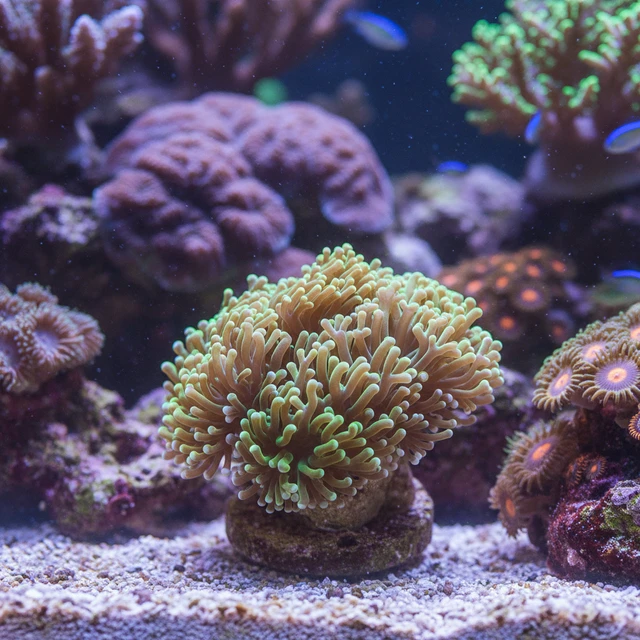
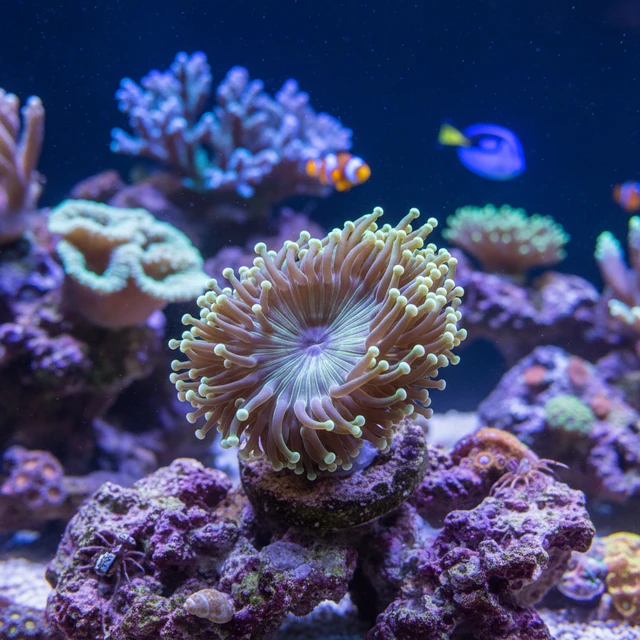
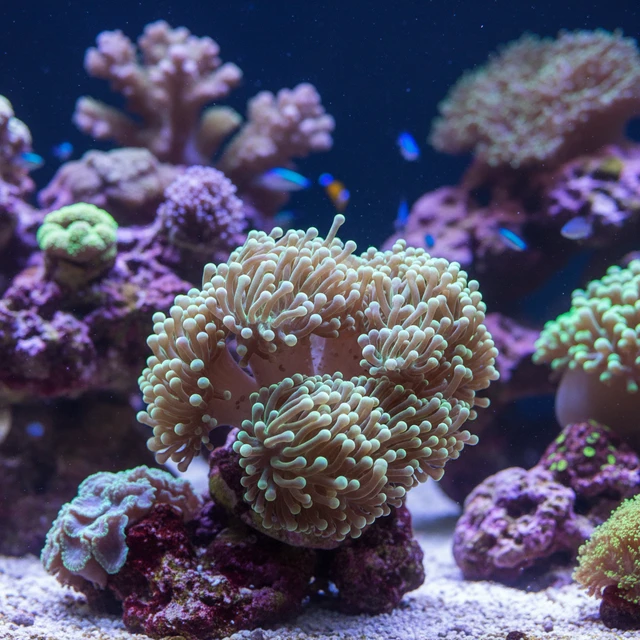
Caulastrea furcata, commonly known as Candy Cane Coral, exhibits a distinctive morphology characterized by its thick, fleshy polyps that can reach up to 1 inch in diameter. The coral typically forms branching colonies with a height of up to 12 inches, displaying a unique morphology with elongated, tubular corallites that are often arranged in a staggered pattern. The coloration ranges from vibrant greens to blues and pinks, with contrasting white or cream-colored skeletal walls. Sexual dimorphism is not pronounced in this species; however, individual polyps may exhibit slight variations in size and coloration. The coral possesses a robust skeletal structure, allowing it to withstand moderate water flow, and its polyps extend during the day, revealing their tentacles equipped with nematocysts for capturing planktonic food. Notably, the Candy Cane Coral has a unique ability to retract its polyps into the corallite during periods of stress or low light, serving as a defensive adaptation against predation.
Behavior & temperament
Candy Cane Coral exhibits a relatively passive behavior, primarily engaging in a symbiotic relationship with zooxanthellae, which provides it with essential nutrients through photosynthesis. The coral extends its polyps during the day to maximize light exposure and capture zooplankton, displaying a feeding behavior that is opportunistic and reliant on the surrounding water column. While it does not exhibit aggressive territorial behavior, it can engage in mild competition with neighboring corals for space and light. The polyps can retract quickly in response to disturbances, showcasing a level of sensitivity to water quality and flow conditions. Additionally, Candy Cane Coral can engage in a form of asexual reproduction through budding, contributing to the expansion of its colony.
Diet & feeding
Candy Cane Coral is primarily a heterotrophic feeder, capturing zooplankton and particulate matter from the water column. In captivity, it thrives on a diet of finely chopped meaty foods, such as brine shrimp and mysis shrimp, along with regular feedings of phytoplankton.
Behind the name
The genus name 'Caulastrea' is derived from the Greek words 'kaulos', meaning 'stem', and 'streon', meaning 'to spread', referring to the branching growth form of the coral. The species name 'furcata' is derived from the Latin word 'furca', meaning 'forked', which describes the bifurcated nature of its corallites.
Plan your tank
Check the numbers before you buy: tank volume, salinity, salt mix, water changes, and your ongoing care routine. Keeping reef? Start from the Saltwater & Reef hub.
Keep reading
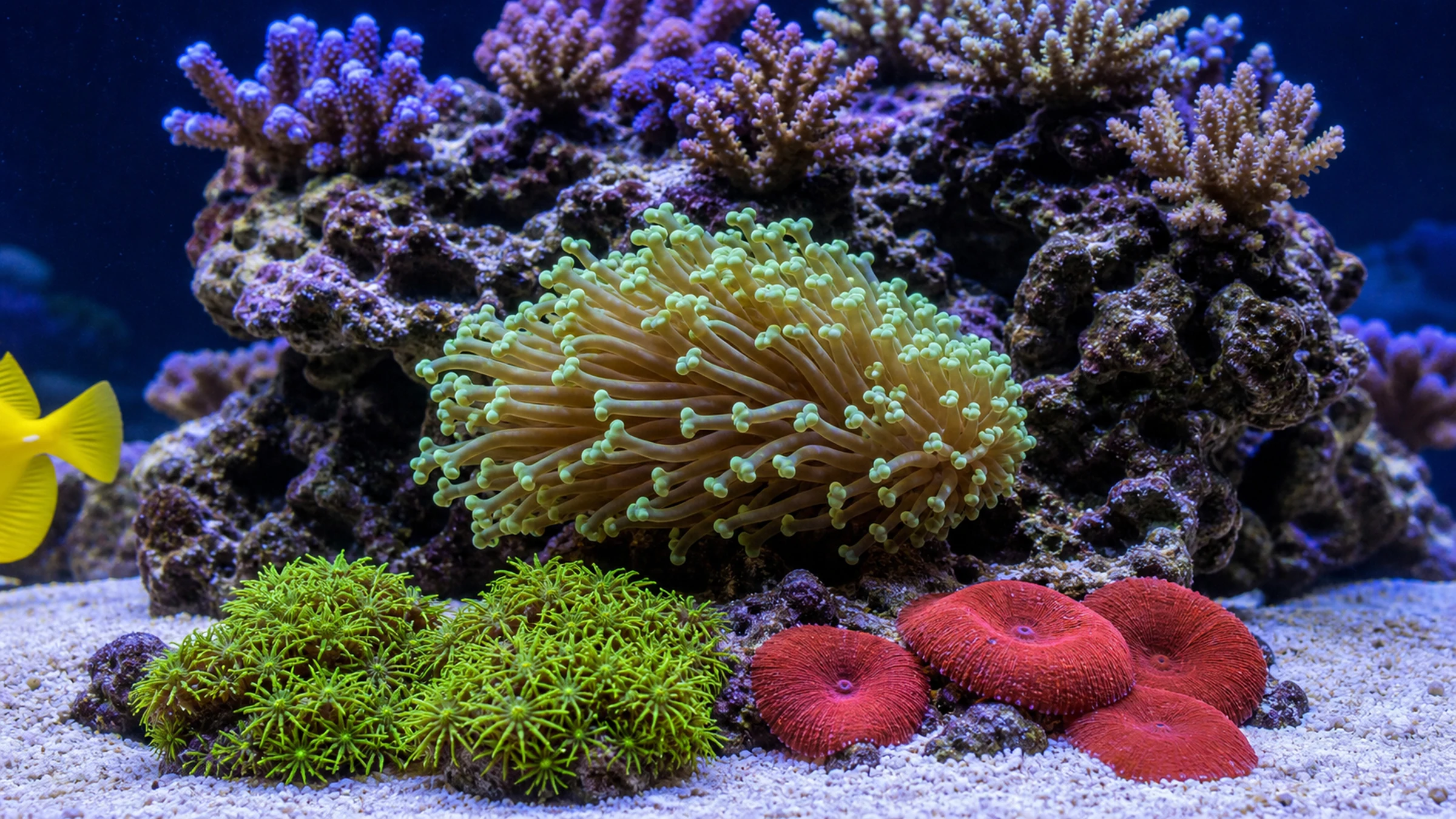
How to place corals by light and flow, PAR targets for softies, LPS, and SPS, dipping new corals for pests, and acclimating them without bleaching.

What every reef parameter means and where to keep it: salinity, temperature, pH, alkalinity, calcium, magnesium, nitrate, and phosphate.

Acclimate new fish, shrimp, and coral safely: temperature floating, drip acclimation, plop-and-drop for shipped livestock, and the first 24 hours.
Keeping Candy Cane Coral?
AquaLens identifies your fish and plants from a photo, tracks water chemistry, and flags health issues early — free on iOS and Android.