
Christmas Tree Worm Care Guide
Spirobranchus giganteus · Saltwater Feather Duster
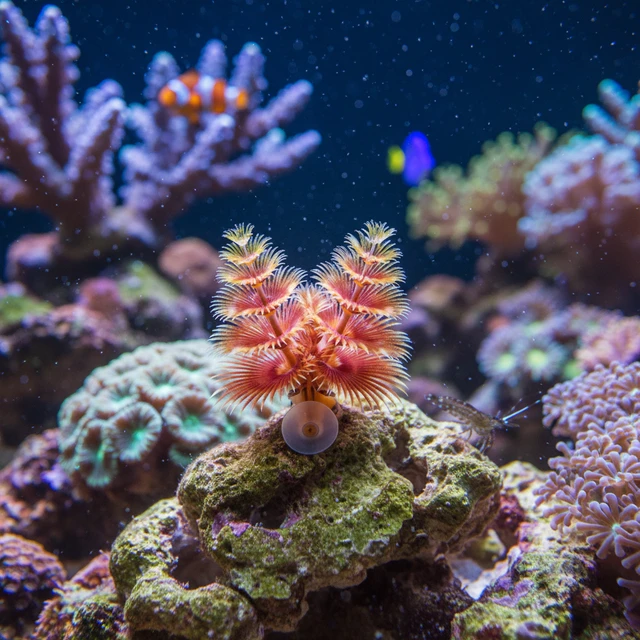
What Christmas Tree Worm look like
Spirobranchus giganteus, commonly known as the Christmas Tree Worm, exhibits a distinctive morphology characterized by its spiraled, brightly colored radioles that resemble a Christmas tree. These structures can reach a maximum diameter of approximately 2.5 cm, while the entire worm can extend to about 10 cm in length when fully expanded. The radioles are composed of numerous bristles and are used for both feeding and respiration, displaying a range of colors including blue, red, yellow, and green, which can vary among individuals. Sexual dimorphism is not pronounced in this species, as both sexes exhibit similar external features. Defensive adaptations include the ability to retract rapidly into their calcareous tubes when threatened, which are often embedded in coral or rocky substrates, providing additional protection. Unique morphological features include the presence of a crown of tentacles that can be extended or retracted, and a segmented body structure that allows for flexibility within its tube.
Behavior & temperament
The Christmas Tree Worm is primarily a solitary invertebrate, although it can be found in clusters on suitable substrates. It exhibits a passive feeding behavior, utilizing its radioles to capture plankton and detritus from the water column. During feeding, the radioles are extended outward, creating a fan-like structure that maximizes water flow and particle capture. Breeding behavior is characterized by external fertilization, where gametes are released into the water column during spawning events, typically synchronized with lunar cycles. The species is generally non-aggressive, but it can exhibit territoriality when competing for space on coral surfaces, often retracting into its tube when disturbed.
Diet & feeding
Spirobranchus giganteus is a filter feeder, primarily consuming phytoplankton, zooplankton, and organic detritus. In captivity, it requires a diet rich in fine particulate matter and may benefit from the addition of liquid foods designed for filter feeders.
Behind the name
The scientific name 'Spirobranchus' derives from the Greek words 'spira,' meaning coil or spiral, and 'branchus,' meaning gill, referring to the spiraled gill structure. The species name 'giganteus' is Latin for 'giant,' indicating its relatively large size among its relatives.
Plan your tank
Check the numbers before you buy: tank volume, salinity, salt mix, water changes, and your ongoing care routine. Keeping reef? Start from the Saltwater & Reef hub.
Keep reading
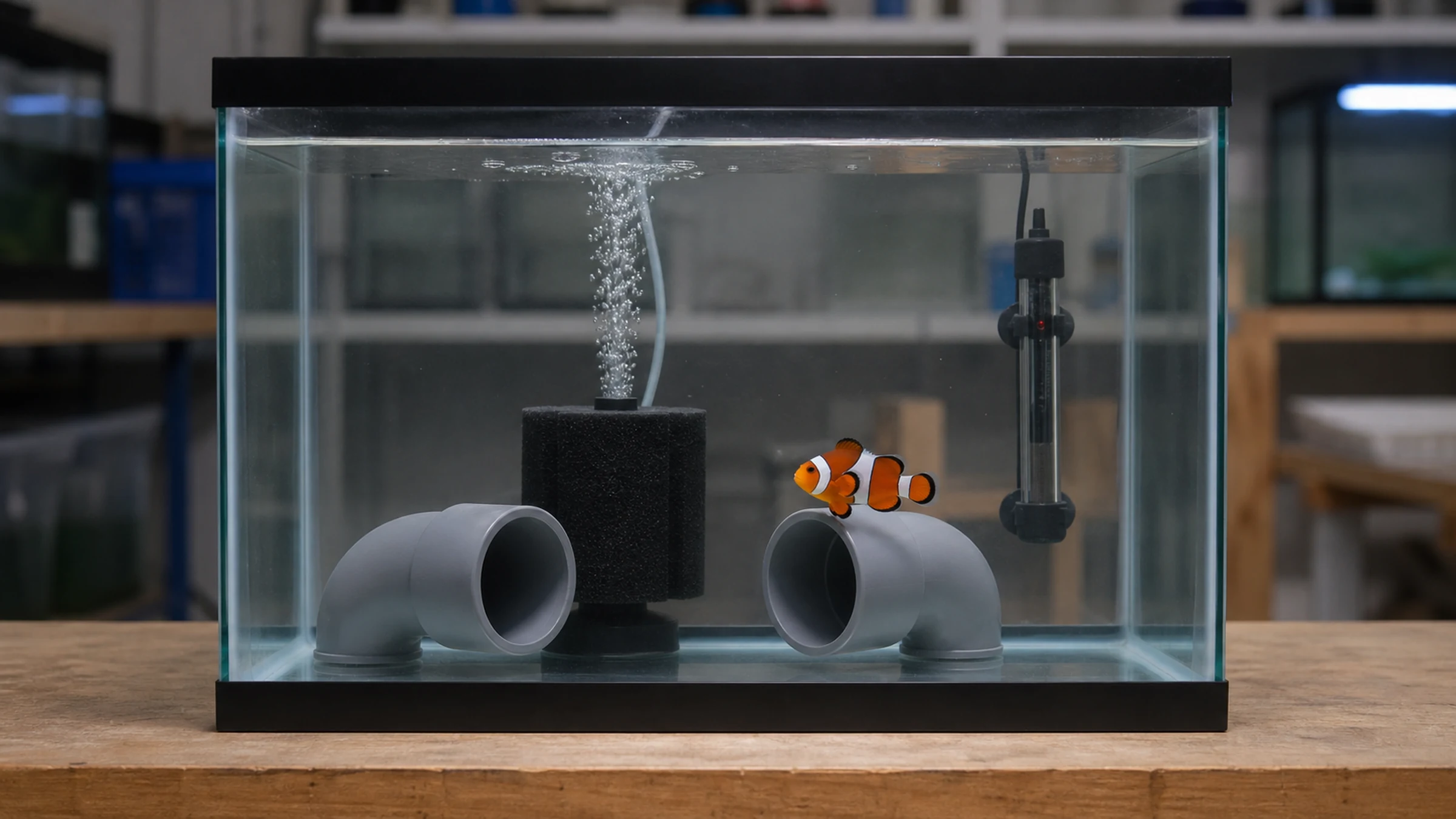
How to quarantine new saltwater fish against marine ich, velvet, and brooklynella: the QT tank, treatments, timelines, and the buy-clean shortcut.

What every reef parameter means and where to keep it: salinity, temperature, pH, alkalinity, calcium, magnesium, nitrate, and phosphate.
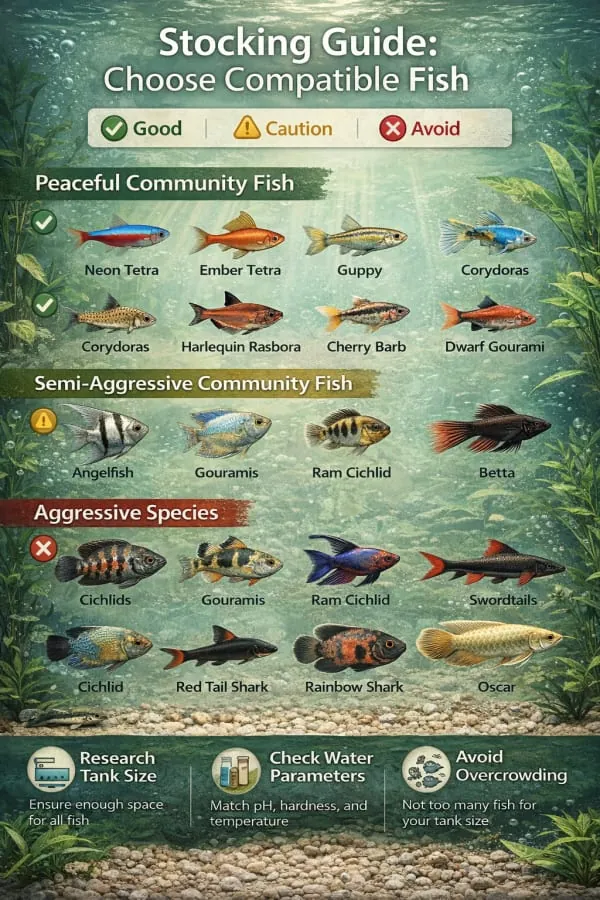
Choose compatible fish: school sizes, swimming zones, aggression, temperature and hardness matching, and honest bioload math for a peaceful community.
Keeping Christmas Tree Worm?
AquaLens identifies your fish and plants from a photo, tracks water chemistry, and flags health issues early — free on iOS and Android.