Clown Tang Care Guide
Acanthurus lineatus · Saltwater Tang
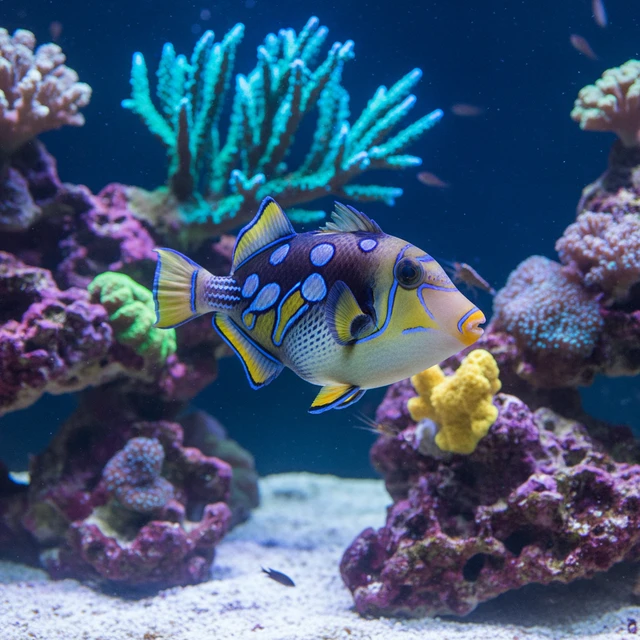
What Clown Tang look like
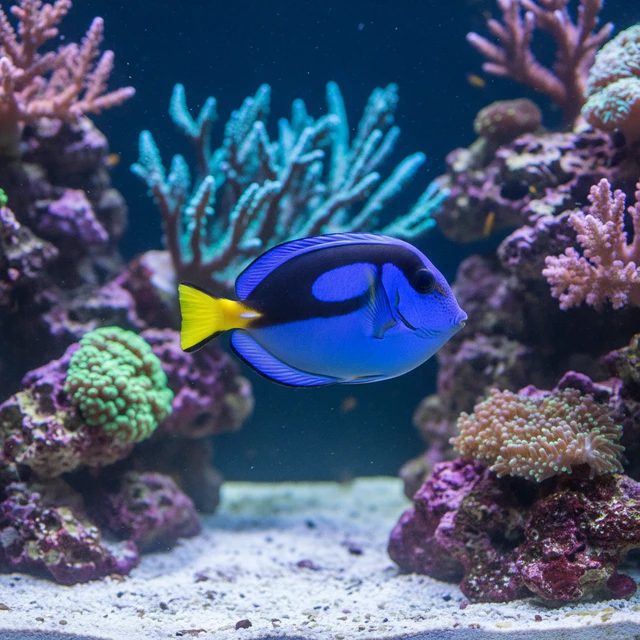
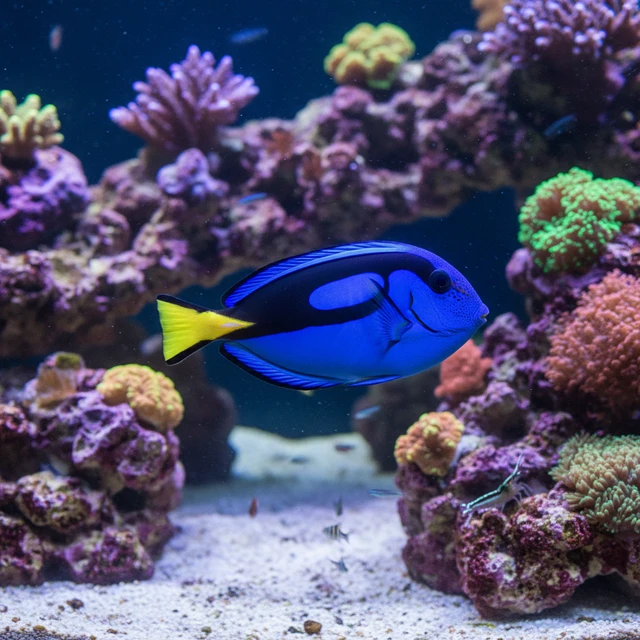
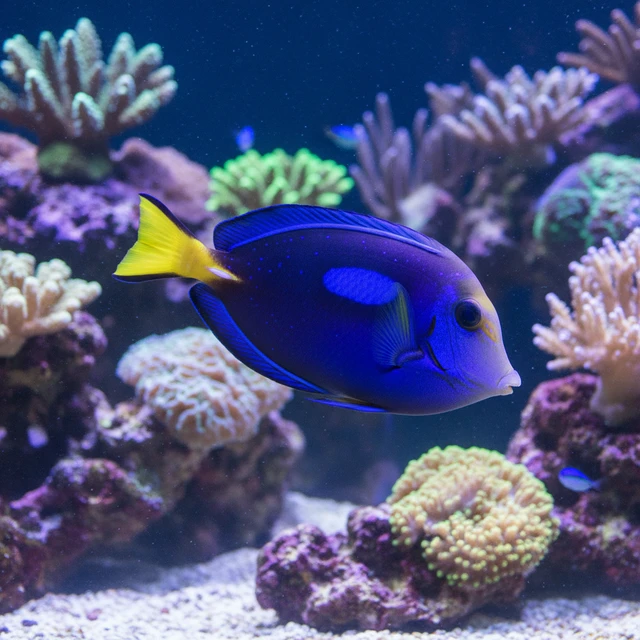
The Clown Tang, or Acanthurus lineatus, exhibits a distinctive morphology characterized by its elongated, laterally compressed body, which can reach a maximum adult size of approximately 12 inches (30 cm). Its coloration is a vibrant mix of blue and yellow, with a prominent yellow stripe running horizontally from the snout to the tail, and a series of vertical blue lines that accentuate its streamlined shape. Sexual dimorphism is subtle, with males typically displaying slightly larger dorsal fins. A notable defensive adaptation is the presence of sharp, retractable spines located on either side of the tail, which can be deployed when threatened. The dorsal fin is long and continuous, featuring a pronounced filamentous extension in adults, while the anal fin is similarly elongated, contributing to its graceful swimming style.
Behavior & temperament
Clown Tangs are known for their active and social behavior, often forming loose schools in the wild. They are predominantly found in the mid-water column, where they exhibit a dynamic swimming style, frequently darting in and out of coral structures. Breeding behavior includes territorial displays, where males will establish dominance over specific areas, often engaging in aggressive posturing. Their temperament can range from mildly aggressive to territorial, particularly during breeding seasons or when defending their space against intruders. Clown Tangs are also known to engage in cleaning behaviors, often visiting cleaning stations where they allow smaller fish to remove parasites from their bodies.
Diet & feeding
In the wild, Clown Tangs are primarily herbivorous, grazing on algae and other plant materials found on reef substrates. In captivity, they require a diet rich in marine algae, spirulina, and high-quality herbivore pellets to maintain optimal health.
Behind the name
The genus name 'Acanthurus' derives from the Greek words 'akanthos', meaning 'thorn', and 'oura', meaning 'tail', referring to the sharp spines on the tail. The species name 'lineatus' is Latin for 'striped', referencing the characteristic stripes of the fish.
Plan your tank
Check the numbers before you buy: tank volume, salinity, salt mix, water changes, and your ongoing care routine. Keeping reef? Start from the Saltwater & Reef hub.
Keep reading
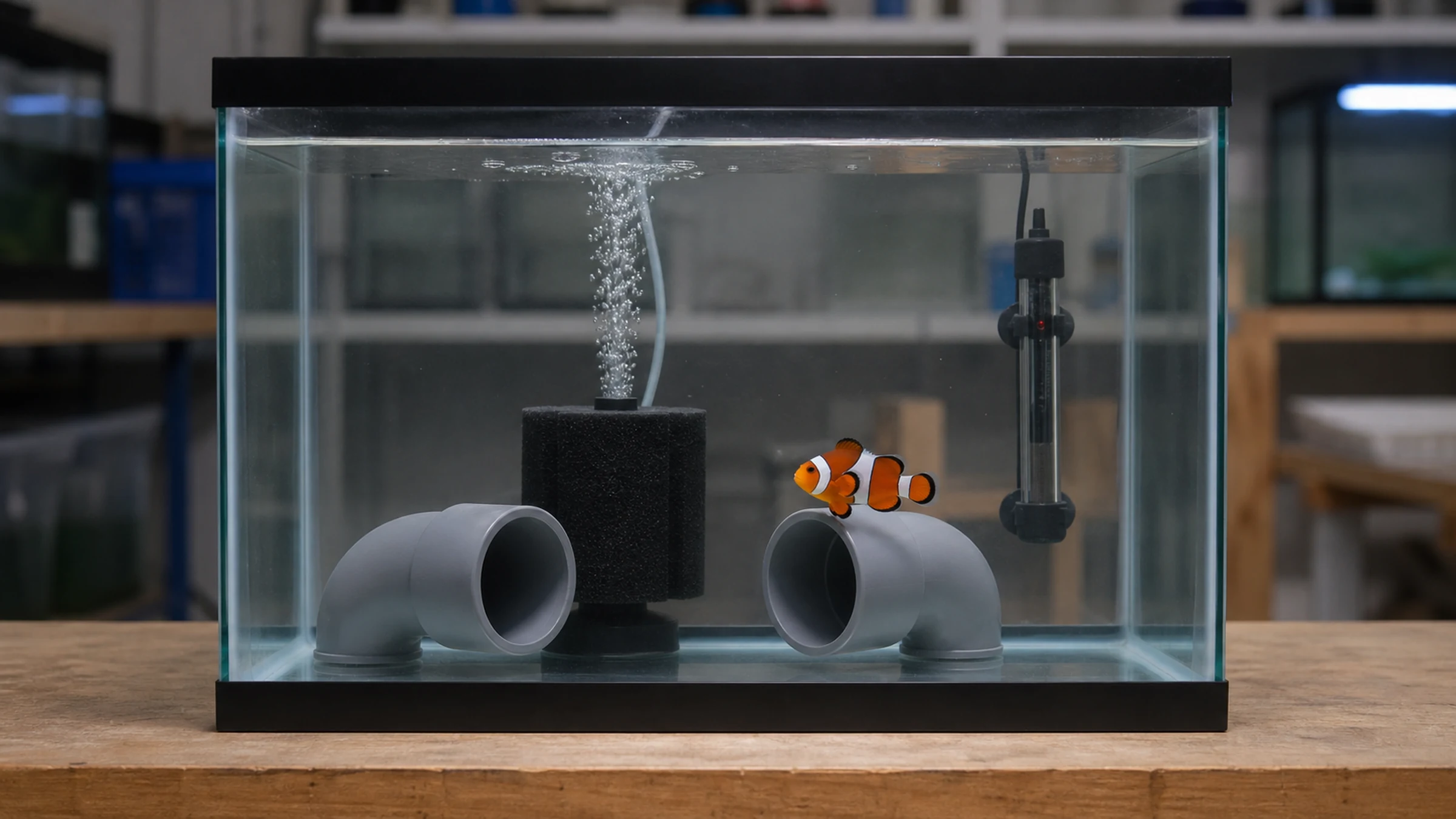
How to quarantine new saltwater fish against marine ich, velvet, and brooklynella: the QT tank, treatments, timelines, and the buy-clean shortcut.

What every reef parameter means and where to keep it: salinity, temperature, pH, alkalinity, calcium, magnesium, nitrate, and phosphate.

Choose compatible fish: school sizes, swimming zones, aggression, temperature and hardness matching, and honest bioload math for a peaceful community.
Keeping Clown Tang?
AquaLens identifies your fish and plants from a photo, tracks water chemistry, and flags health issues early — free on iOS and Android.