Fimbriated Moray Eel Care Guide
Gymnothorax fimbriatus · Saltwater Eel
What Fimbriated Moray Eel look like
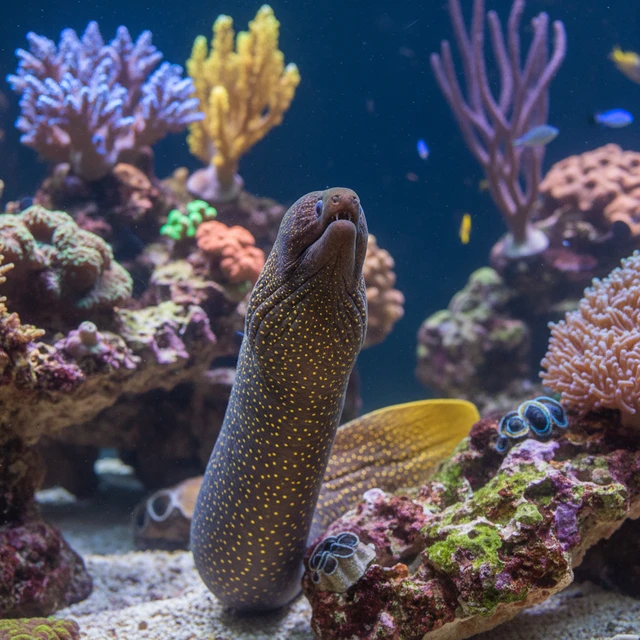
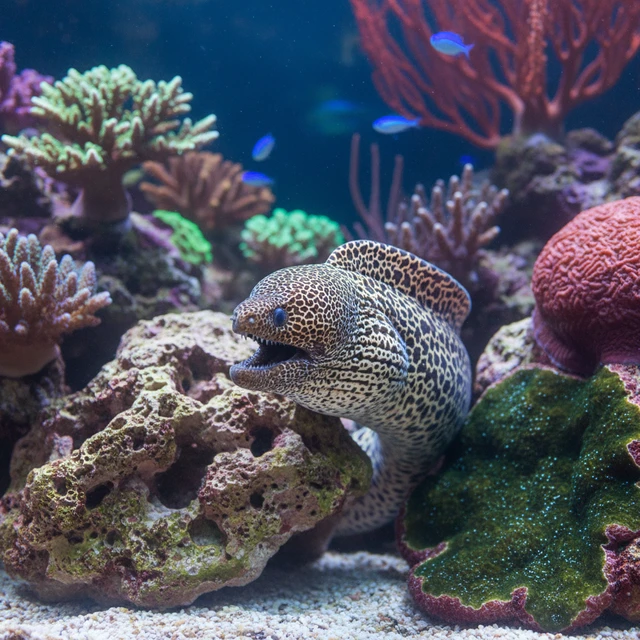
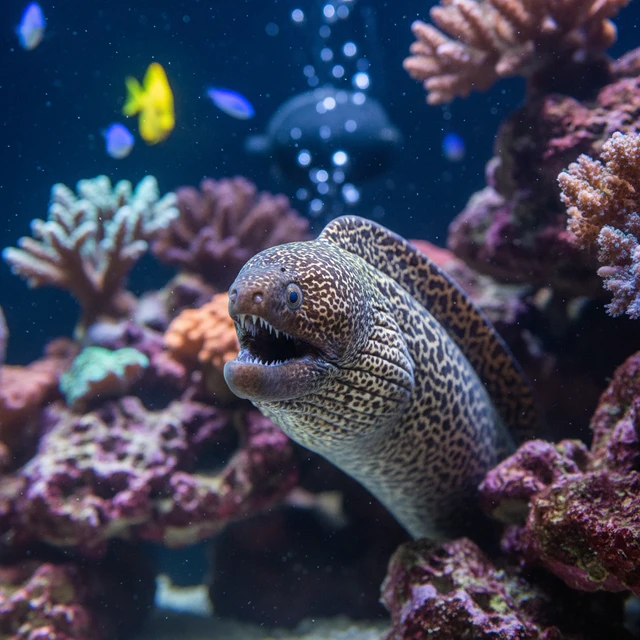
The Fimbriated Moray Eel (Gymnothorax fimbriatus) exhibits a robust, elongated body that can reach a maximum adult size of approximately 5 feet (1.5 meters). Its coloration is characterized by a striking pattern of dark brown to greenish hues, adorned with numerous small, pale spots and a distinctive series of lighter bands that run along its body, providing effective camouflage among reef structures. This species displays minimal sexual dimorphism, with both sexes presenting similar external characteristics. Notable morphological features include a long, tapered head with a pronounced jaw equipped with sharp, backward-curving teeth, facilitating the capture of prey. The eel's skin is devoid of scales, covered instead by a mucous layer that serves both protective and hydrodynamic functions. Additionally, the Fimbriated Moray possesses a lateral line system that aids in detecting vibrations and movements in the water, enhancing its predatory capabilities.
Behavior & temperament
The Fimbriated Moray Eel is predominantly a solitary and territorial species, often found residing in crevices and caves within coral reefs. It exhibits a nocturnal feeding pattern, emerging primarily at night to hunt for prey. During the day, it may be observed partially protruding from its hiding spot, displaying a behavior known as 'head poking.' This species is known for its aggressive temperament when threatened, displaying defensive postures such as opening its mouth wide to reveal its formidable dentition. Breeding behavior remains largely undocumented in the wild, although it is believed to engage in external fertilization during spawning events. Social interactions are limited, with individuals typically avoiding proximity to one another.
Diet & feeding
The Fimbriated Moray Eel is a carnivorous predator, primarily feeding on small fish, crustaceans, and cephalopods in its natural habitat. In captivity, it requires a diet rich in meaty foods, such as shrimp, fish fillets, and other marine proteins to thrive.
Behind the name
The genus name 'Gymnothorax' derives from the Greek words 'gymnos,' meaning 'naked,' and 'thorax,' meaning 'chest,' referring to the eel's scaleless body. The species name 'fimbriatus' comes from the Latin word 'fimbriatus,' meaning 'fringed' or 'bordered,' likely referring to the eel's distinctive banding pattern.
Plan your tank
Check the numbers before you buy: tank volume, salinity, salt mix, water changes, and your ongoing care routine. Keeping reef? Start from the Saltwater & Reef hub.
Keep reading
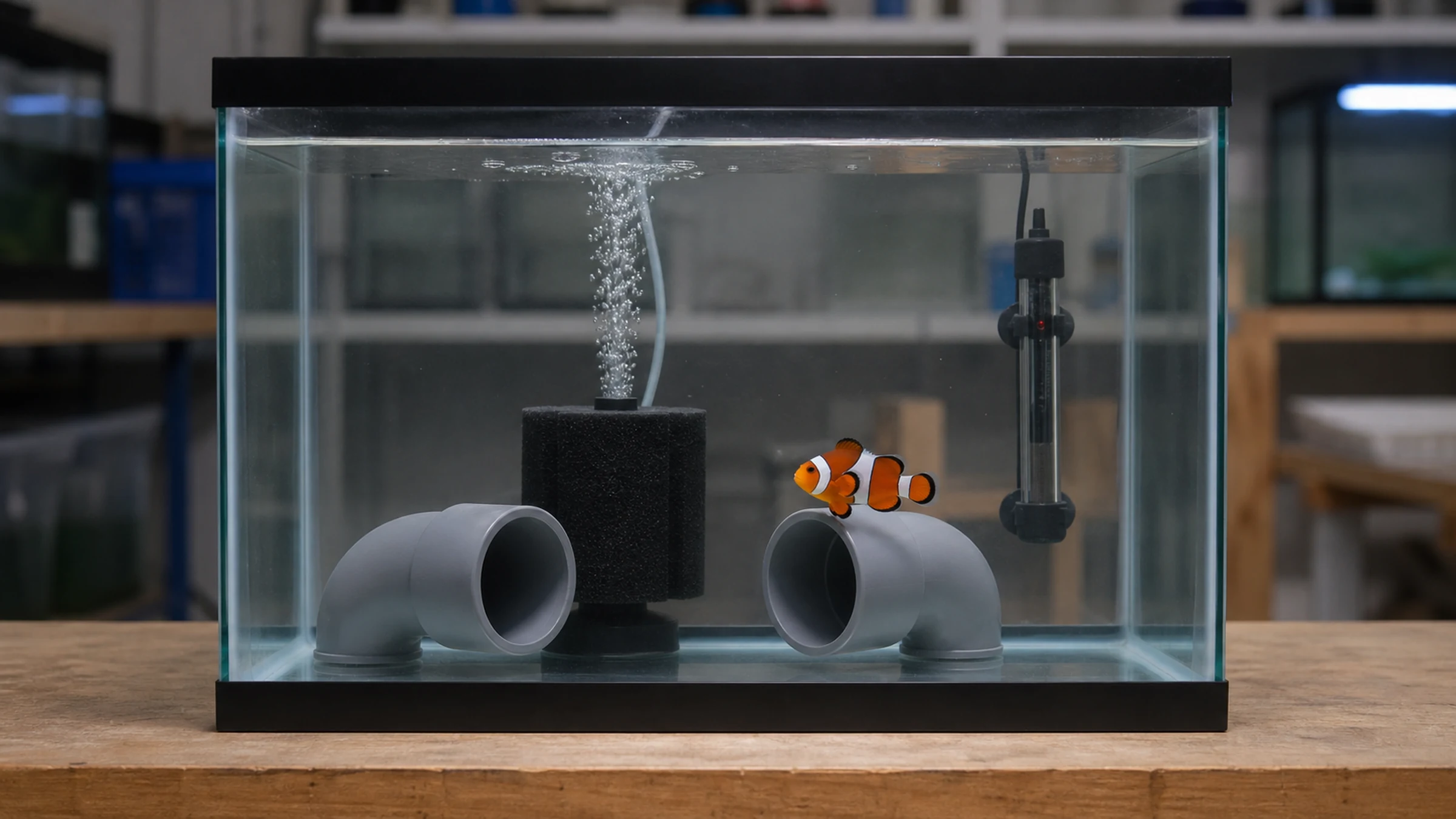
How to quarantine new saltwater fish against marine ich, velvet, and brooklynella: the QT tank, treatments, timelines, and the buy-clean shortcut.

What every reef parameter means and where to keep it: salinity, temperature, pH, alkalinity, calcium, magnesium, nitrate, and phosphate.
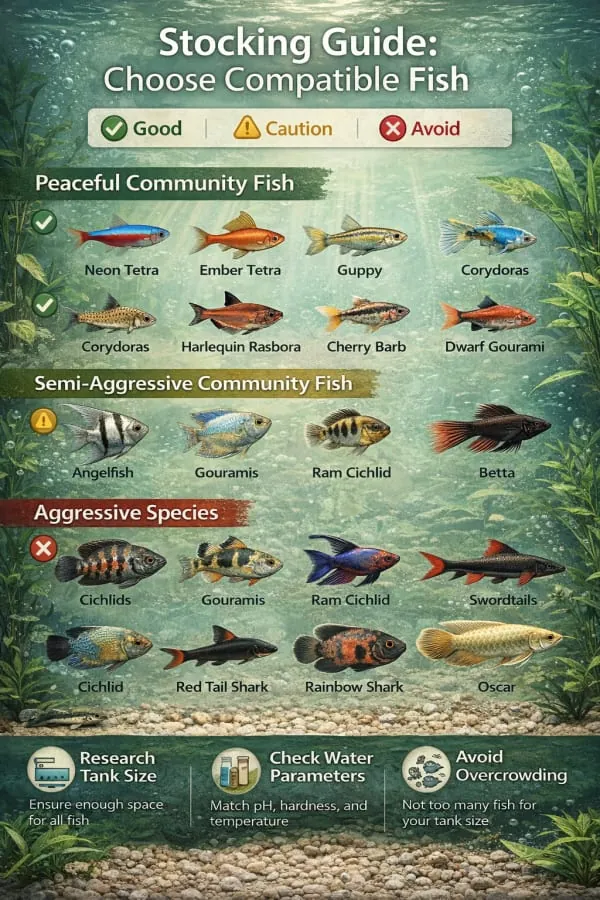
Choose compatible fish: school sizes, swimming zones, aggression, temperature and hardness matching, and honest bioload math for a peaceful community.
Keeping Fimbriated Moray Eel?
AquaLens identifies your fish and plants from a photo, tracks water chemistry, and flags health issues early — free on iOS and Android.