Foxface Rabbitfish Care Guide
Siganus vulpinus · Saltwater Foxface
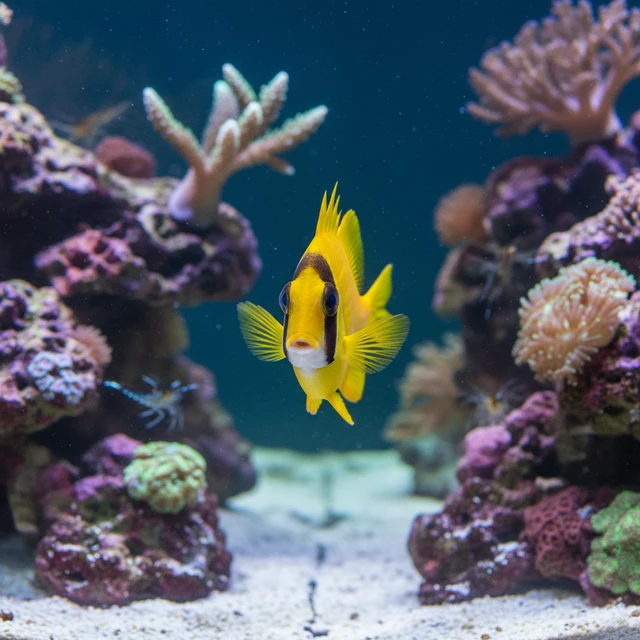
What Foxface Rabbitfish look like
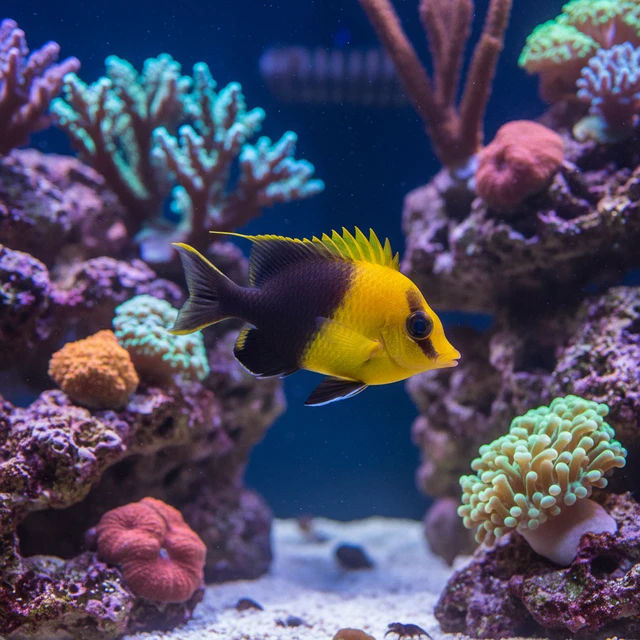
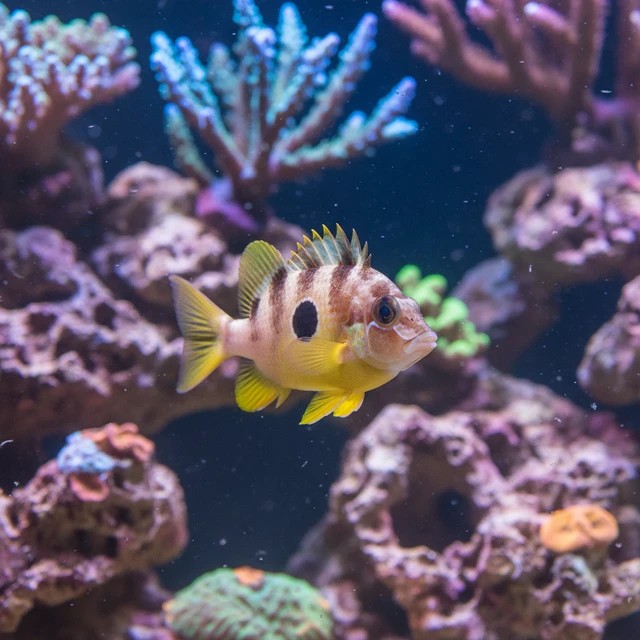
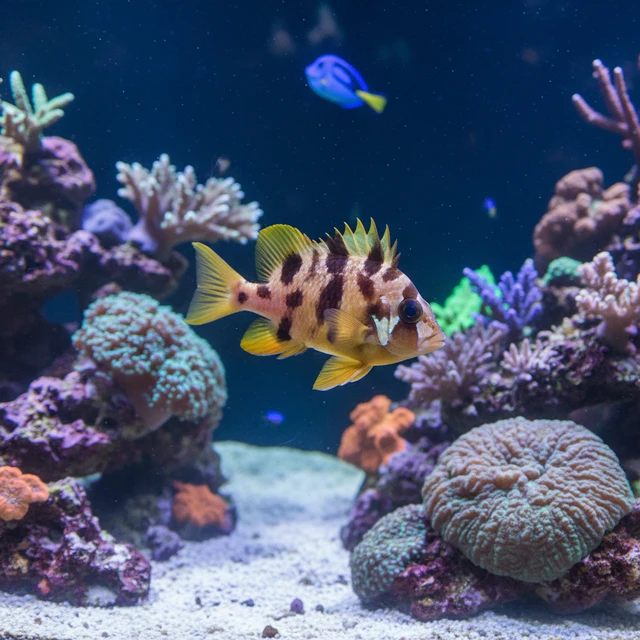
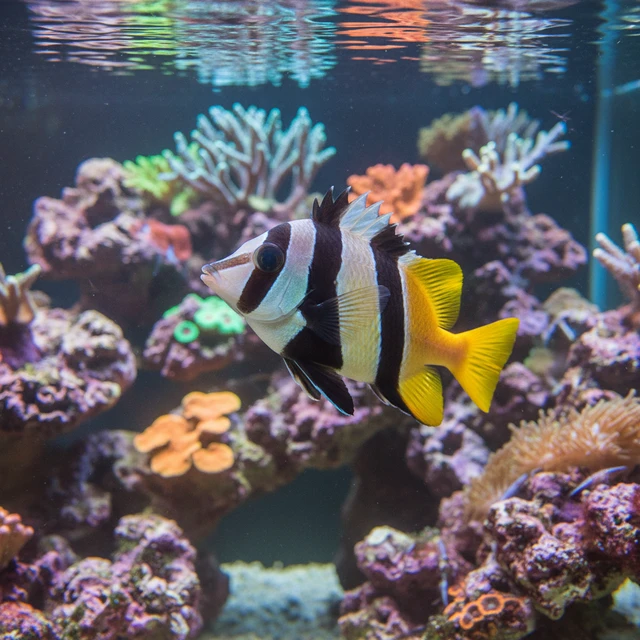
The Foxface Rabbitfish (Siganus vulpinus) exhibits a distinctive body shape characterized by a laterally compressed, oval form that can reach a maximum adult size of approximately 12 inches (30 cm). Its coloration is striking, featuring a vibrant yellow body adorned with intricate black markings, particularly a prominent black spot on the dorsal fin and a mask-like pattern across the face, which contributes to its common name. Sexual dimorphism is minimal, though males may display slightly more intense coloration during breeding periods. This species possesses venomous spines located on the dorsal and anal fins, serving as a defensive adaptation against predators. The dentition is adapted for herbivorous feeding, with a set of flat, grinding teeth that facilitate the consumption of algae and plant material. Additionally, the Foxface Rabbitfish features a well-developed lateral line system that aids in detecting water movements and potential threats.
Behavior & temperament
Foxface Rabbitfish are generally social and can be found in small groups, often establishing a loose hierarchy within their schools. They are primarily mid-water swimmers, frequently observed grazing on algae in the reef environment. During breeding, males may exhibit territorial behavior, displaying more vibrant colors and engaging in courtship rituals that involve chasing and fin displays. Their temperament is typically peaceful, although they can become aggressive towards conspecifics or similar-looking species, especially in confined spaces. This species is known for its ability to adapt to various environments, and while it is not a strong swimmer, it can maneuver adeptly among reef structures.
Diet & feeding
In the wild, the Foxface Rabbitfish primarily feeds on algae, macroalgae, and other plant materials, making it an obligate herbivore. In captivity, it requires a diet rich in marine algae, spirulina, and high-quality herbivore pellets to thrive.
Behind the name
The scientific name 'Siganus vulpinus' derives from the Latin 'Siganus', which is a genus name for rabbitfish, and 'vulpinus', meaning 'fox-like', referring to its coloration and facial markings reminiscent of a fox.
Plan your tank
Check the numbers before you buy: tank volume, salinity, salt mix, water changes, and your ongoing care routine. Keeping reef? Start from the Saltwater & Reef hub.
Keep reading
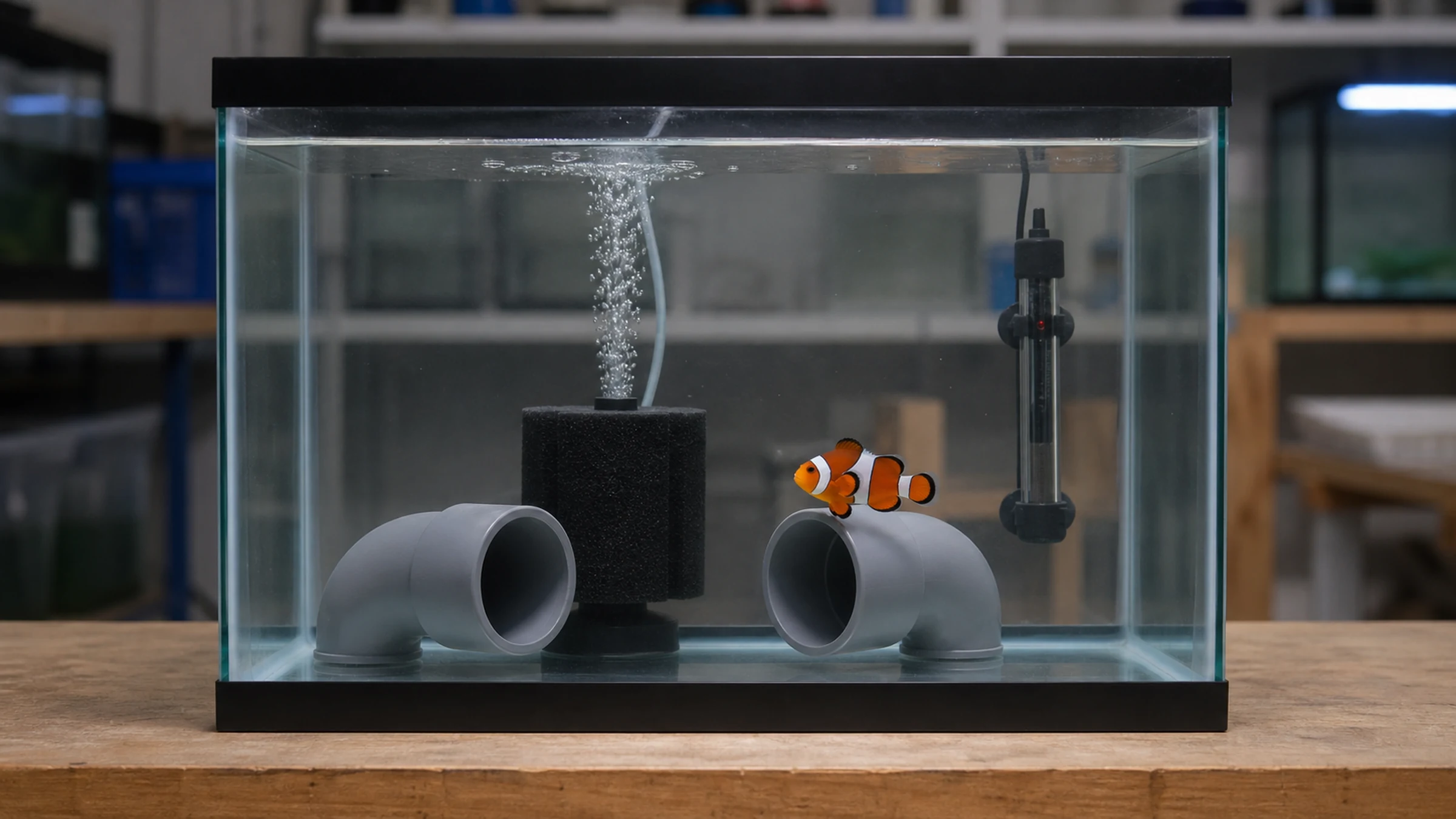
How to quarantine new saltwater fish against marine ich, velvet, and brooklynella: the QT tank, treatments, timelines, and the buy-clean shortcut.

What every reef parameter means and where to keep it: salinity, temperature, pH, alkalinity, calcium, magnesium, nitrate, and phosphate.

Choose compatible fish: school sizes, swimming zones, aggression, temperature and hardness matching, and honest bioload math for a peaceful community.
Keeping Foxface Rabbitfish?
AquaLens identifies your fish and plants from a photo, tracks water chemistry, and flags health issues early — free on iOS and Android.