Fu Manchu Lionfish Care Guide
Dendrochirus biocellatus · Saltwater Lionfish
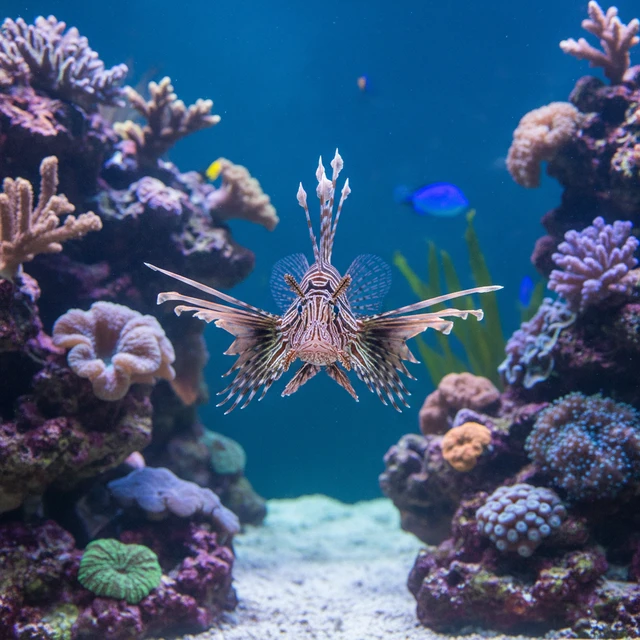
What Fu Manchu Lionfish look like
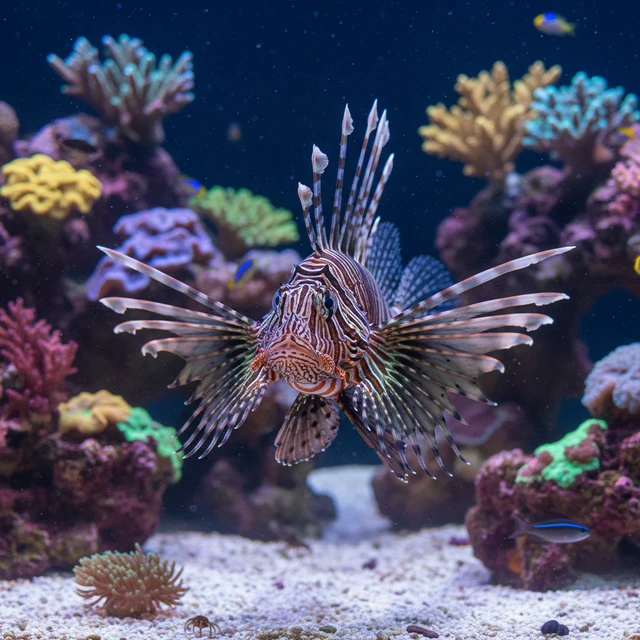
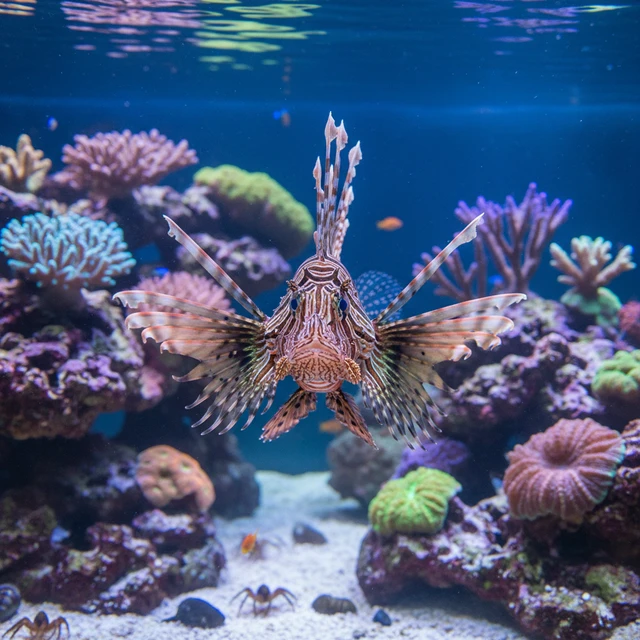
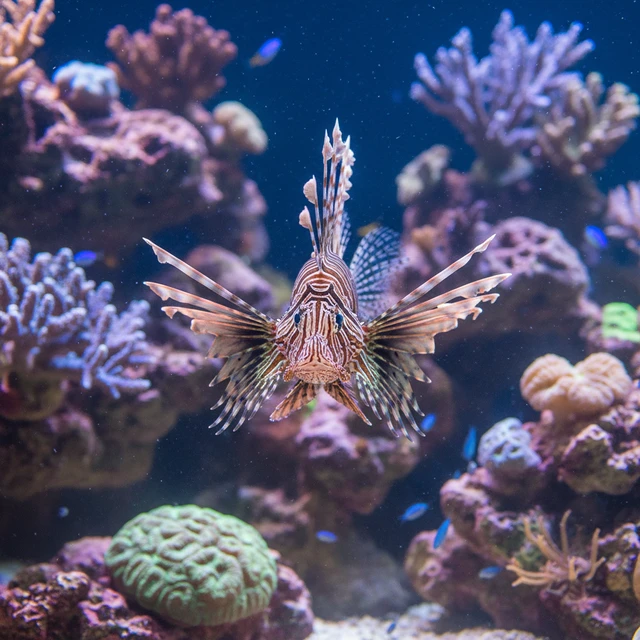
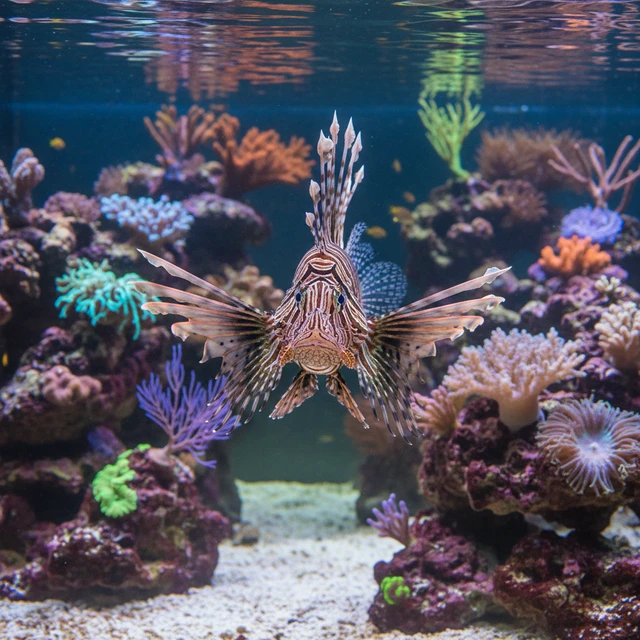
The Fu Manchu Lionfish (Dendrochirus biocellatus) exhibits a striking appearance characterized by elongated dorsal fin spines and a distinctive pattern of red, white, and brown stripes across its body. Adults can reach a maximum size of approximately 8 inches (20 cm) in total length. Sexual dimorphism is subtle, with males generally being slightly larger and more vibrantly colored than females. This species possesses venomous spines that serve as a defensive adaptation against predators, with the venom being delivered through specialized grooves in the spines. Notably, the Fu Manchu Lionfish has a unique morphology with two prominent, elongated tentacles extending from the chin, which enhance its camouflage among corals and rocky substrates.
Behavior & temperament
Dendrochirus biocellatus is primarily a solitary species, exhibiting territorial behavior, particularly during breeding periods. It typically inhabits the reef's lower to middle strata, where it employs ambush predation tactics, remaining motionless and camouflaged until prey approaches. Breeding behavior involves elaborate courtship displays, where males perform a series of dances to attract females. The temperament of the Fu Manchu Lionfish is generally non-aggressive towards larger tankmates but can display territorial aggression towards conspecifics and smaller fish, making careful tank planning essential.
Diet & feeding
In the wild, the Fu Manchu Lionfish primarily preys on small fish and crustaceans, utilizing its ambush strategy to capture unsuspecting prey. In captivity, it requires a varied diet consisting of high-quality frozen or live foods such as shrimp, small fish, and other meaty offerings to maintain optimal health.
Behind the name
The genus name 'Dendrochirus' derives from the Greek words 'dendron' meaning 'tree' and 'chirus' meaning 'hand', referring to the branched appearance of the dorsal fins. The species name 'biocellatus' is derived from Latin, where 'bi-' means 'two' and 'cellatus' means 'cell', likely referencing the distinct markings on the fish's body.
Plan your tank
Check the numbers before you buy: tank volume, salinity, salt mix, water changes, and your ongoing care routine. Keeping reef? Start from the Saltwater & Reef hub.
Keep reading
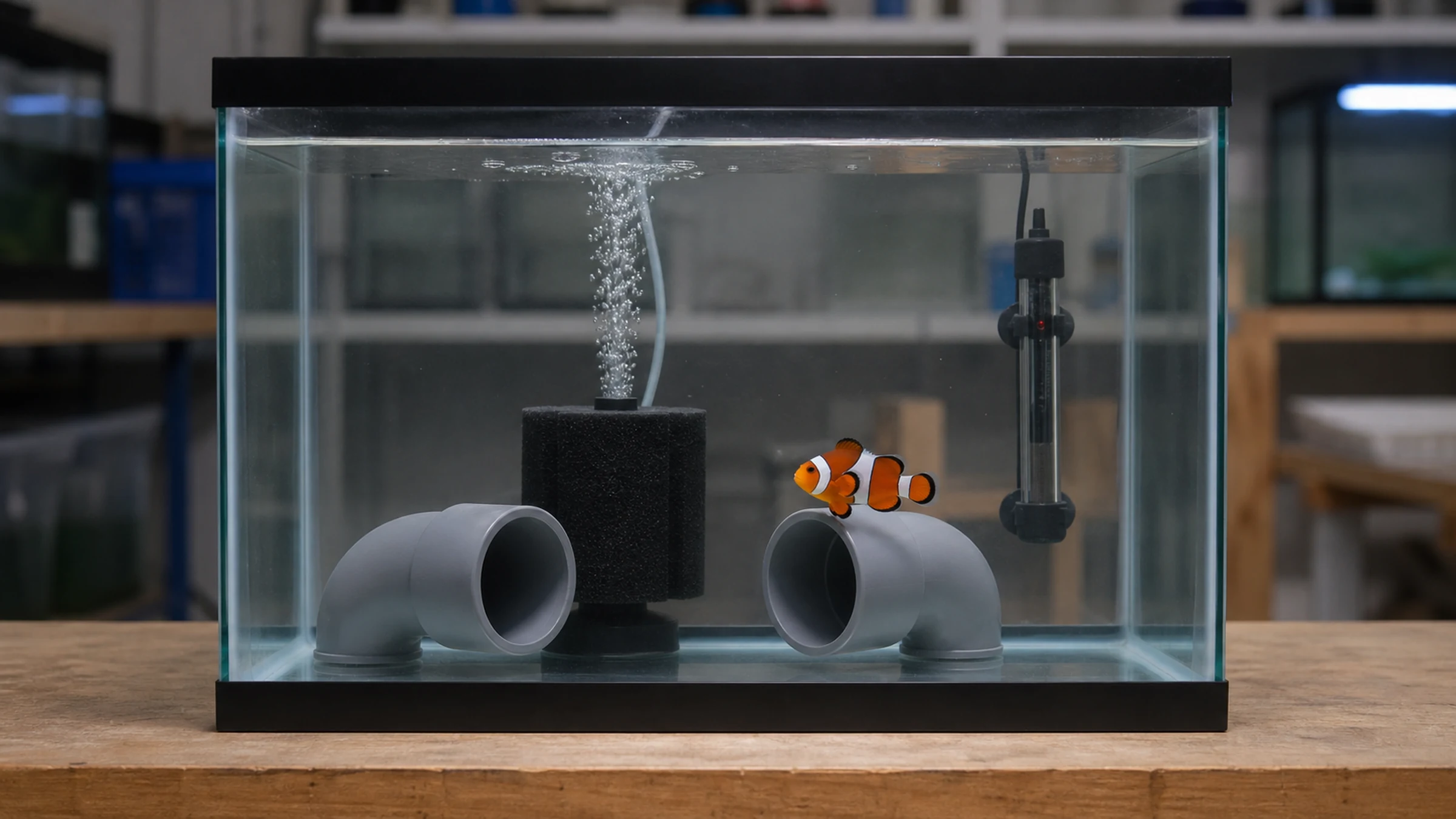
How to quarantine new saltwater fish against marine ich, velvet, and brooklynella: the QT tank, treatments, timelines, and the buy-clean shortcut.

What every reef parameter means and where to keep it: salinity, temperature, pH, alkalinity, calcium, magnesium, nitrate, and phosphate.

Choose compatible fish: school sizes, swimming zones, aggression, temperature and hardness matching, and honest bioload math for a peaceful community.
Keeping Fu Manchu Lionfish?
AquaLens identifies your fish and plants from a photo, tracks water chemistry, and flags health issues early — free on iOS and Android.