Harlequin Bass Care Guide
Serranus tigrinus · Saltwater Basslet
What Harlequin Bass look like
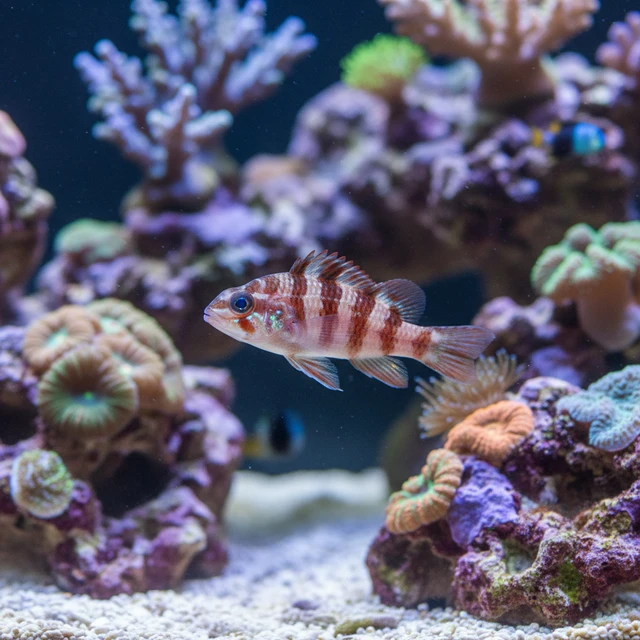
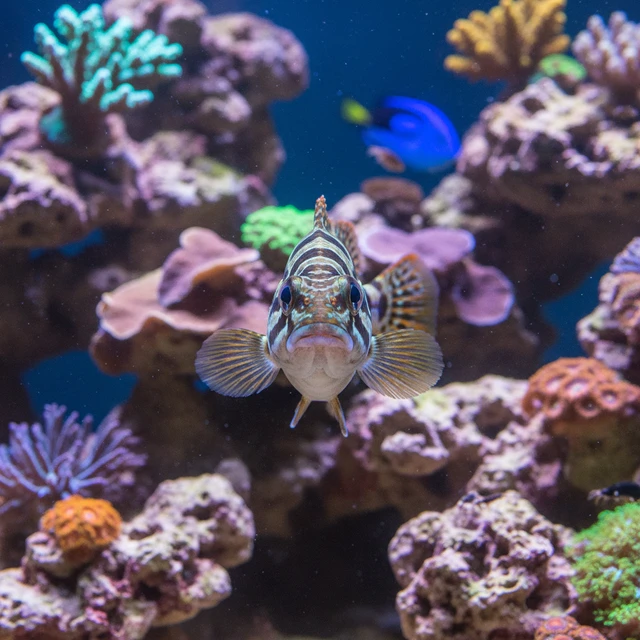
The Harlequin Bass (Serranus tigrinus) exhibits a striking coloration characterized by vibrant blue and yellow stripes that run vertically along its body, providing a stunning contrast against its dark background. This species can reach a maximum adult size of approximately 10 inches (25 cm) in length. Sexual dimorphism is subtle, with males typically displaying more intense coloration and slightly larger body size compared to females. Defensive adaptations include a robust, laterally compressed body and sharp spines on the dorsal fin, which can deter potential predators. Notably, the Harlequin Bass possesses a well-developed lateral line system that aids in detecting vibrations in the water, and its dentition comprises sharp, conical teeth adapted for grasping slippery prey.
Behavior & temperament
The Harlequin Bass is known for its territorial behavior, often establishing dominance hierarchies within its social groups. It primarily occupies the mid-water column, where it can be observed darting between crevices and overhangs in search of food. Breeding behavior includes elaborate courtship displays, where males exhibit vibrant coloration to attract females. The species is generally considered semi-aggressive, particularly towards conspecifics and other similar-sized fish, but can coexist peacefully in larger community tanks with ample hiding spots.
Diet & feeding
In the wild, the Harlequin Bass is primarily piscivorous, feeding on small fish and invertebrates. In captivity, it requires a varied diet that includes high-quality frozen or live foods such as shrimp, small fish, and other protein-rich offerings.
Behind the name
The genus name 'Serranus' is derived from the Latin word 'serra,' meaning 'saw,' referring to the serrated edges of the dorsal fin. The species name 'tigrinus' is derived from the Latin word 'tigris,' meaning 'tiger,' alluding to its striped appearance.
Plan your tank
Check the numbers before you buy: tank volume, salinity, salt mix, water changes, and your ongoing care routine. Keeping reef? Start from the Saltwater & Reef hub.
Keep reading
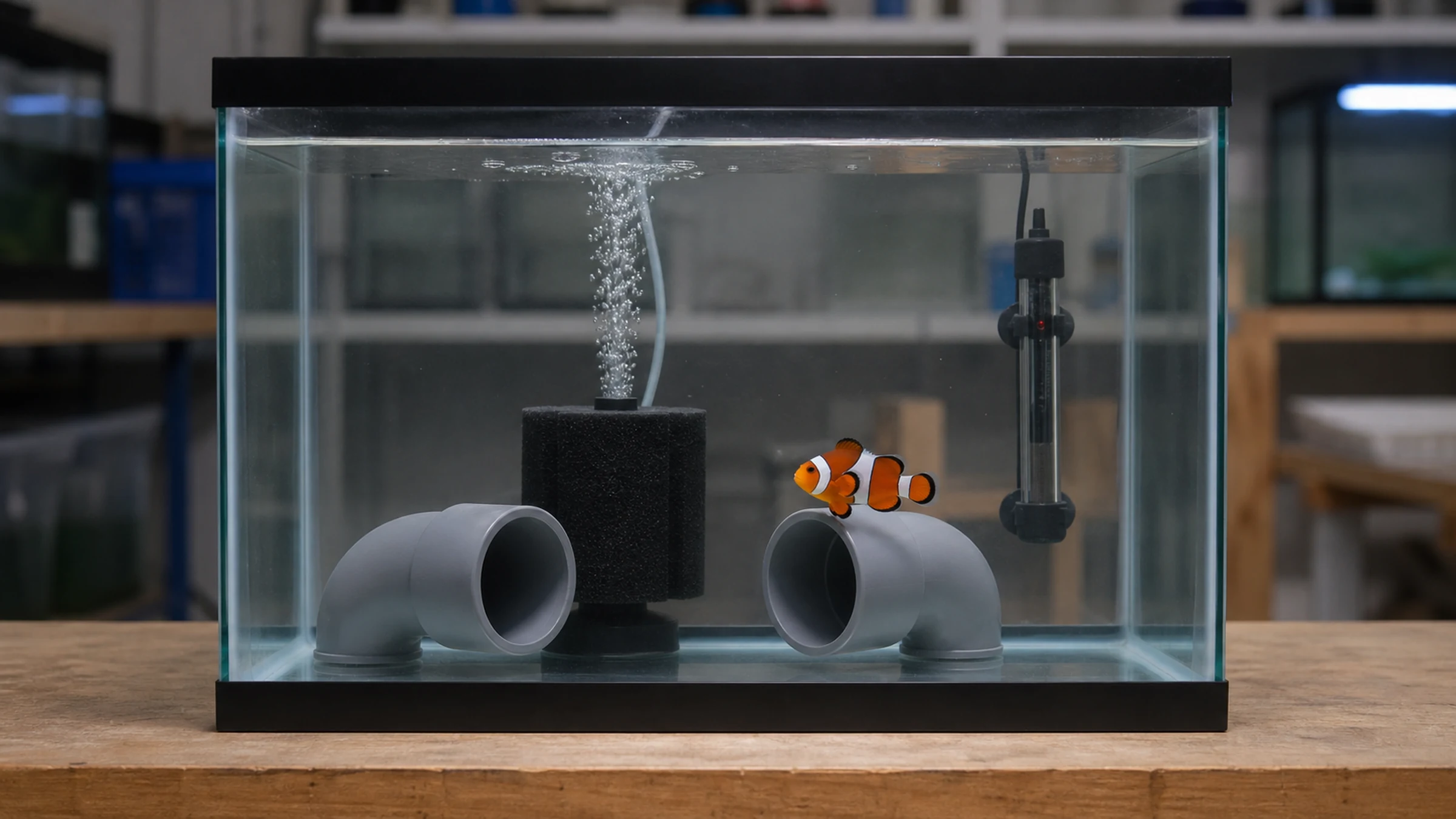
How to quarantine new saltwater fish against marine ich, velvet, and brooklynella: the QT tank, treatments, timelines, and the buy-clean shortcut.

What every reef parameter means and where to keep it: salinity, temperature, pH, alkalinity, calcium, magnesium, nitrate, and phosphate.

Choose compatible fish: school sizes, swimming zones, aggression, temperature and hardness matching, and honest bioload math for a peaceful community.
Keeping Harlequin Bass?
AquaLens identifies your fish and plants from a photo, tracks water chemistry, and flags health issues early — free on iOS and Android.