Long-Tentacle Plate Coral Care Guide
Heliofungia actiniformis · Saltwater LPS Coral
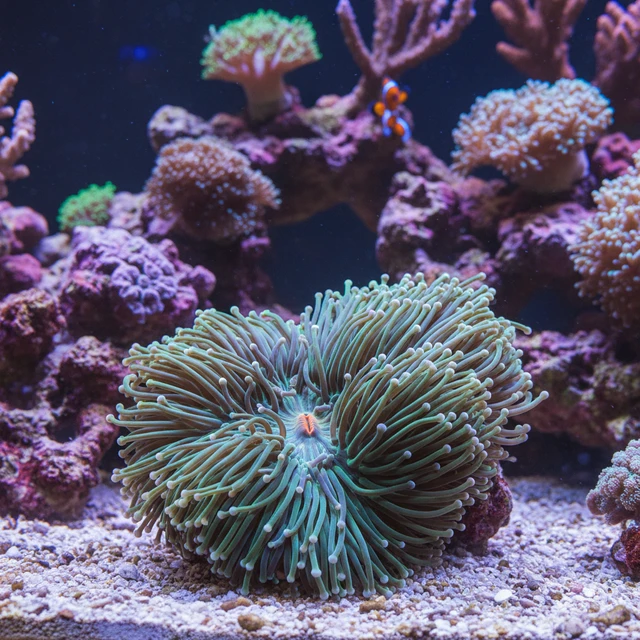
What Long-Tentacle Plate Coral look like
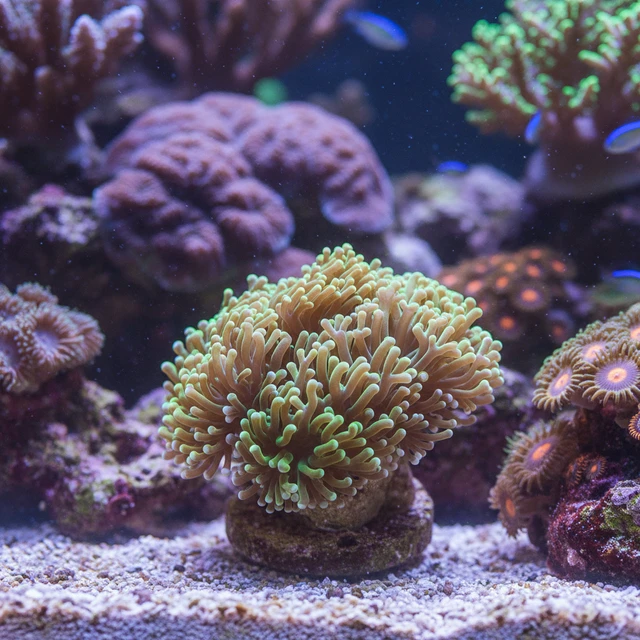
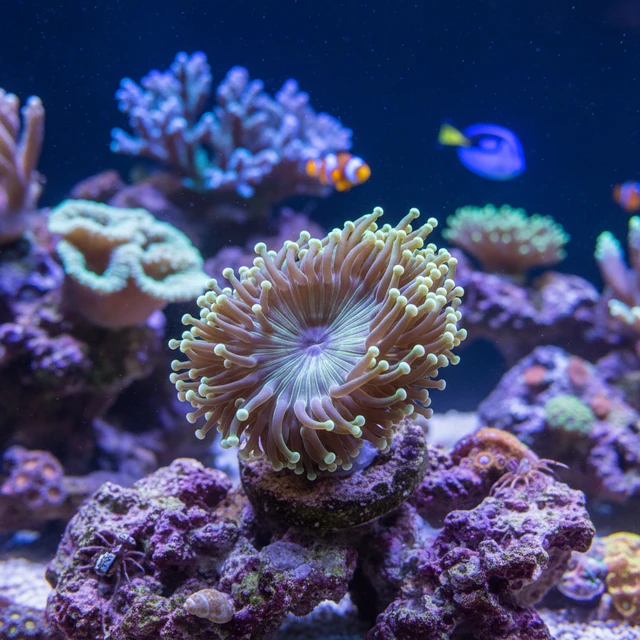
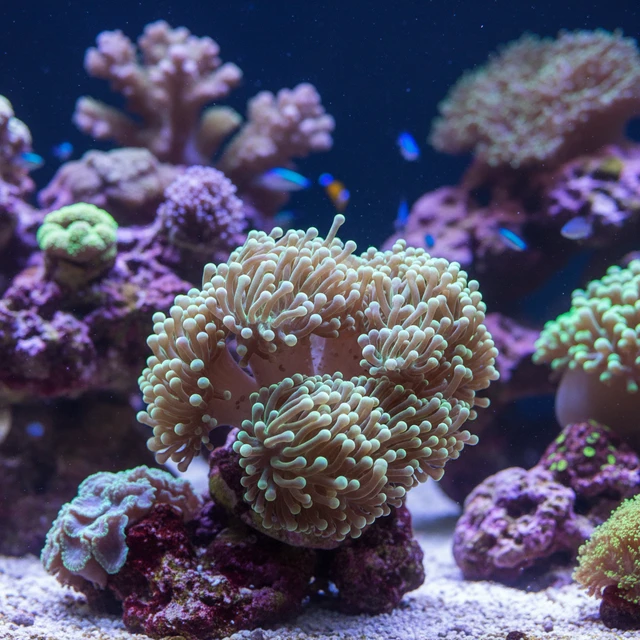
Heliofungia actiniformis, commonly known as the Long-Tentacle Plate Coral, exhibits a distinctive morphology characterized by its large, flattened, disk-like structure that can reach a maximum diameter of up to 12 inches (30 cm). The coral's surface is adorned with long, slender tentacles that can extend significantly, often exceeding the diameter of the plate itself, which aids in capturing prey. The polyps are typically brightly colored, ranging from green to brown, with a smooth, glossy texture. Unlike many other corals, H. actiniformis lacks a rigid skeleton; instead, it possesses a soft, fleshy body that allows for flexibility and movement. This species displays minimal sexual dimorphism, with both male and female polyps appearing similar. Defensive adaptations include the ability to retract its tentacles quickly when threatened and the presence of nematocysts, which can deliver a mild sting to deter potential predators.
Behavior & temperament
The Long-Tentacle Plate Coral is primarily a solitary species, often found resting on sandy substrates or among rubble in shallow reef environments. It exhibits a unique feeding behavior, extending its long tentacles during the night to capture plankton and small zooplankton, while retracting them during the day to minimize exposure to sunlight and potential predation. This coral does not engage in aggressive interactions with neighboring corals, as it tends to maintain a peaceful coexistence. Its polyp extension patterns are highly responsive to water movement and light levels, with a tendency to fully extend at night when feeding. Additionally, H. actiniformis may engage in symbiotic relationships with zooxanthellae, providing it with additional energy through photosynthesis, although it is primarily heterotrophic.
Diet & feeding
Heliofungia actiniformis is a carnivorous coral that primarily feeds on zooplankton and small fish larvae in its natural habitat. In captivity, it requires a diet of finely chopped meaty foods, such as mysis shrimp and other marine proteins, supplemented with occasional phytoplankton to support its symbiotic algae.
Behind the name
The genus name 'Heliofungia' derives from the Greek 'helios' meaning 'sun' and 'fungus' indicating its mushroom-like shape, while the species name 'actiniformis' comes from the Latin 'actinus' meaning 'ray' or 'beam', referring to the radiating tentacles.
Plan your tank
Check the numbers before you buy: tank volume, salinity, salt mix, water changes, and your ongoing care routine. Keeping reef? Start from the Saltwater & Reef hub.
Keep reading
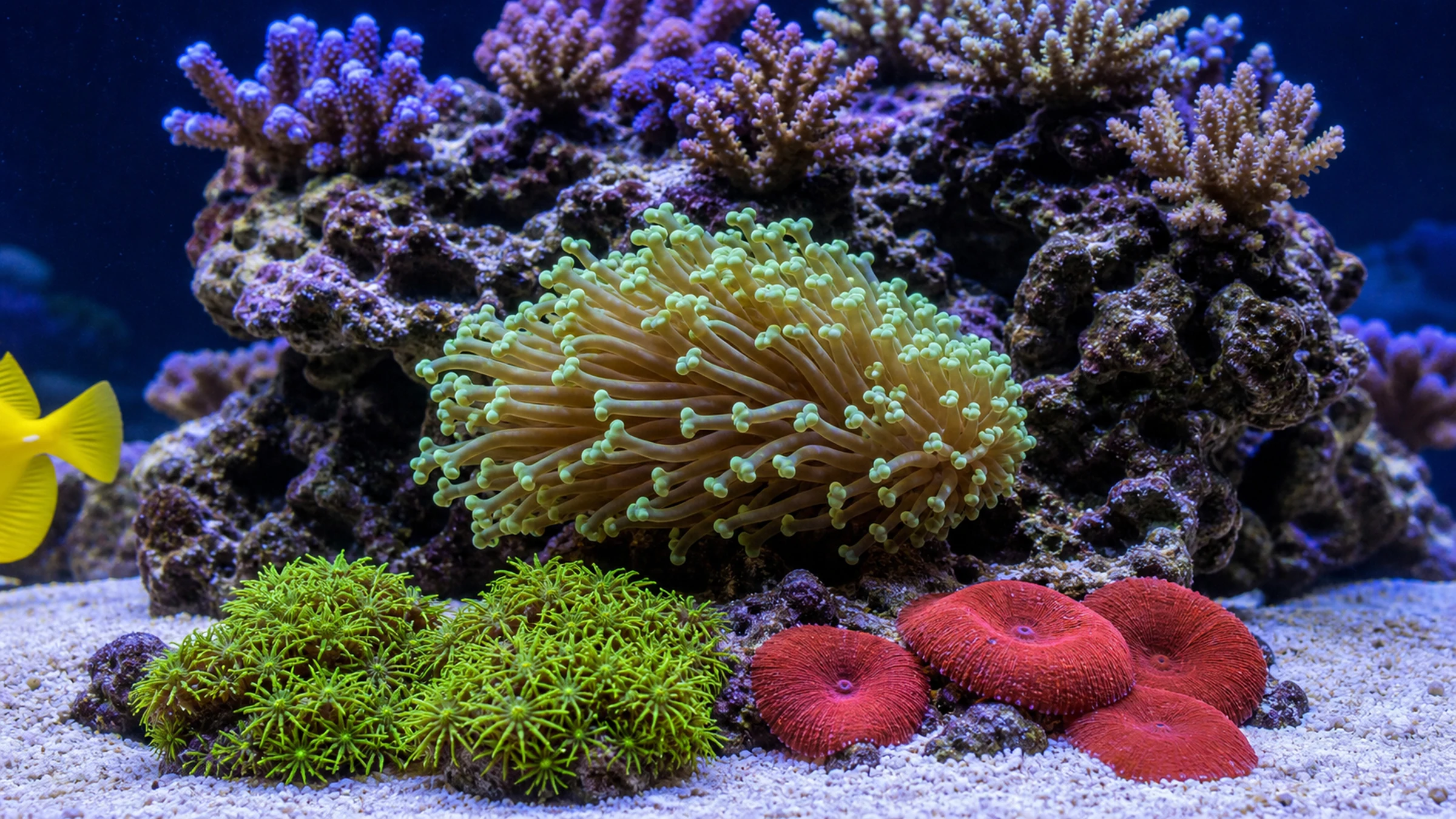
How to place corals by light and flow, PAR targets for softies, LPS, and SPS, dipping new corals for pests, and acclimating them without bleaching.

What every reef parameter means and where to keep it: salinity, temperature, pH, alkalinity, calcium, magnesium, nitrate, and phosphate.
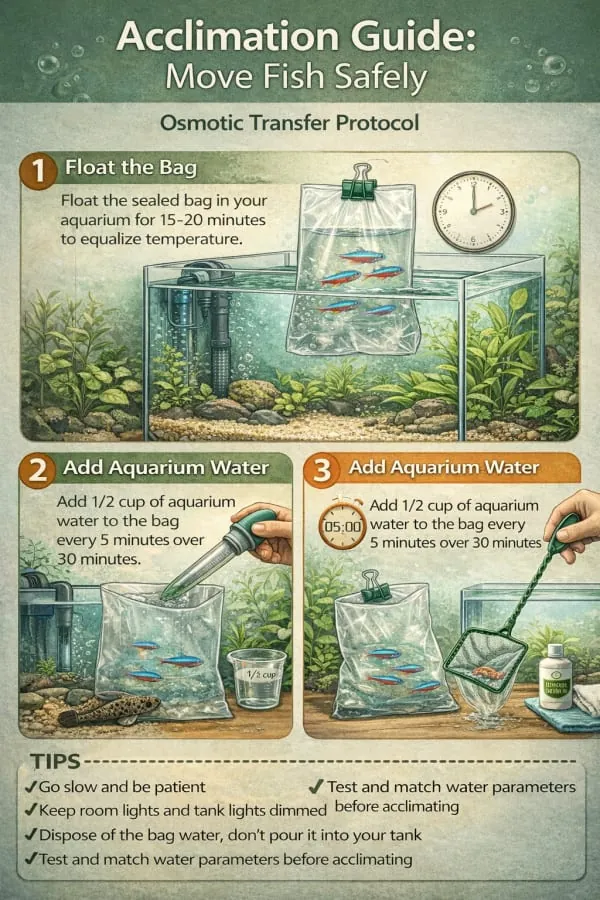
Acclimate new fish, shrimp, and coral safely: temperature floating, drip acclimation, plop-and-drop for shipped livestock, and the first 24 hours.
Keeping Long-Tentacle Plate Coral?
AquaLens identifies your fish and plants from a photo, tracks water chemistry, and flags health issues early — free on iOS and Android.