Maroon Clownfish Care Guide
Amphiprion biaculeatus · Saltwater Clownfish
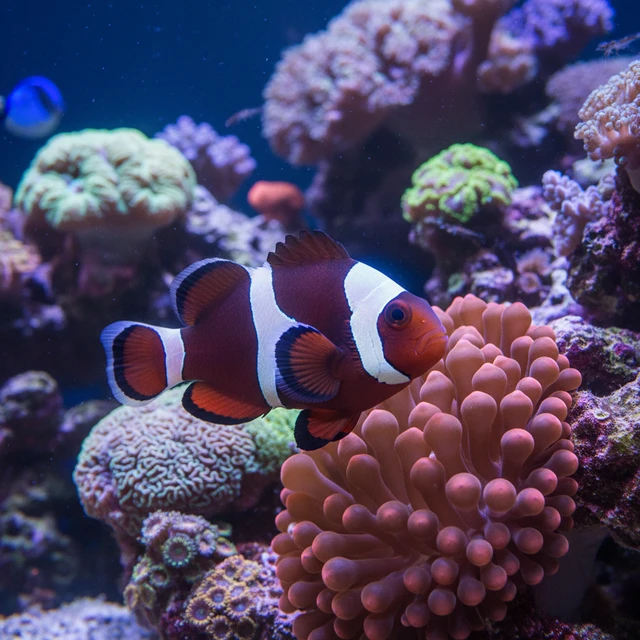
What Maroon Clownfish look like
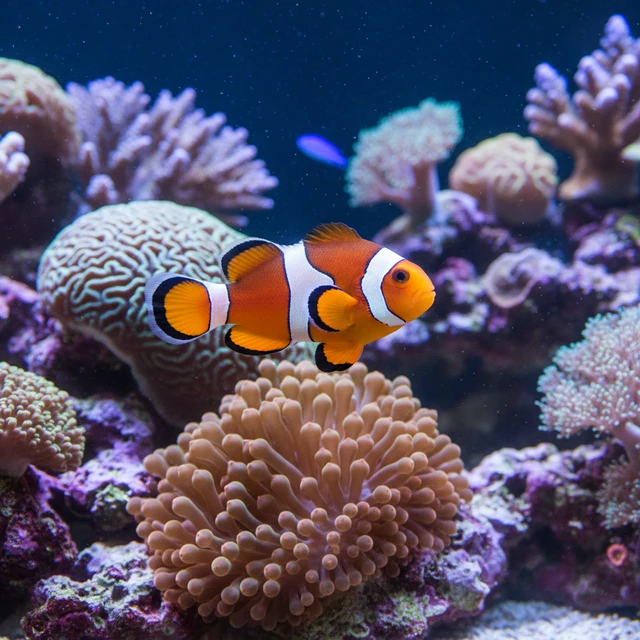
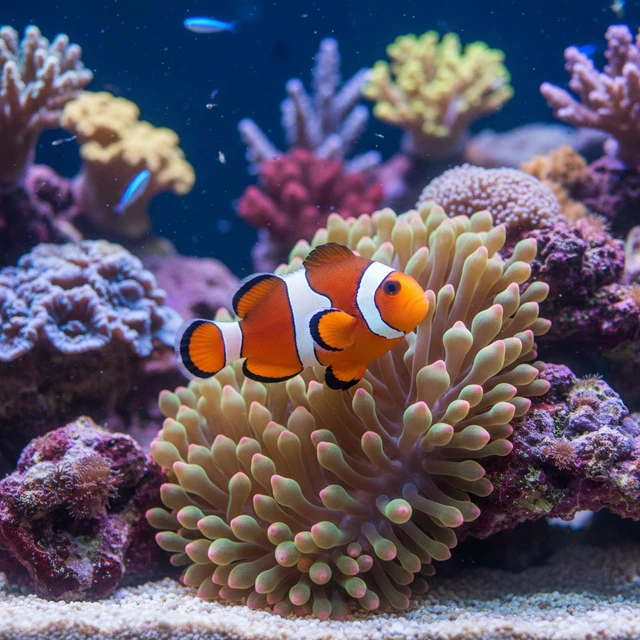
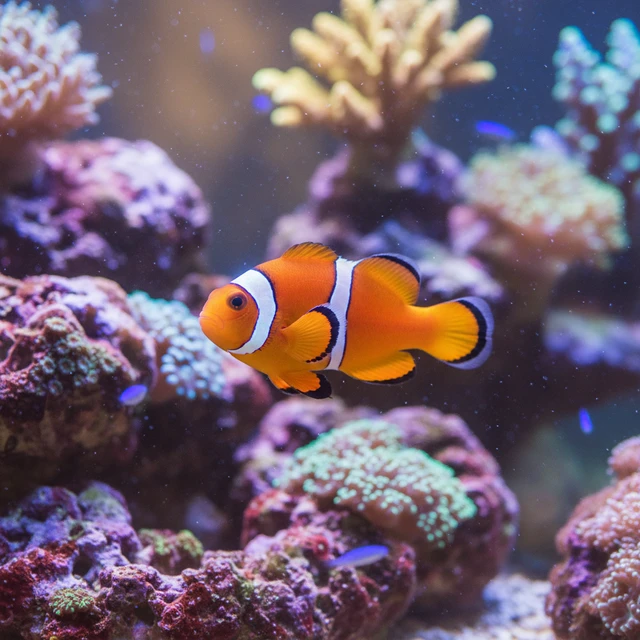
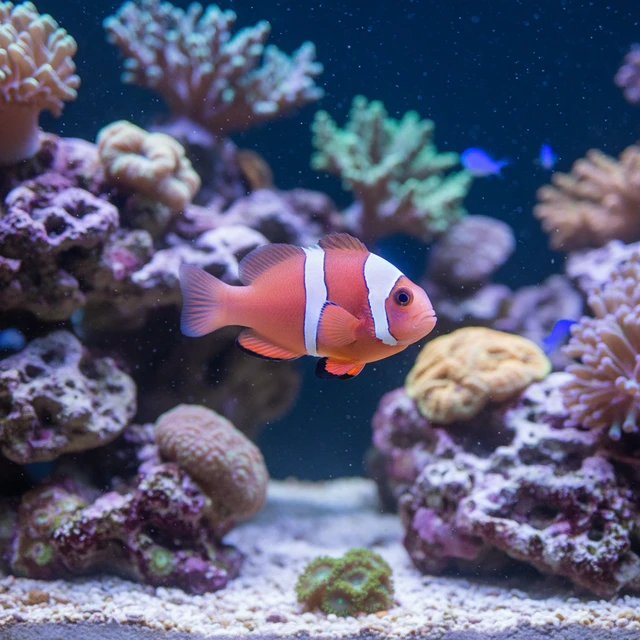
Amphiprion biaculeatus, commonly known as the Maroon Clownfish, exhibits a robust and laterally compressed body structure, reaching a maximum adult size of approximately 5 to 6 inches (12 to 15 cm). This species is characterized by its striking coloration, typically displaying a deep maroon hue with three distinct white bands outlined in black, which are more pronounced in females. Sexual dimorphism is evident, as females are generally larger and more dominant than males. Defensive adaptations include the presence of a mucus layer that allows them to coexist with their host anemones, reducing the risk of stinging. Unique morphological features include a pronounced dorsal fin with a high number of spines, and a well-developed lateral line system that aids in detecting water movements and vibrations.
Behavior & temperament
Maroon Clownfish are known for their highly social behavior, often forming monogamous pairs within a defined territory, typically around a host anemone. They exhibit a clear social hierarchy, with the dominant female leading the group and the male exhibiting courtship behaviors such as nipping and dancing. Their breeding behavior is marked by the female laying eggs on a flat surface near the anemone, which the male subsequently guards and aerates. In terms of temperament, they can be aggressive towards intruders, especially during breeding periods, and may exhibit territoriality against other fish species.
Diet & feeding
In the wild, Maroon Clownfish primarily feed on zooplankton, small crustaceans, and algae. In captivity, they thrive on a varied diet that includes high-quality pellets, frozen or live foods such as brine shrimp and mysis shrimp, and occasional vegetable matter.
Behind the name
The scientific name 'Amphiprion biaculeatus' derives from the Greek words 'amphi' meaning 'on both sides' and 'prion' meaning 'saw', referring to the serrated edges of the dorsal fin spines, and 'biaculeatus' from Latin meaning 'two spines', indicating the two prominent spines found on the fish.
Plan your tank
Check the numbers before you buy: tank volume, salinity, salt mix, water changes, and your ongoing care routine. Keeping reef? Start from the Saltwater & Reef hub.
Keep reading
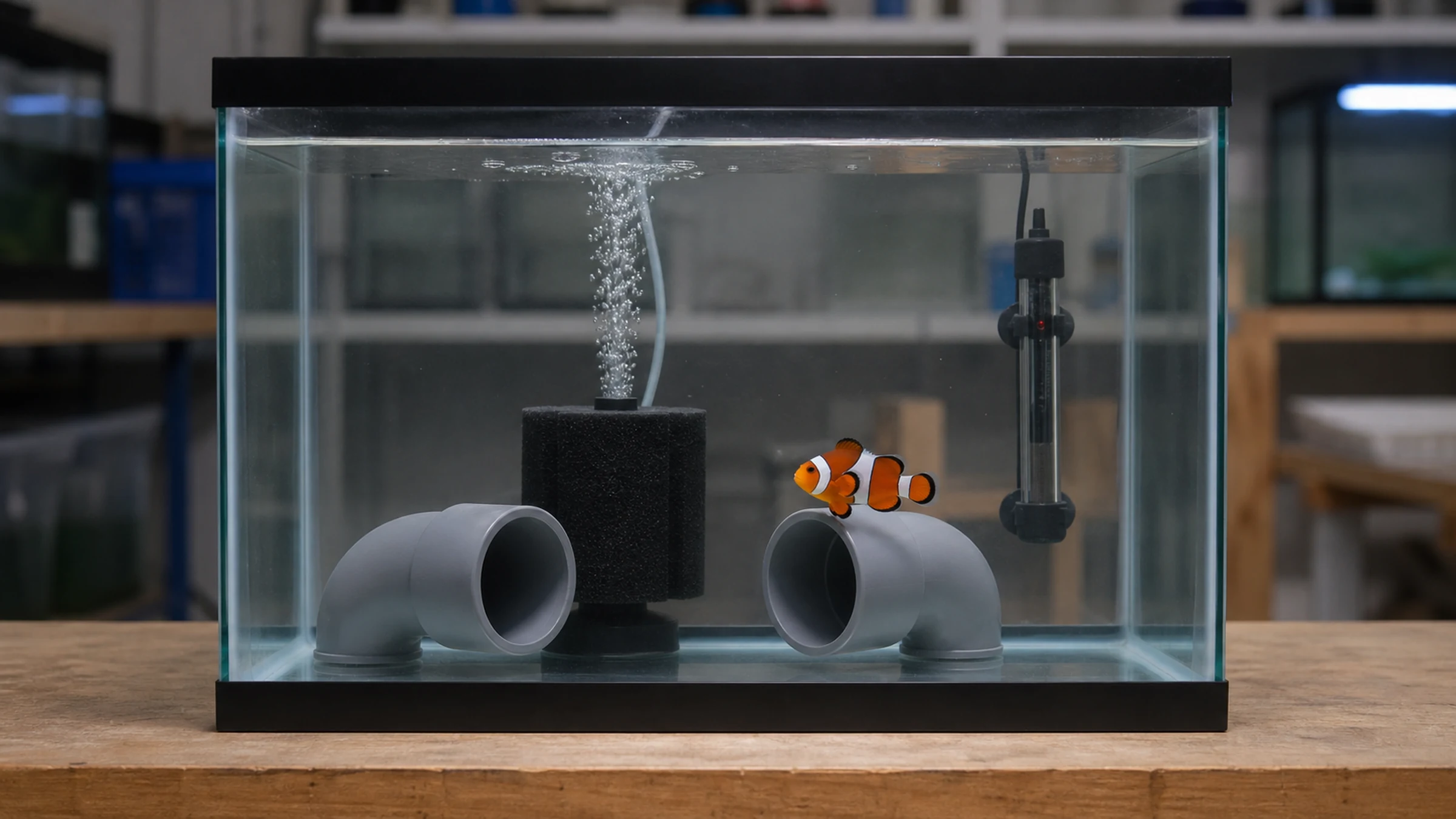
How to quarantine new saltwater fish against marine ich, velvet, and brooklynella: the QT tank, treatments, timelines, and the buy-clean shortcut.

What every reef parameter means and where to keep it: salinity, temperature, pH, alkalinity, calcium, magnesium, nitrate, and phosphate.

Choose compatible fish: school sizes, swimming zones, aggression, temperature and hardness matching, and honest bioload math for a peaceful community.
Keeping Maroon Clownfish?
AquaLens identifies your fish and plants from a photo, tracks water chemistry, and flags health issues early — free on iOS and Android.