
Moorish Idol Care Guide
Zanclus cornutus · Saltwater Idol
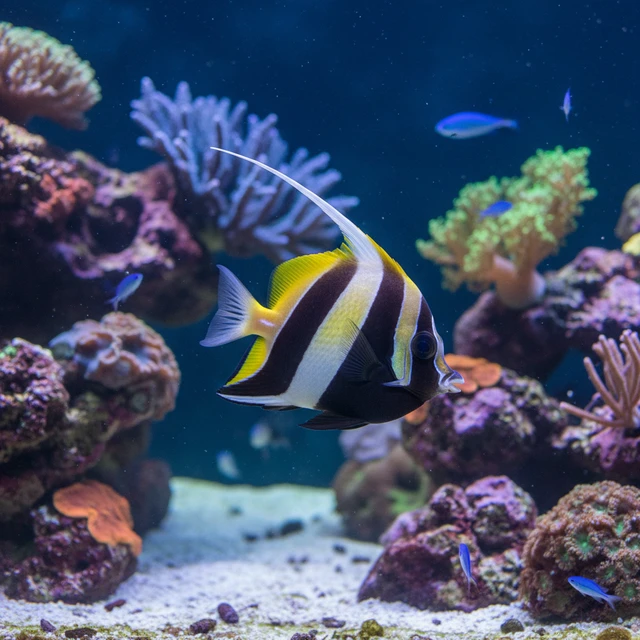
What Moorish Idol look like
The Moorish Idol (Zanclus cornutus) exhibits a strikingly elongated, laterally compressed body that can reach a maximum adult size of approximately 9 inches (23 cm). Its distinctive coloration features a vibrant yellow body adorned with bold black vertical stripes and a prominent white dorsal fin that extends into a long filament, giving it a unique silhouette. Sexual dimorphism is subtle, with males typically displaying slightly larger dorsal fins. Defensive adaptations include the ability to swim rapidly and maneuver deftly among reef structures, as well as the presence of sharp spines on the dorsal fin that can deter potential predators. Notably, the Moorish Idol possesses a unique lateral line system that aids in detecting water movements, enhancing its ability to navigate its environment.
Behavior & temperament
Moorish Idols are known for their social behavior, often forming small groups or pairs within their natural habitat. They are primarily found in the mid-water column of coral reefs and exhibit a relatively peaceful temperament, although they can become territorial during breeding periods. Breeding behavior involves elaborate courtship displays, where males will perform acrobatic swims to attract females. Their feeding behavior is primarily focused on grazing on algae and small invertebrates, and they exhibit a tendency to hover in one area while foraging, using their elongated snouts to reach food sources.
Diet & feeding
In the wild, Moorish Idols are primarily herbivorous, feeding on a diet of algae, coral polyps, and small invertebrates. In captivity, they require a varied diet that includes high-quality marine flakes, spirulina, and frozen or live foods such as brine shrimp and mysis shrimp.
Behind the name
The genus name 'Zanclus' is derived from the Greek word 'zanklos,' meaning 'bent' or 'curved,' referring to the fish's distinctive body shape. The species name 'cornutus' comes from the Latin word 'cornu,' meaning 'horned,' which describes the prominent dorsal fin extension.
Plan your tank
Check the numbers before you buy: tank volume, salinity, salt mix, water changes, and your ongoing care routine. Keeping reef? Start from the Saltwater & Reef hub.
Keep reading
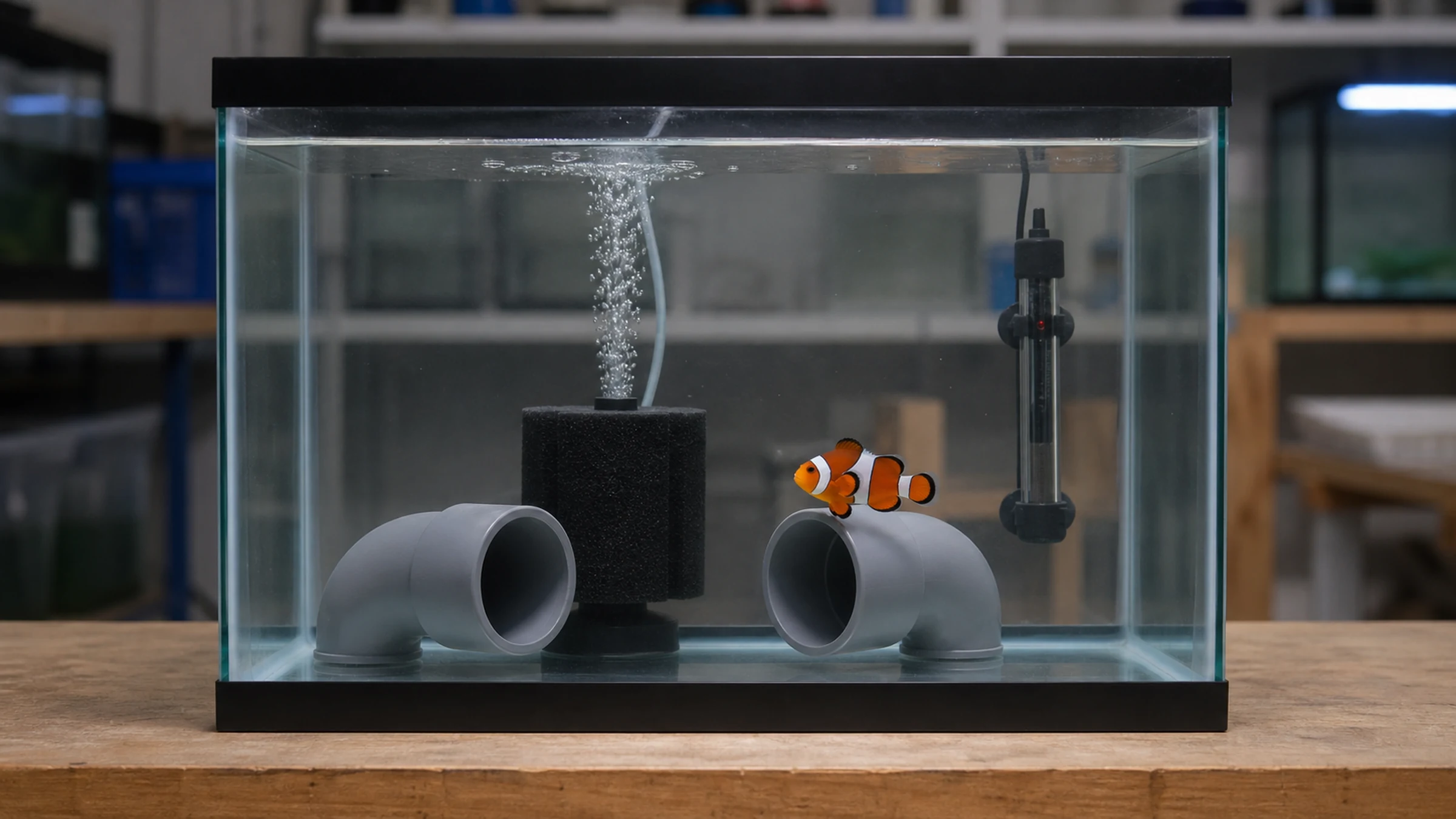
How to quarantine new saltwater fish against marine ich, velvet, and brooklynella: the QT tank, treatments, timelines, and the buy-clean shortcut.

What every reef parameter means and where to keep it: salinity, temperature, pH, alkalinity, calcium, magnesium, nitrate, and phosphate.
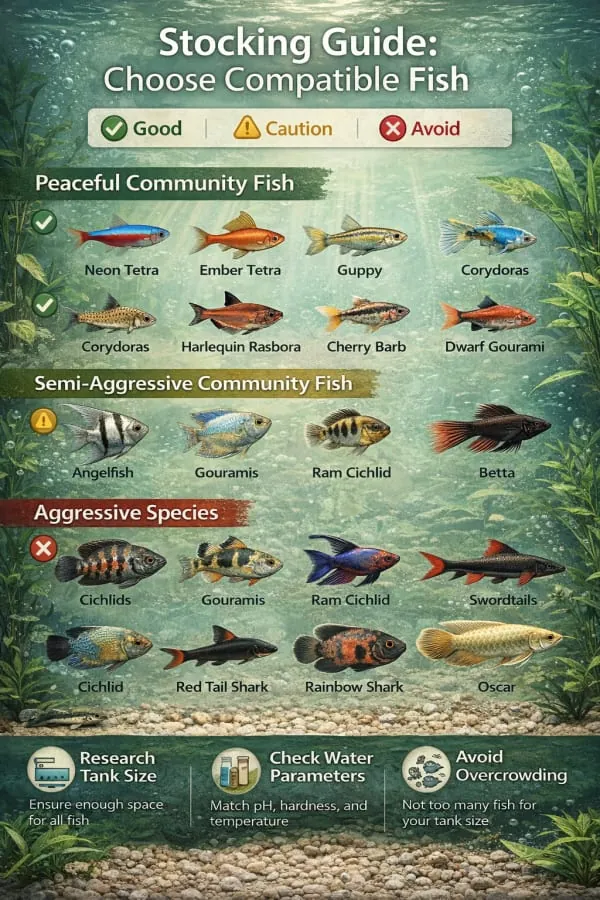
Choose compatible fish: school sizes, swimming zones, aggression, temperature and hardness matching, and honest bioload math for a peaceful community.
Keeping Moorish Idol?
AquaLens identifies your fish and plants from a photo, tracks water chemistry, and flags health issues early — free on iOS and Android.