
Mycedium Elephant Ear Care Guide
Mycedium elephantotus · Saltwater LPS Coral
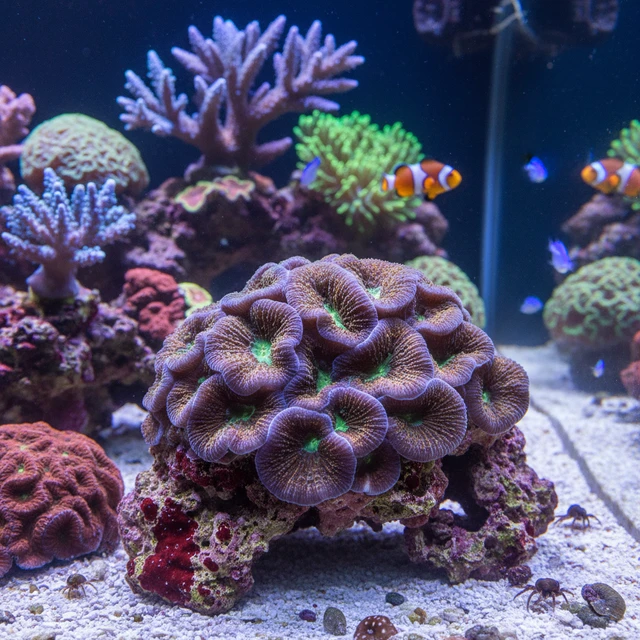
What Mycedium Elephant Ear look like
Mycedium elephantotus, commonly known as the Elephant Ear Coral, exhibits a robust and unique morphology characterized by its large, flattened, and lobed structure. This species can reach a maximum diameter of approximately 30 centimeters (12 inches) in optimal conditions. The coral features a prominent skeletal structure with thick, fleshy polyps that can extend significantly during the night for feeding, displaying a vibrant array of colors ranging from green to brown, often with contrasting highlights. The polyps possess a distinctive arrangement of tentacles that can retract into the coral body, showcasing their defensive adaptations against predation. Notably, the coral exhibits a unique surface texture, which can resemble the wrinkled surface of an elephant's skin, hence its common name. The presence of a well-defined calcareous skeleton provides structural integrity, while the lateral lines along the polyps aid in sensing environmental changes.
Behavior & temperament
Mycedium elephantotus is primarily a solitary coral species, although it can form small colonies under favorable conditions. It exhibits a relatively slow growth rate and is known for its ability to extend its polyps during the night to capture plankton and other particulate matter from the water column. This species engages in a symbiotic relationship with zooxanthellae, which provide essential nutrients through photosynthesis during the day. The coral's feeding behavior is characterized by its ability to utilize both autotrophic and heterotrophic mechanisms, allowing it to thrive in various reef environments. While generally peaceful, it can exhibit aggressive tendencies towards neighboring corals through the use of sweeper tentacles, which can deliver mild stings to competitors.
Diet & feeding
Mycedium elephantotus is primarily a heterotrophic feeder, capturing zooplankton and organic detritus from the water column. In captivity, it thrives on a diet of finely chopped meaty foods, such as mysis shrimp and brine shrimp, along with regular feedings of phytoplankton and coral-specific foods.
Behind the name
The scientific name 'Mycedium elephantotus' derives from the Greek word 'mykes,' meaning 'fungus,' and 'elephantotus,' which is a combination of 'elephant' and the Greek suffix '-otus,' referring to the coral's resemblance to the skin of an elephant.
Plan your tank
Check the numbers before you buy: tank volume, salinity, salt mix, water changes, and your ongoing care routine. Keeping reef? Start from the Saltwater & Reef hub.
Keep reading
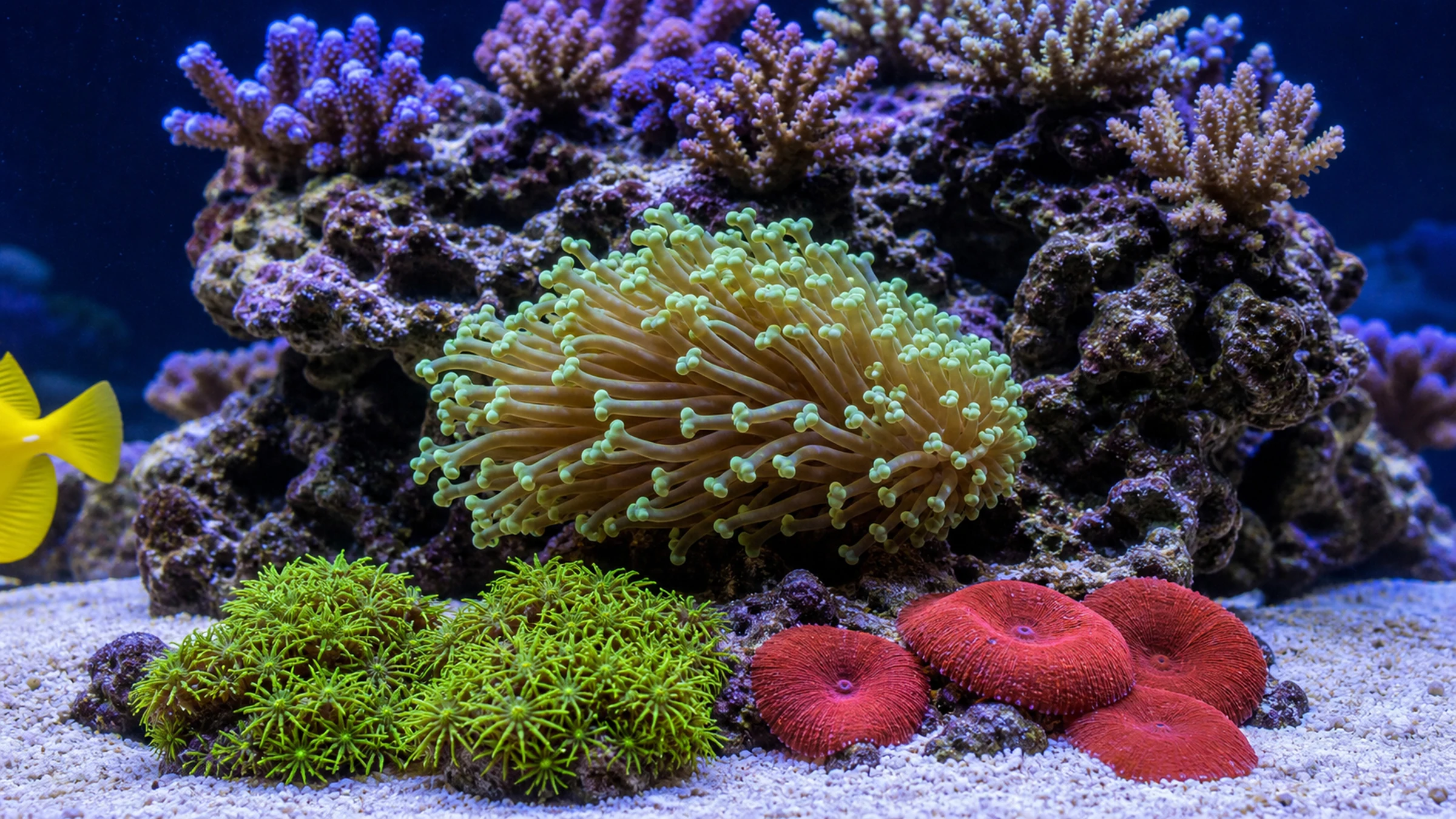
How to place corals by light and flow, PAR targets for softies, LPS, and SPS, dipping new corals for pests, and acclimating them without bleaching.

What every reef parameter means and where to keep it: salinity, temperature, pH, alkalinity, calcium, magnesium, nitrate, and phosphate.

Acclimate new fish, shrimp, and coral safely: temperature floating, drip acclimation, plop-and-drop for shipped livestock, and the first 24 hours.
Keeping Mycedium Elephant Ear?
AquaLens identifies your fish and plants from a photo, tracks water chemistry, and flags health issues early — free on iOS and Android.