Neon Dottyback Care Guide
Pseudochromis aldabraensis · Saltwater Dottyback
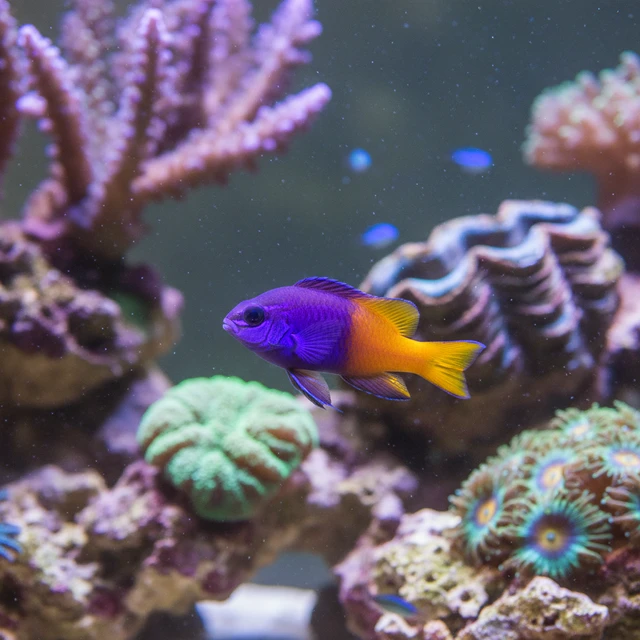
What Neon Dottyback look like
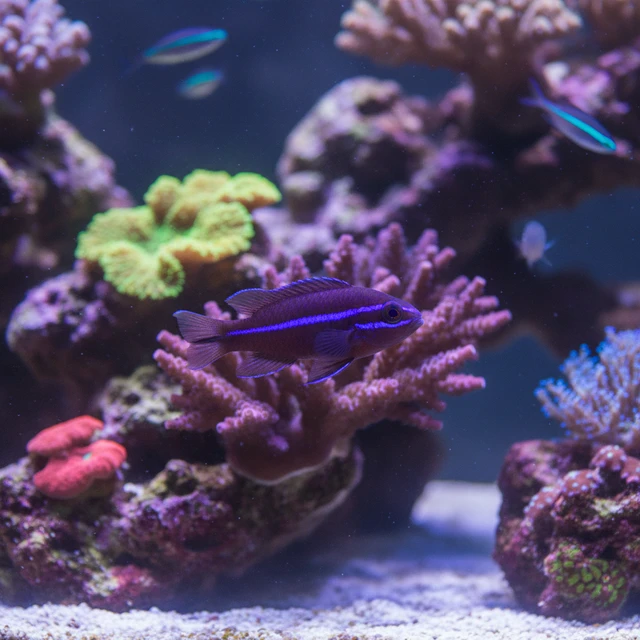
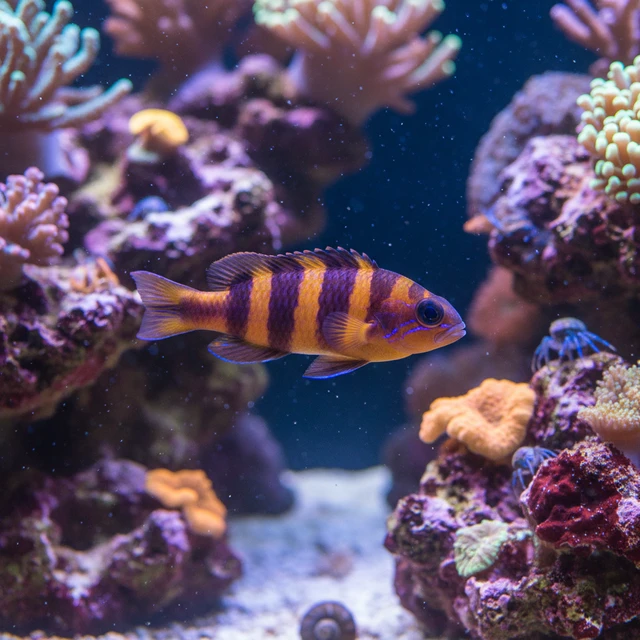
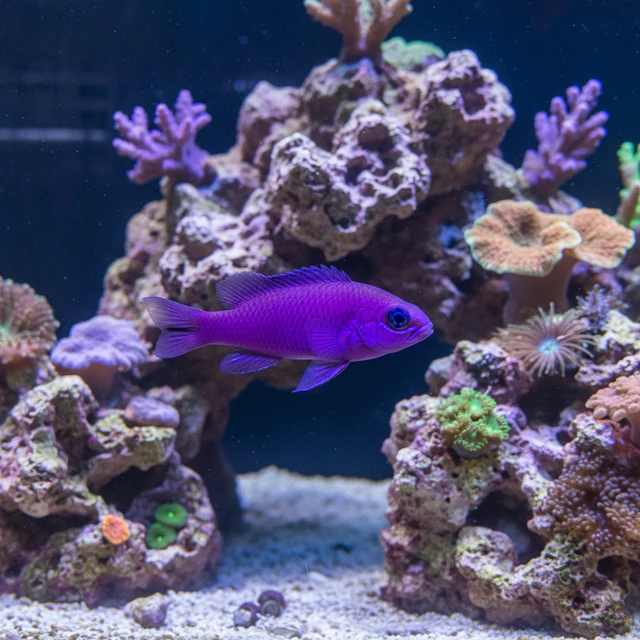
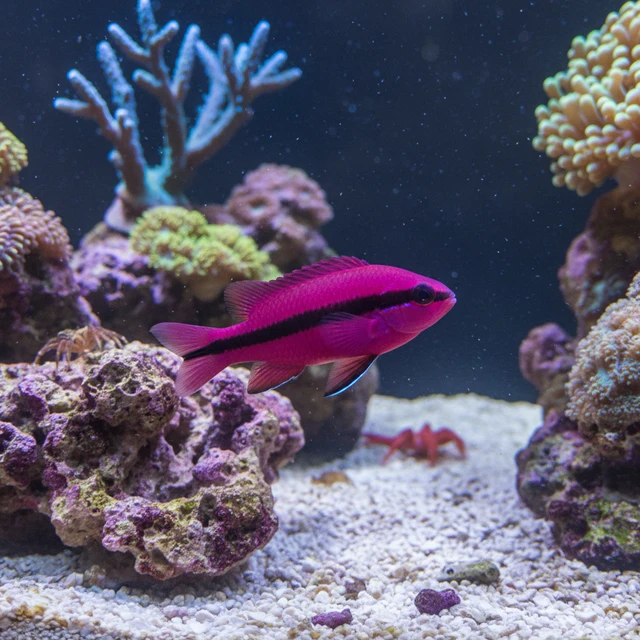
The Neon Dottyback (Pseudochromis aldabraensis) exhibits a vibrant coloration characterized by a striking combination of electric blue and yellow hues, particularly pronounced in males. Adults can reach a maximum size of approximately 3 inches (7.5 cm) in standard length. Sexual dimorphism is evident, with males displaying more intense coloration and a more elongated body shape compared to the relatively subdued and stockier females. This species possesses a robust, laterally compressed body, complemented by a pointed snout and a terminal mouth adapted for feeding on small prey. Notable defensive adaptations include a set of sharp, spiny dorsal fin rays that can be erected when threatened, providing a deterrent to potential predators. The lateral line system is well-developed, aiding in the detection of water movements and vibrations in their environment.
Behavior & temperament
Neon Dottybacks are generally territorial and exhibit a hierarchical social structure, often establishing dominance over a defined area within the reef. They are primarily found in the mid-water column, frequently darting between crevices and coral formations. Breeding behavior involves the male establishing a territory and performing courtship displays to attract females, which may include color changes and fin displays. Their temperament can be described as moderately aggressive, particularly towards other dottybacks and similar-sized fish, making it essential to provide ample hiding spaces in a community tank to mitigate aggression.
Diet & feeding
In the wild, Neon Dottybacks primarily consume small zooplankton and tiny invertebrates. In captivity, they thrive on a varied diet that includes high-quality frozen or live foods such as brine shrimp, mysis shrimp, and finely chopped marine flesh, supplemented with high-quality pellets.
Behind the name
The genus name 'Pseudochromis' is derived from the Greek words 'pseudo,' meaning false, and 'chroma,' meaning color, indicating a resemblance to other colorful fish. The species name 'aldabraensis' refers to Aldabra Atoll, where this species was first described.
Plan your tank
Check the numbers before you buy: tank volume, salinity, salt mix, water changes, and your ongoing care routine. Keeping reef? Start from the Saltwater & Reef hub.
Keep reading
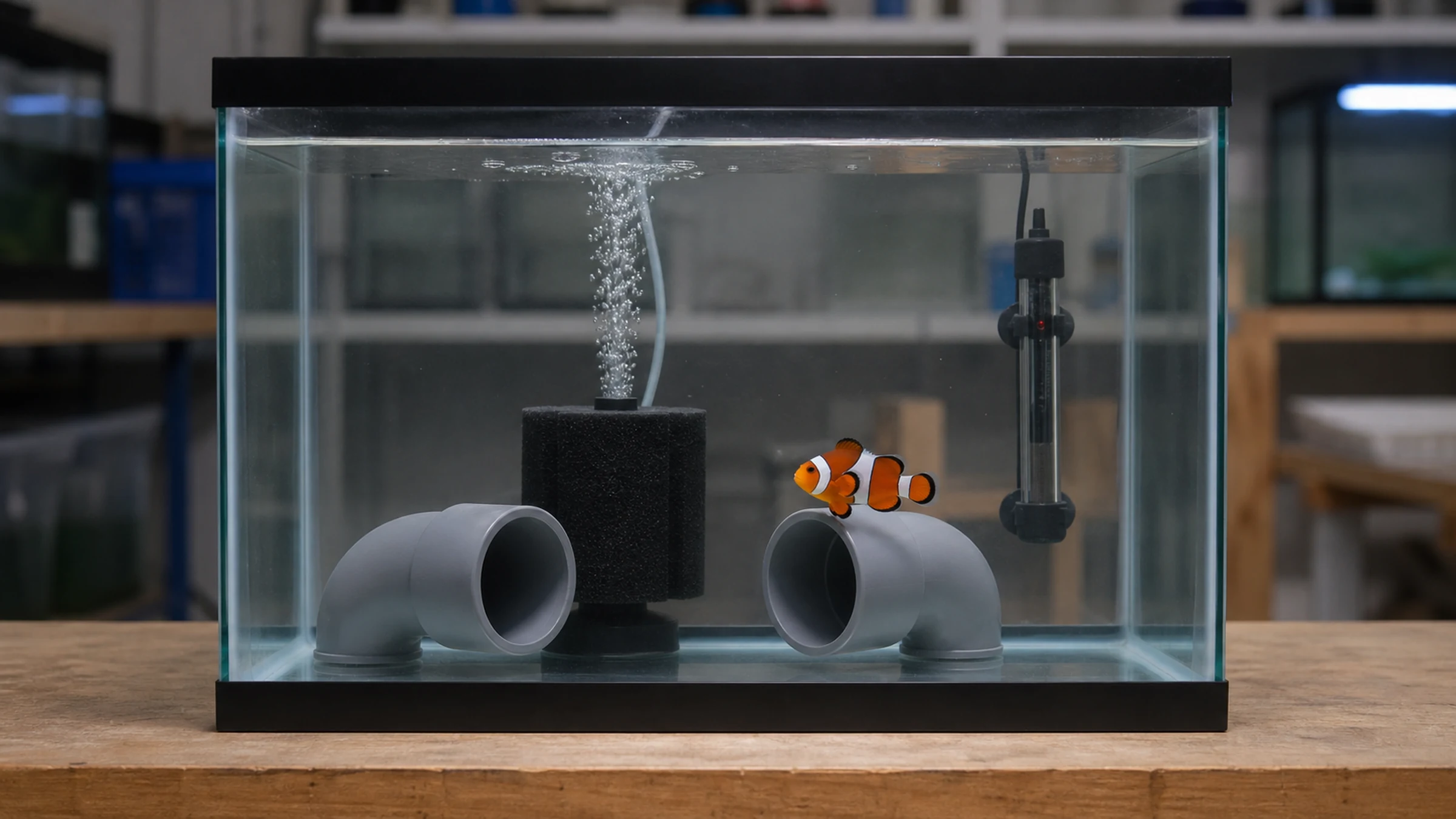
How to quarantine new saltwater fish against marine ich, velvet, and brooklynella: the QT tank, treatments, timelines, and the buy-clean shortcut.

What every reef parameter means and where to keep it: salinity, temperature, pH, alkalinity, calcium, magnesium, nitrate, and phosphate.
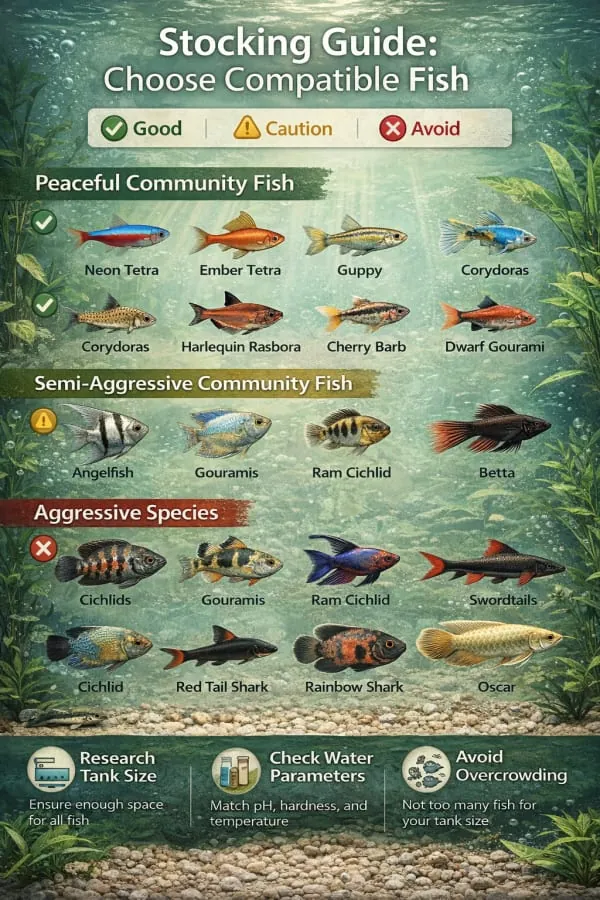
Choose compatible fish: school sizes, swimming zones, aggression, temperature and hardness matching, and honest bioload math for a peaceful community.
Keeping Neon Dottyback?
AquaLens identifies your fish and plants from a photo, tracks water chemistry, and flags health issues early — free on iOS and Android.