Pajama Cardinalfish Care Guide
Sphaeramia nematoptera · Saltwater Cardinalfish
What Pajama Cardinalfish look like
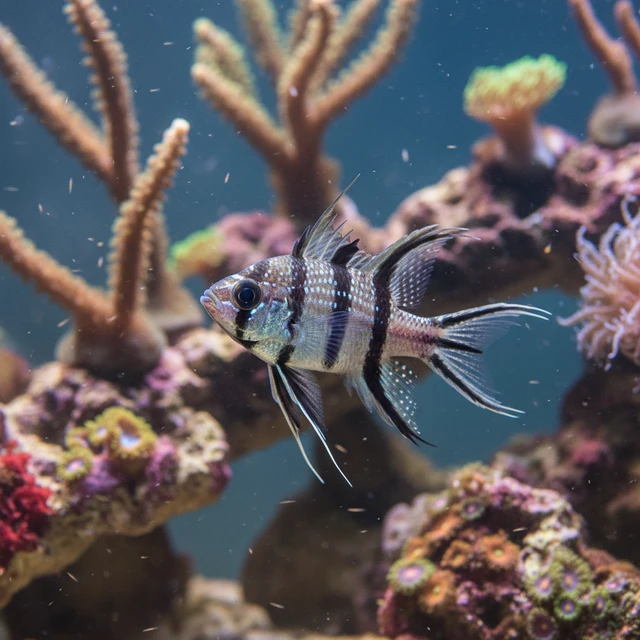
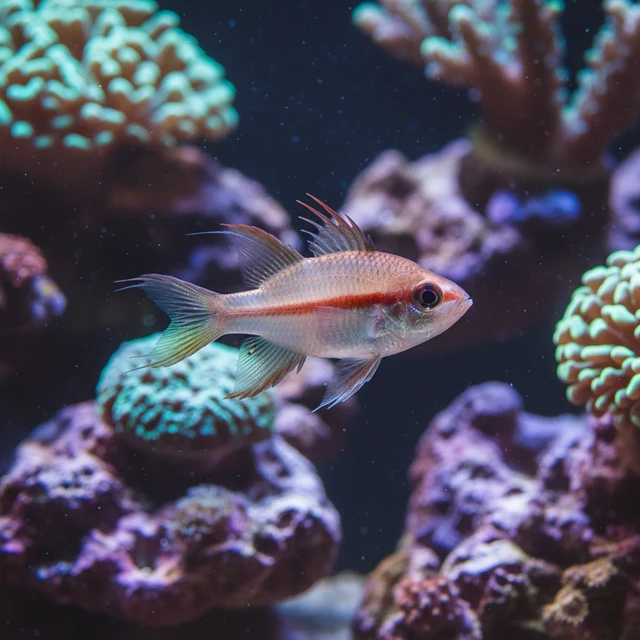
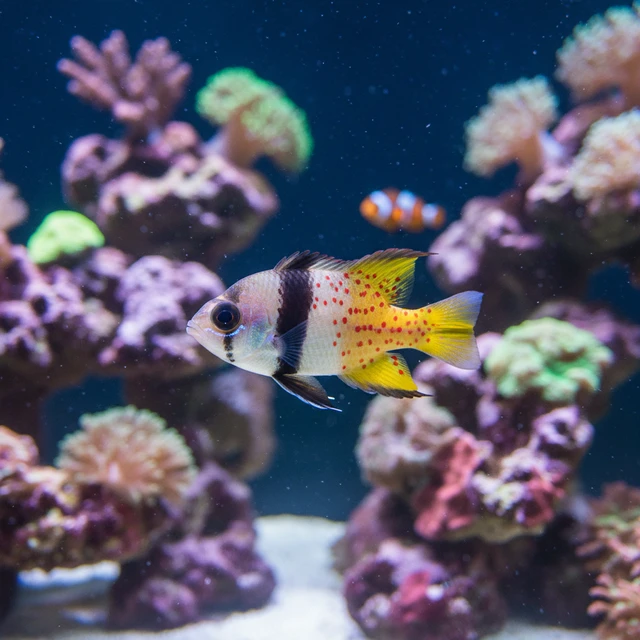
The Pajama Cardinalfish, Sphaeramia nematoptera, exhibits a distinctive body shape characterized by a laterally compressed, elongated form that can reach a maximum adult size of approximately 3 inches (7.5 cm). Its coloration is notable, featuring a pale, silvery body adorned with five prominent dark vertical bars that provide effective camouflage among the coral structures of its habitat. Sexual dimorphism is subtle, with males typically exhibiting slightly more vivid coloration and larger dorsal fins than females. Defensive adaptations include the ability to retreat into crevices or among coral branches when threatened. Unique morphological features include a well-developed lateral line system that aids in detecting vibrations in the water, and a small, terminal mouth equipped with fine, conical teeth that facilitate the capture of small prey.
Behavior & temperament
Pajama Cardinalfish are generally social and are often found in small groups, displaying a loose social hierarchy. They inhabit the mid-water column, frequently hovering near coral reefs and rocky outcrops. Breeding behavior involves the male guarding the eggs, which are laid in a safe location among the substrate or coral. Their temperament is typically peaceful, making them suitable for community tanks; however, they can exhibit territorial behavior during breeding periods. They are known to be nocturnal, often becoming more active during twilight hours, which influences their feeding and social interactions.
Diet & feeding
In the wild, Pajama Cardinalfish primarily feed on zooplankton and small crustaceans. In captivity, they thrive on a varied diet that includes high-quality flake foods, frozen or live brine shrimp, and other small meaty foods.
Behind the name
The genus name 'Sphaeramia' is derived from the Greek word 'sphaira', meaning 'sphere', likely referring to the rounded body shape, while 'nematoptera' comes from the Greek 'nema' meaning 'thread' and 'pteron' meaning 'wing', possibly alluding to the elongated fin structures.
Plan your tank
Check the numbers before you buy: tank volume, salinity, salt mix, water changes, and your ongoing care routine. Keeping reef? Start from the Saltwater & Reef hub.
Keep reading
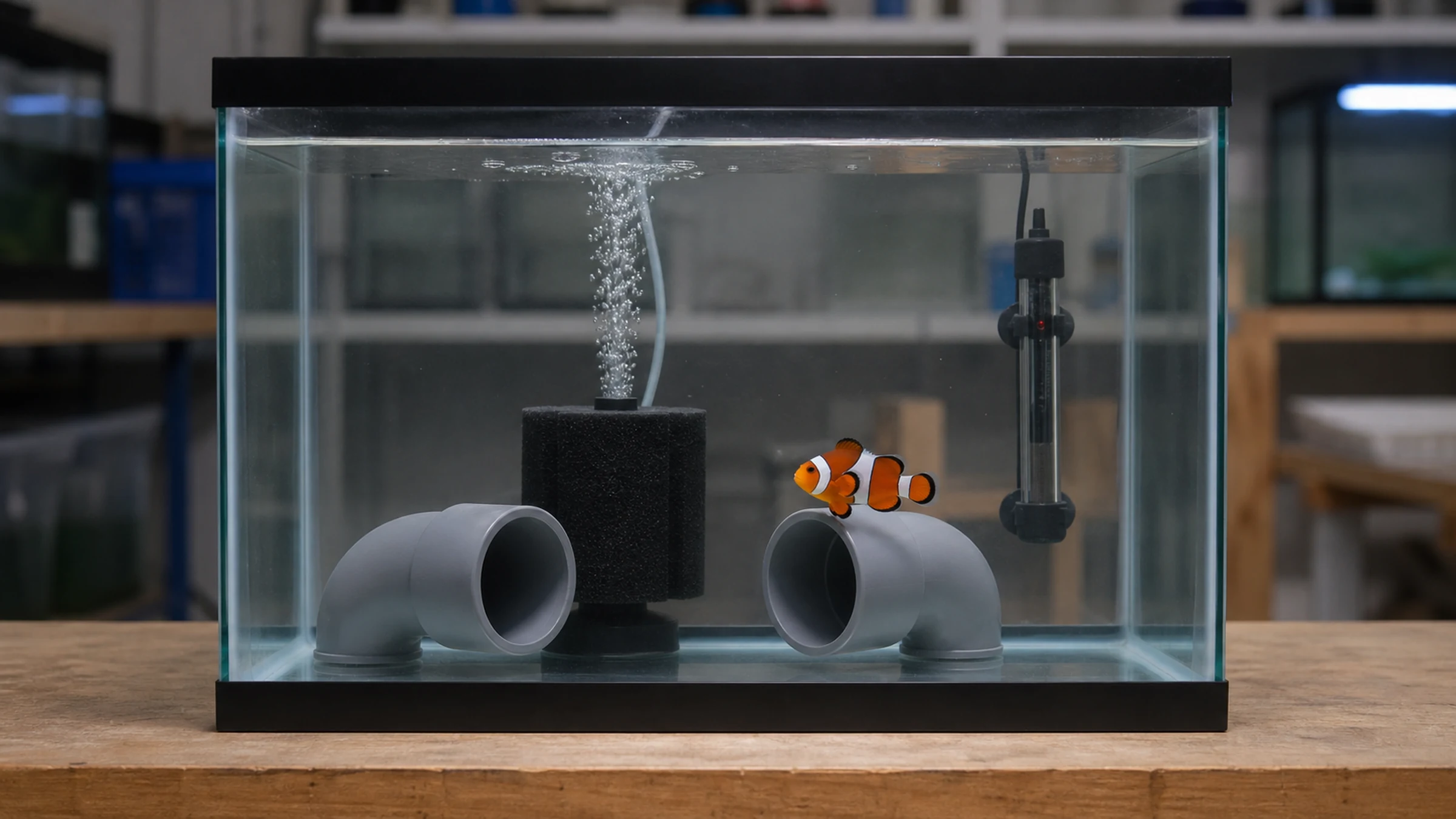
How to quarantine new saltwater fish against marine ich, velvet, and brooklynella: the QT tank, treatments, timelines, and the buy-clean shortcut.

What every reef parameter means and where to keep it: salinity, temperature, pH, alkalinity, calcium, magnesium, nitrate, and phosphate.

Choose compatible fish: school sizes, swimming zones, aggression, temperature and hardness matching, and honest bioload math for a peaceful community.
Keeping Pajama Cardinalfish?
AquaLens identifies your fish and plants from a photo, tracks water chemistry, and flags health issues early — free on iOS and Android.