Porcupine Puffer Care Guide
Diodon holocanthus · Saltwater Pufferfish
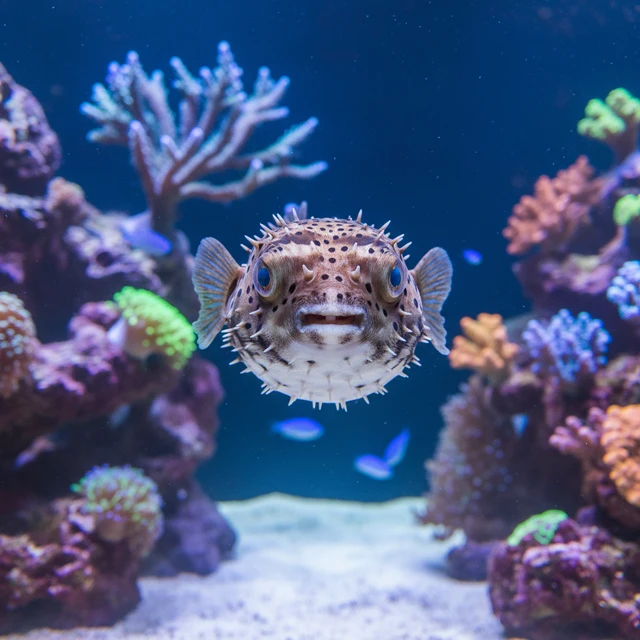
What Porcupine Puffer look like
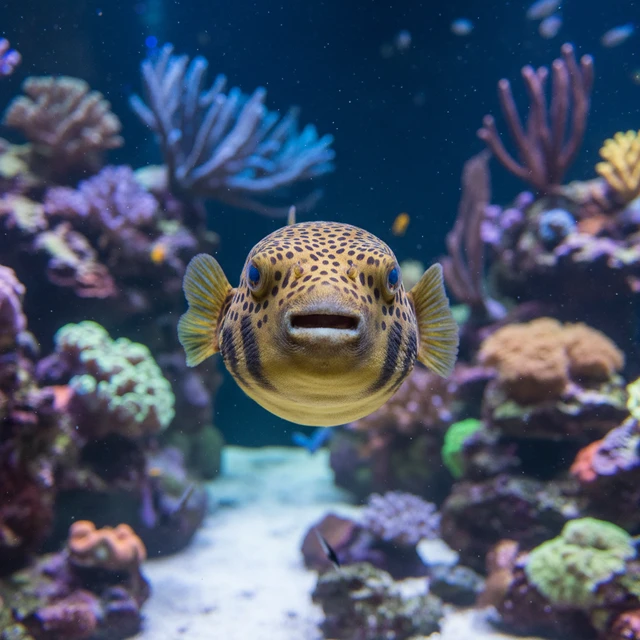
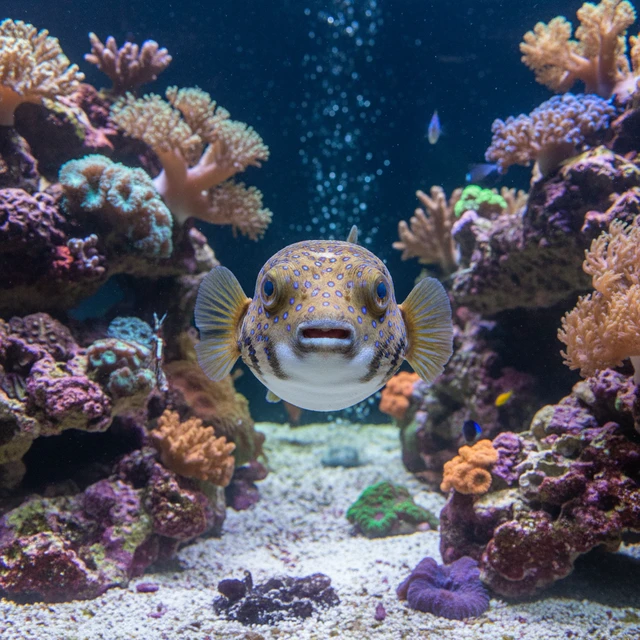
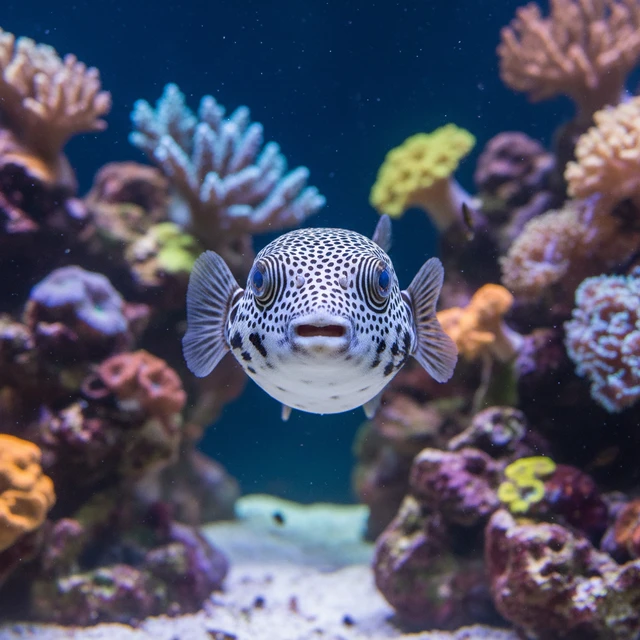
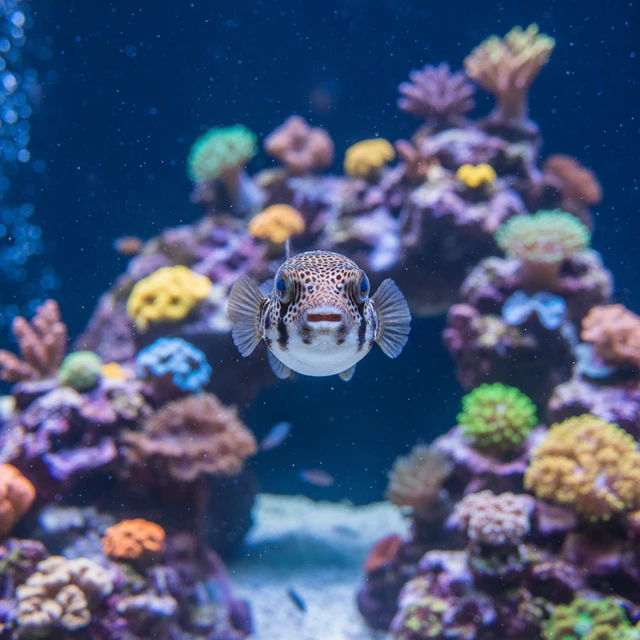
The Porcupine Puffer (Diodon holocanthus) exhibits a robust, globular body that can reach a maximum adult size of approximately 26 inches (66 cm). Its skin is covered with numerous sharp spines that are retracted when the fish is in a relaxed state but become prominent when the fish inflates, serving as a primary defensive adaptation against predators. The coloration varies from a pale yellow to a brownish hue, often adorned with darker spots and patterns that provide camouflage among the reef substrate. Sexual dimorphism is minimal, though females may appear slightly larger and more rotund during breeding seasons. The fish possesses a beak-like dentition, consisting of fused teeth that enable it to crack open hard-shelled prey, and features a distinctive lateral line system that aids in detecting water movements.
Behavior & temperament
The Porcupine Puffer is generally a solitary and territorial species, often found hovering near the substrate or among rocky crevices. It exhibits a calm demeanor but can display aggression when threatened or during territorial disputes. Breeding behavior involves courtship displays where males may perform a series of swimming patterns to attract females. This species is primarily nocturnal, becoming more active during the night when it forages for food. Its feeding behavior includes slow, methodical movements as it searches for crustaceans, mollusks, and other invertebrates, often using its beak to pry open shells. While it has limited swimming agility, it compensates with its ability to inflate its body, making it less palatable to potential predators.
Diet & feeding
In the wild, the Porcupine Puffer primarily feeds on hard-shelled invertebrates such as mollusks and crustaceans. In captivity, it requires a varied diet that includes high-quality pellets, frozen or live foods such as shrimp, and occasionally, plant matter to ensure optimal health.
Behind the name
The genus name 'Diodon' is derived from the Greek words 'di' meaning 'two' and 'odon' meaning 'tooth', referring to the fish's beak-like dentition. The species name 'holocanthus' comes from the Greek 'holos' meaning 'whole' and 'akantha' meaning 'spine', indicating the presence of spines covering the body.
Plan your tank
Check the numbers before you buy: tank volume, salinity, salt mix, water changes, and your ongoing care routine. Keeping reef? Start from the Saltwater & Reef hub.
Keep reading
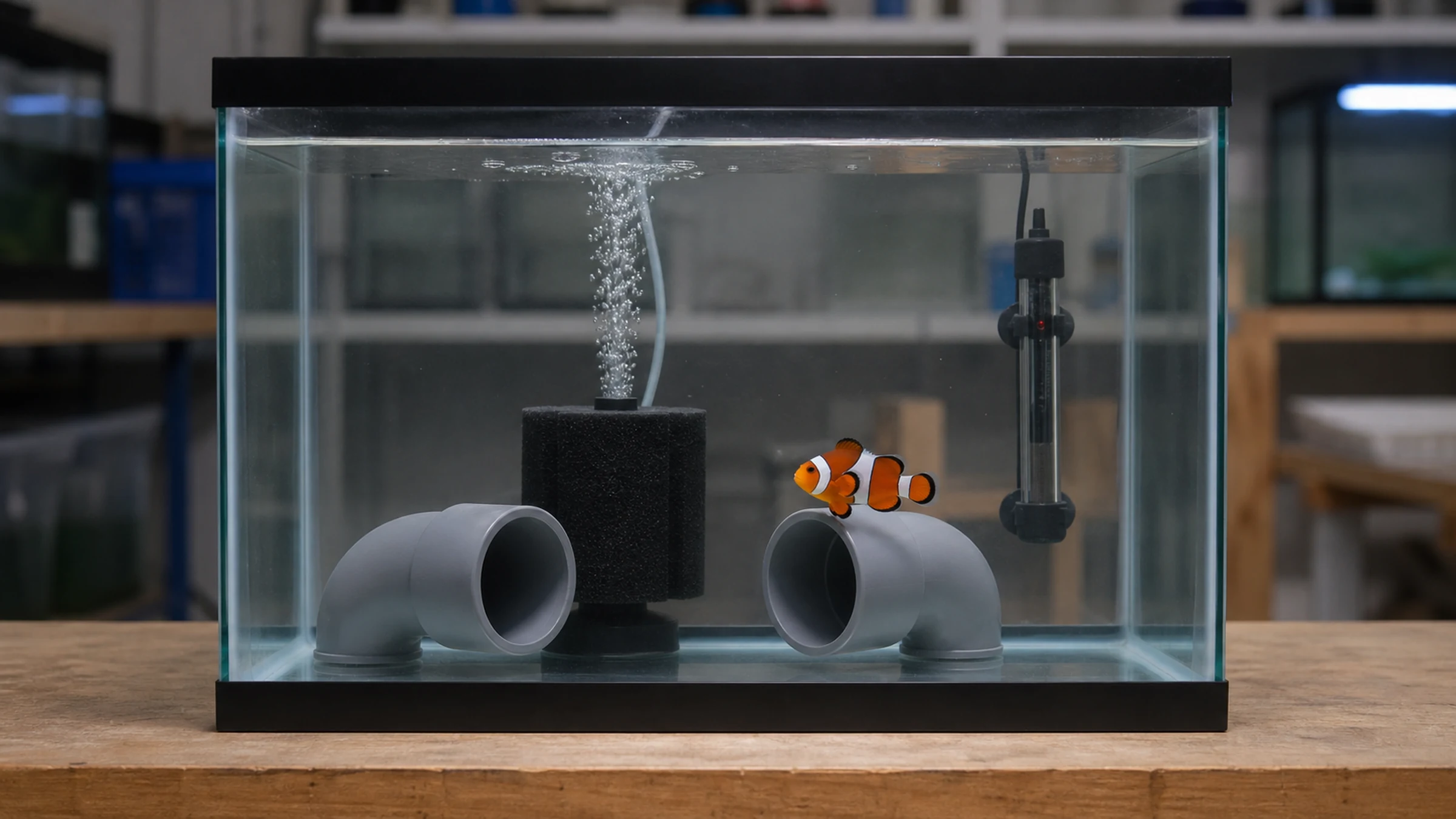
How to quarantine new saltwater fish against marine ich, velvet, and brooklynella: the QT tank, treatments, timelines, and the buy-clean shortcut.

What every reef parameter means and where to keep it: salinity, temperature, pH, alkalinity, calcium, magnesium, nitrate, and phosphate.

Choose compatible fish: school sizes, swimming zones, aggression, temperature and hardness matching, and honest bioload math for a peaceful community.
Keeping Porcupine Puffer?
AquaLens identifies your fish and plants from a photo, tracks water chemistry, and flags health issues early — free on iOS and Android.