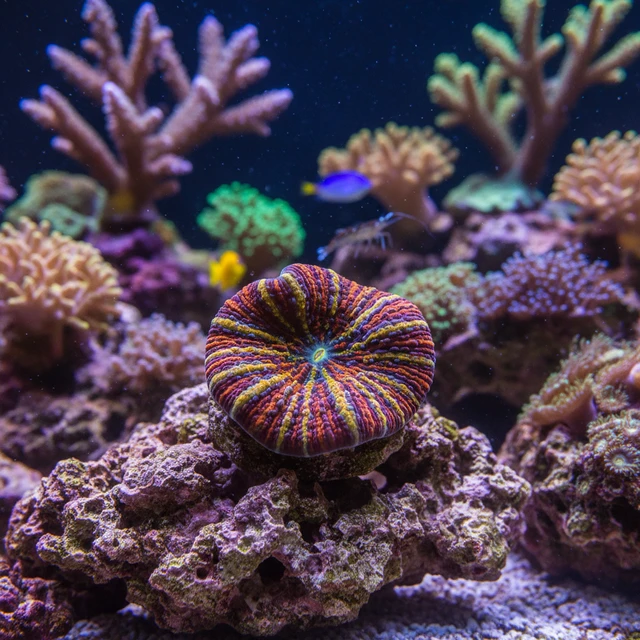
Ricordea Florida Care Guide
Ricordea florida · Saltwater Mushroom Coral
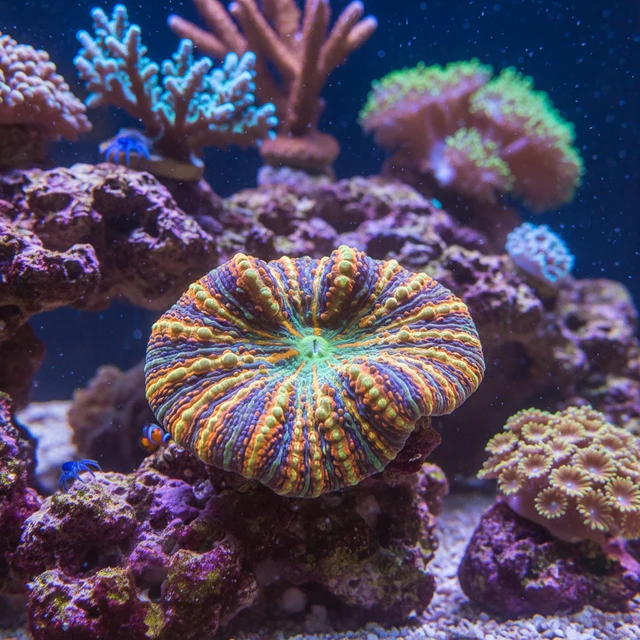
What Ricordea Florida look like
Ricordea florida exhibits a distinctive morphology characterized by its rounded, fleshy polyps that can reach up to 2 inches (5 cm) in diameter. The polyps possess a thick, gelatinous body with a smooth surface, often displaying vibrant colors ranging from green and blue to orange and yellow, which can vary significantly among individuals. The oral disc is centrally located and surrounded by numerous short, stubby tentacles that can extend to capture food. These tentacles contain specialized stinging cells (nematocysts) for defense and prey capture. Ricordea florida lacks a rigid skeleton, relying instead on a soft, flexible structure that allows it to adapt to various reef environments. This species does not exhibit sexual dimorphism, but it can reproduce both sexually and asexually, with a notable ability to fragment and regenerate.
Behavior & temperament
Ricordea florida is primarily a solitary coral, though it can form small clusters when conditions are favorable. It exhibits a relatively sedentary lifestyle, with limited movement, primarily through the extension and contraction of its polyps. This species engages in both autotrophic and heterotrophic feeding behaviors; it captures plankton and organic debris with its tentacles while also relying on photosynthetic symbionts (zooxanthellae) for energy. The coral displays a degree of aggression towards neighboring corals, often using its nematocysts to defend its territory. During the day, polyps extend fully to maximize light absorption, while at night, they may retract partially, reducing exposure to potential predators.
Diet & feeding
Ricordea florida is an omnivorous coral, primarily feeding on zooplankton and particulate organic matter in the wild. In captivity, it requires a diet supplemented with finely chopped meaty foods, such as mysis shrimp or brine shrimp, along with regular exposure to light for its symbiotic zooxanthellae.
Behind the name
The scientific name 'Ricordea' is derived from the Latin word 'ricordare', meaning 'to remember', while 'florida' is derived from the Latin 'floridus', meaning 'flowery' or 'flourishing', referring to its vibrant appearance.
Plan your tank
Check the numbers before you buy: tank volume, salinity, salt mix, water changes, and your ongoing care routine. Keeping reef? Start from the Saltwater & Reef hub.
Keep reading
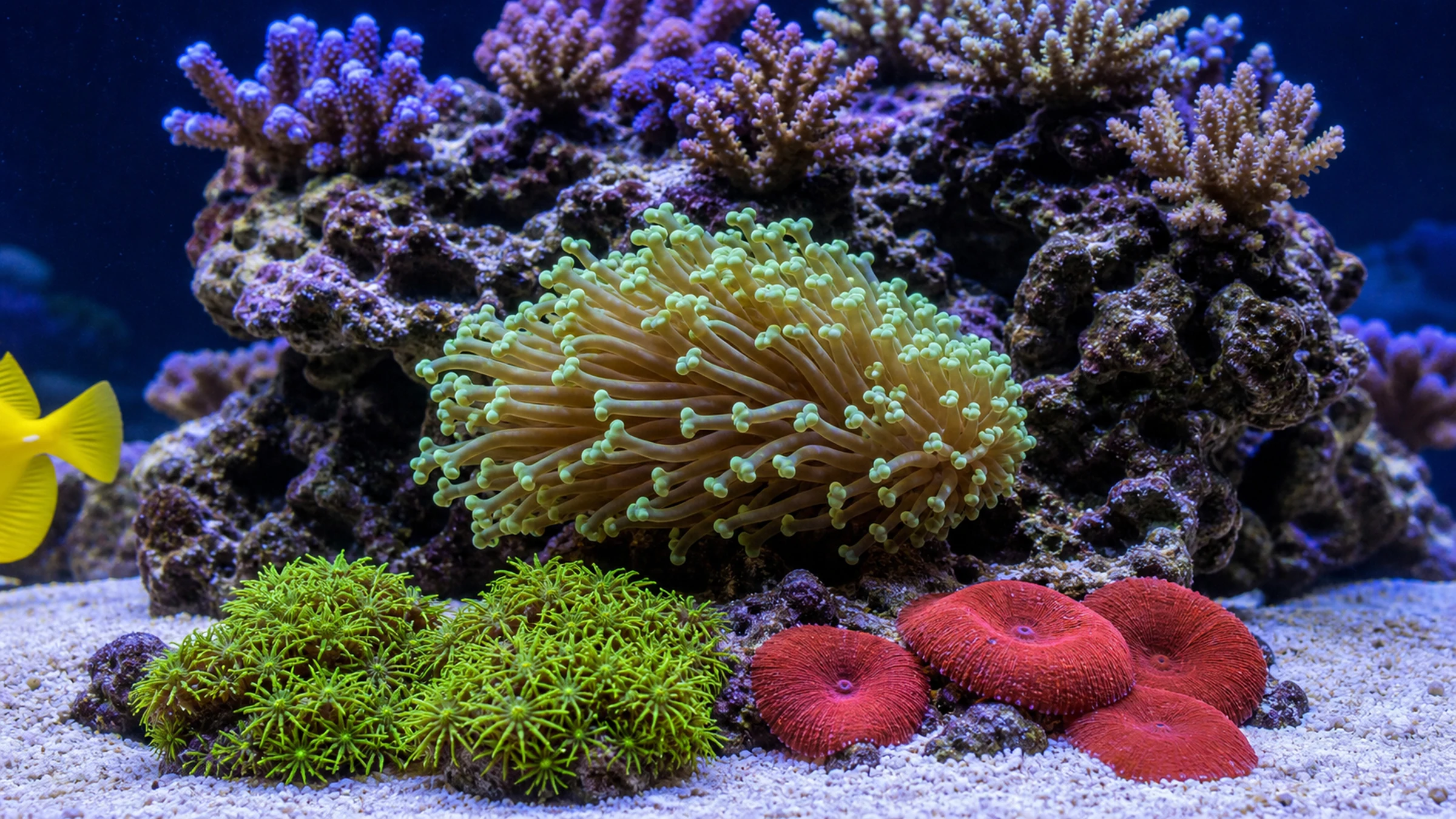
How to place corals by light and flow, PAR targets for softies, LPS, and SPS, dipping new corals for pests, and acclimating them without bleaching.
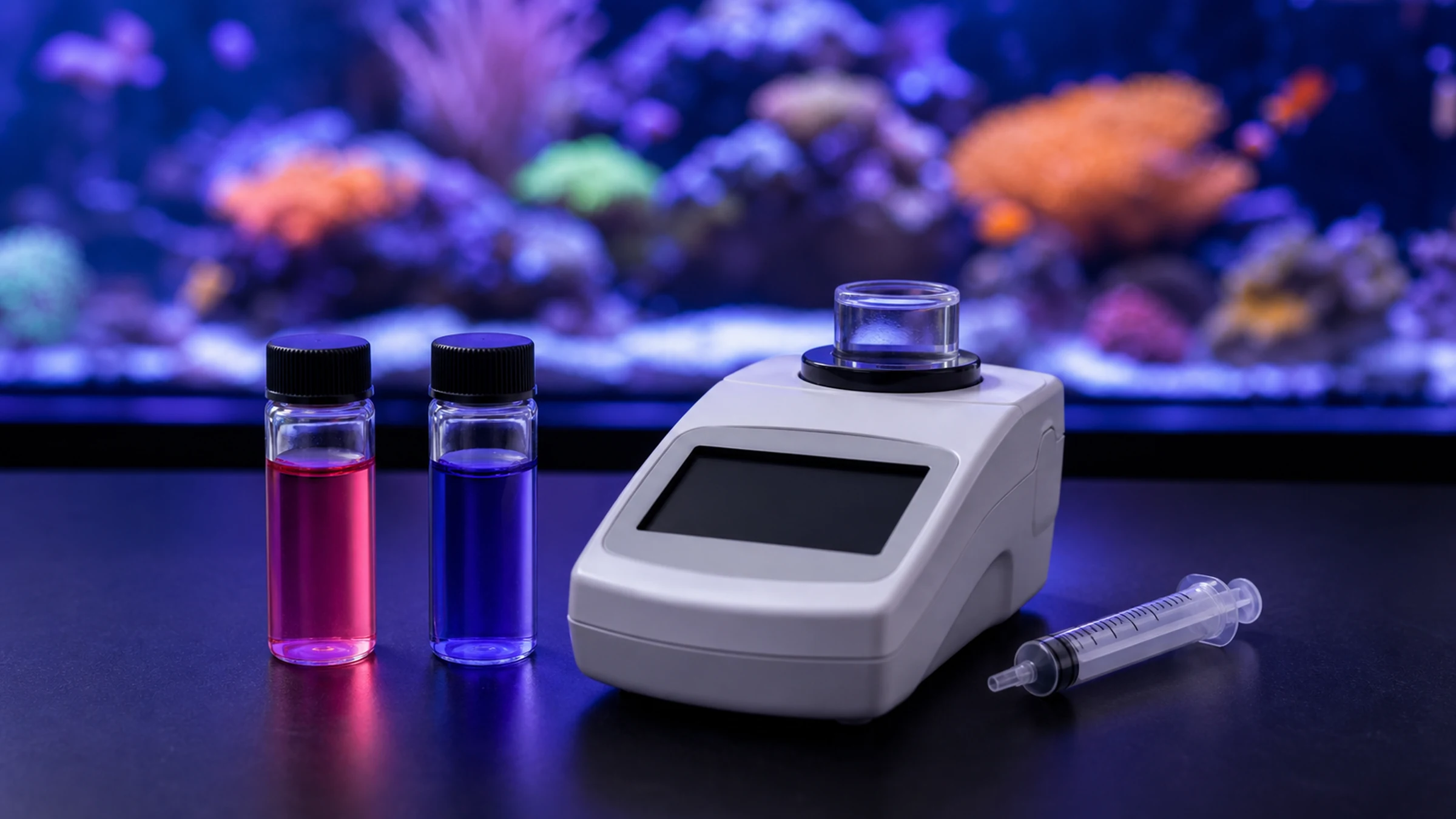
What every reef parameter means and where to keep it: salinity, temperature, pH, alkalinity, calcium, magnesium, nitrate, and phosphate.
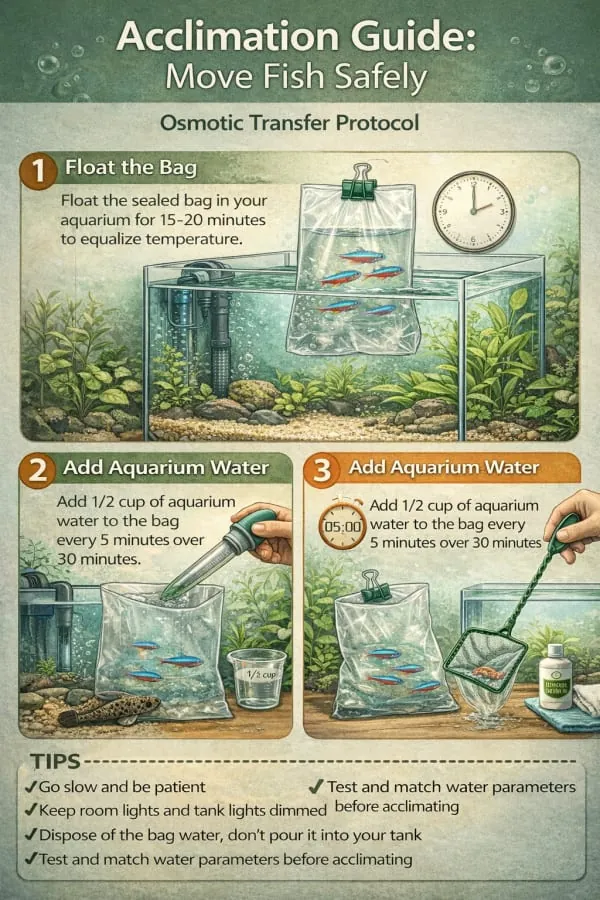
Acclimate new fish, shrimp, and coral safely: temperature floating, drip acclimation, plop-and-drop for shipped livestock, and the first 24 hours.
Keeping Ricordea Florida?
AquaLens identifies your fish and plants from a photo, tracks water chemistry, and flags health issues early — free on iOS and Android.