Rock Beauty Angelfish Care Guide
Holacanthus tricolor · Saltwater Angelfish
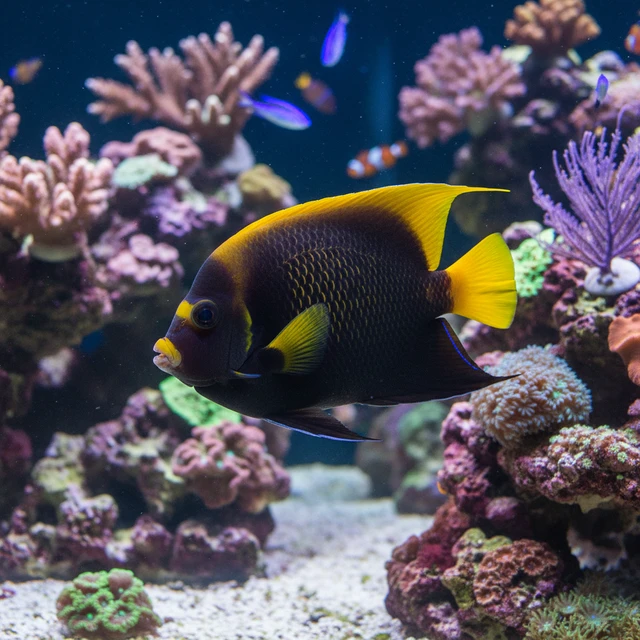
What Rock Beauty Angelfish look like
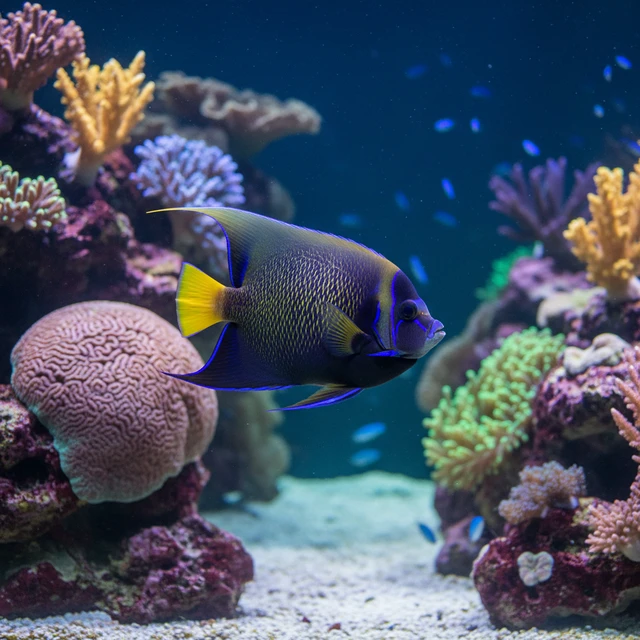
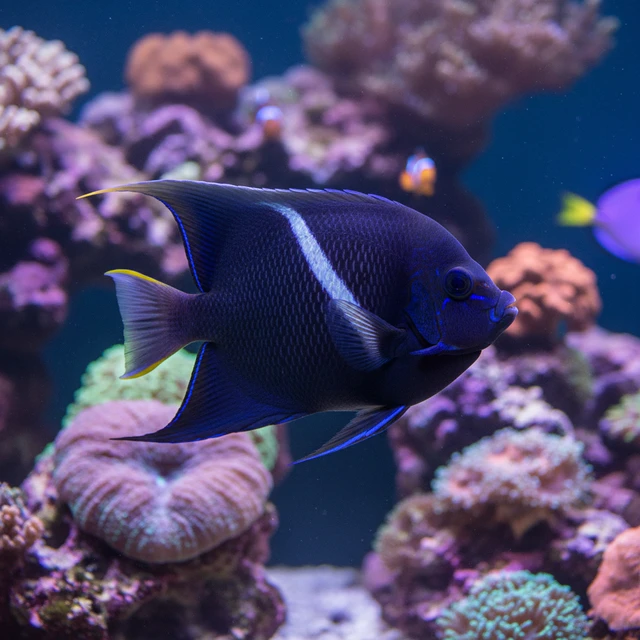
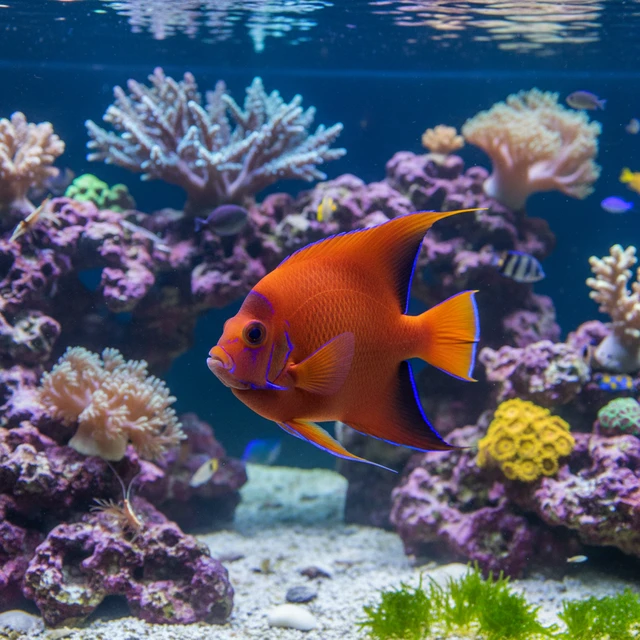
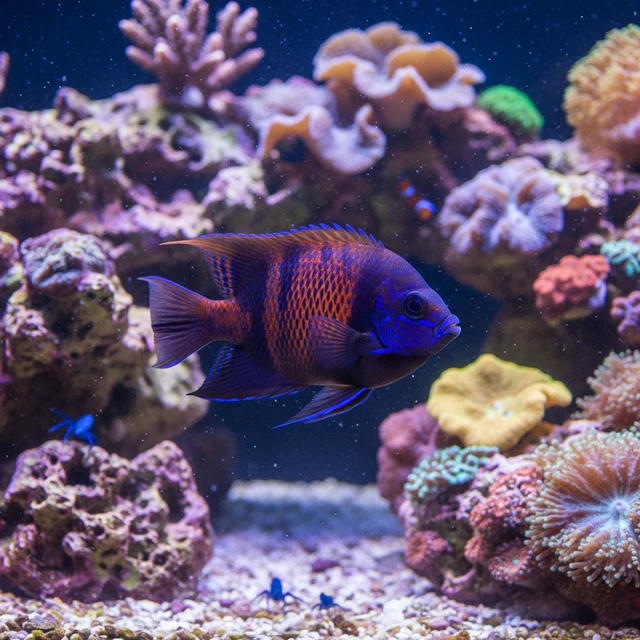
The Rock Beauty Angelfish, Holacanthus tricolor, exhibits a striking coloration characterized by a vibrant yellow body adorned with bold, dark blue to black vertical stripes. Adults can reach a maximum size of approximately 12 inches (30 cm). Sexual dimorphism is subtle, with males typically displaying slightly larger dorsal fins and more pronounced coloration than females. This species possesses a robust, laterally compressed body, which aids in maneuverability among reef structures. Notable morphological features include a small, terminal mouth equipped with brush-like teeth adapted for grazing on algae and sponges, as well as elongated dorsal and anal fins that enhance its swimming agility. The Rock Beauty also has a distinctive, rounded caudal fin that contributes to its swift movements, while its lateral line system is well-developed, allowing for enhanced sensory perception in its environment.
Behavior & temperament
The Rock Beauty Angelfish is generally a solitary species, often establishing a territory within the reef environment. They are known to inhabit the mid to lower levels of the reef, where they exhibit a semi-aggressive temperament towards conspecifics and other similar-sized fish. Breeding behavior includes forming pairs during the spawning season, where they engage in elaborate courtship displays. This species is primarily diurnal, actively foraging during the day and retreating to crevices or under ledges at night for protection. Their feeding behavior involves grazing on algae, sponges, and other sessile invertebrates, utilizing their specialized dentition to scrape food from surfaces. While they possess a mild stinging potential from their dorsal spines, they are not considered a significant threat to larger predators.
Diet & feeding
The Rock Beauty Angelfish is primarily an omnivorous grazer, feeding on a diet of algae, sponges, and small invertebrates in the wild. In captivity, they require a varied diet that includes high-quality marine flakes, pellets, and frozen foods supplemented with algae and sponge-based products.
Behind the name
The genus name 'Holacanthus' derives from the Greek words 'holos' meaning 'whole' and 'akantha' meaning 'thorn,' referring to the spiny dorsal fin. The species name 'tricolor' indicates the three distinct colors present on the fish's body.
Plan your tank
Check the numbers before you buy: tank volume, salinity, salt mix, water changes, and your ongoing care routine. Keeping reef? Start from the Saltwater & Reef hub.
Keep reading
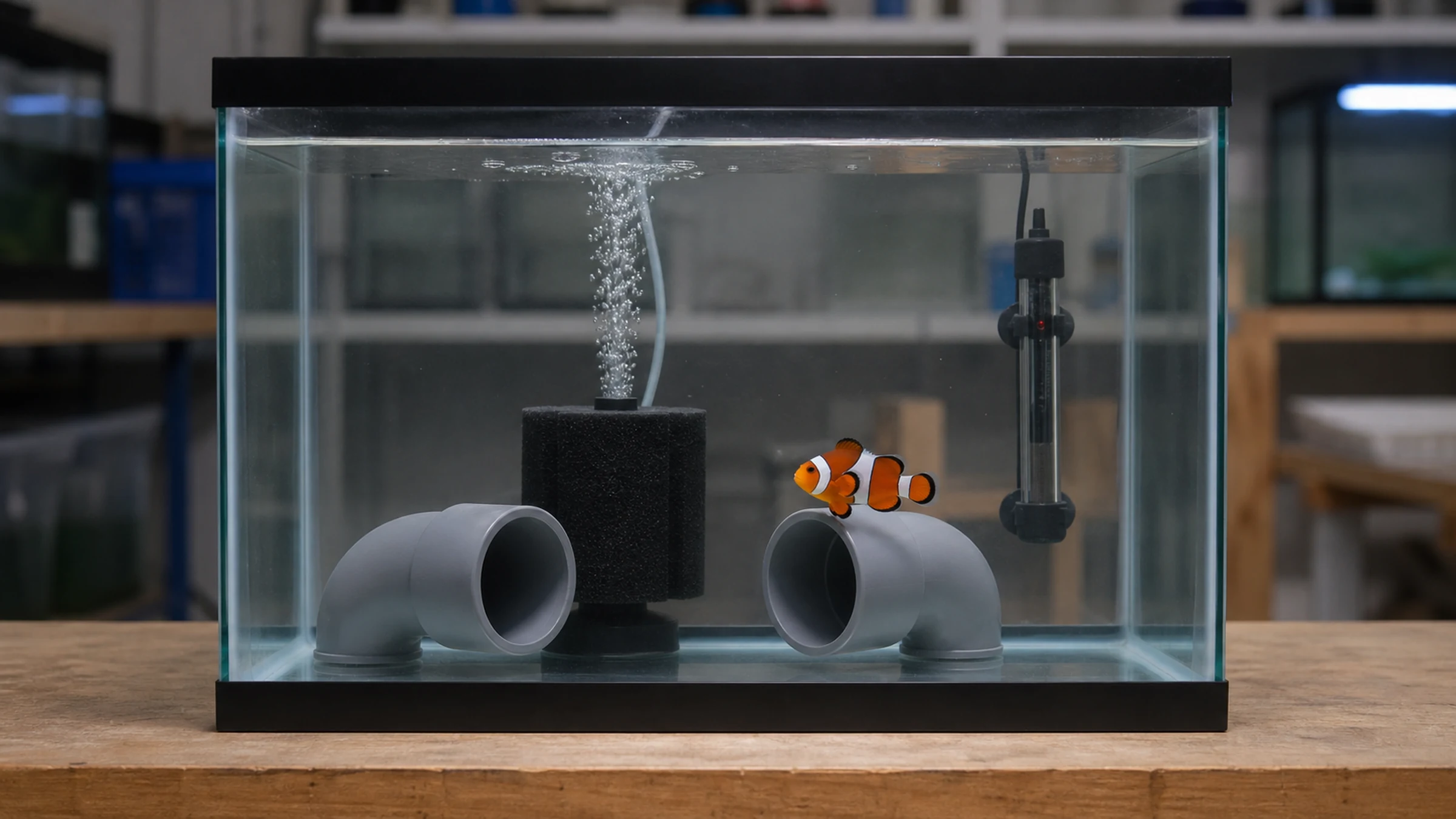
How to quarantine new saltwater fish against marine ich, velvet, and brooklynella: the QT tank, treatments, timelines, and the buy-clean shortcut.

What every reef parameter means and where to keep it: salinity, temperature, pH, alkalinity, calcium, magnesium, nitrate, and phosphate.

Choose compatible fish: school sizes, swimming zones, aggression, temperature and hardness matching, and honest bioload math for a peaceful community.
Keeping Rock Beauty Angelfish?
AquaLens identifies your fish and plants from a photo, tracks water chemistry, and flags health issues early — free on iOS and Android.