Scribbled Angelfish Care Guide
Chaetodontoplus duboulayi · Saltwater Angelfish
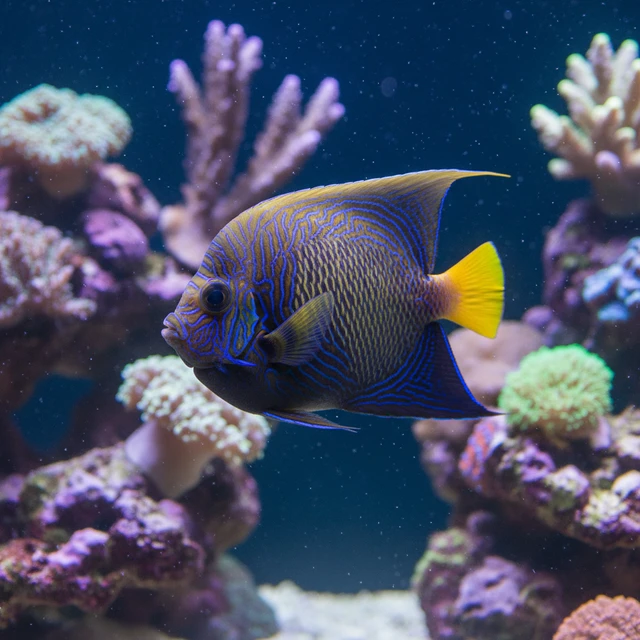
What Scribbled Angelfish look like
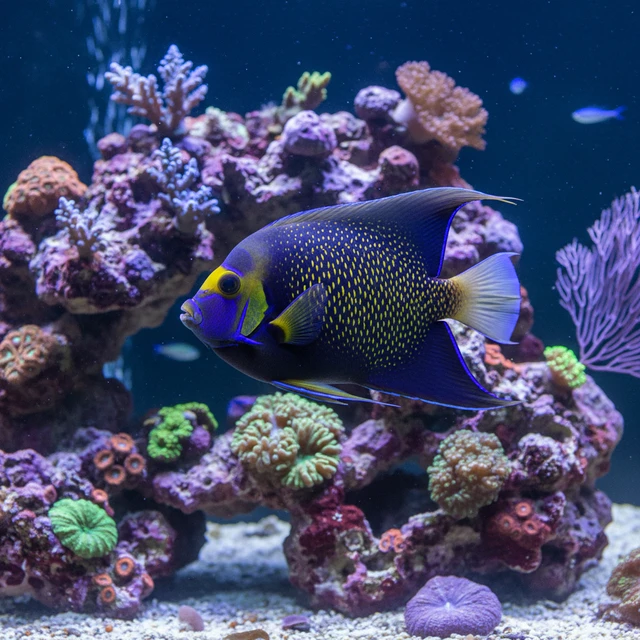
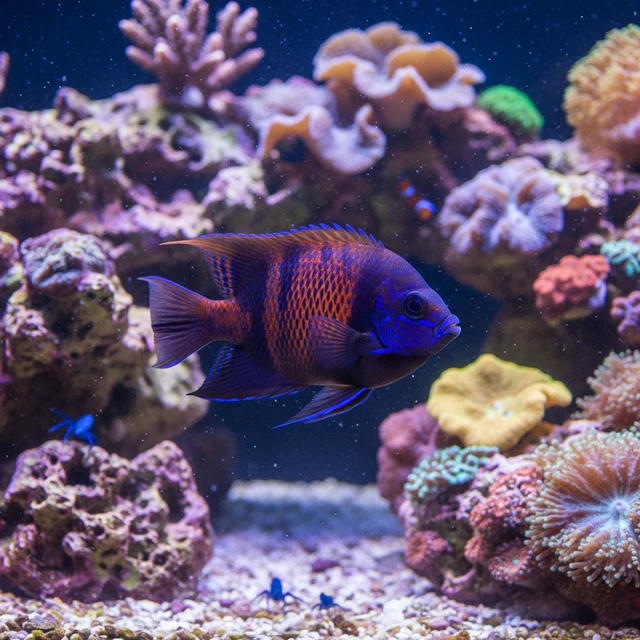
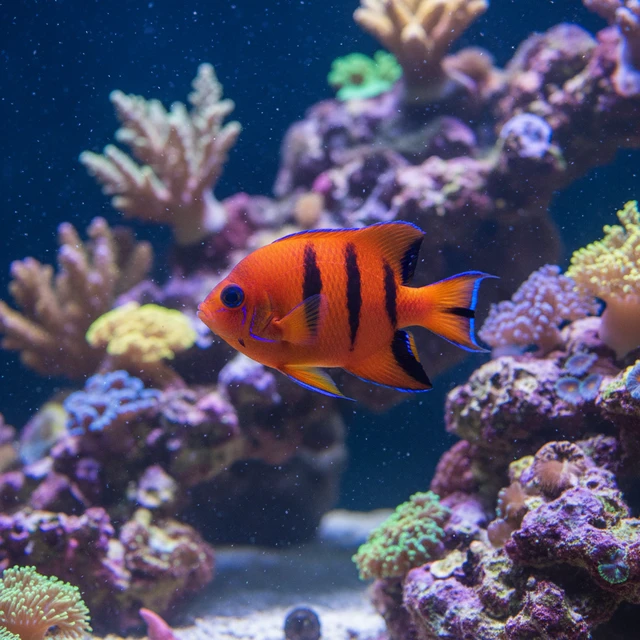
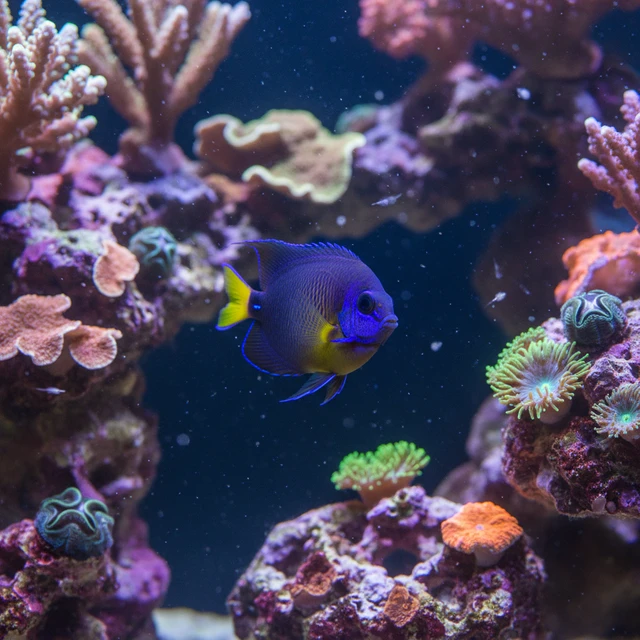
The Scribbled Angelfish, or Chaetodontoplus duboulayi, exhibits a striking coloration characterized by a vivid blue background adorned with intricate yellow and black scribbled patterns. Adults can reach a maximum size of approximately 6 inches (15 cm) in standard length. Sexual dimorphism is subtle, with males generally displaying slightly larger and more elongated dorsal fins compared to females. This species possesses a robust body with a laterally compressed profile, complemented by a small, terminal mouth adapted for grazing on algae and small invertebrates. Defensive adaptations include the presence of spines along the dorsal and anal fins, which can deter potential predators. Notably, the Scribbled Angelfish features a distinctive lateral line system that aids in the detection of water movements, enhancing its ability to navigate through complex reef environments.
Behavior & temperament
Scribbled Angelfish are generally solitary or found in pairs, exhibiting a hierarchical social structure where dominant individuals establish territories within the reef. They primarily inhabit the mid to upper levels of the reef, where they engage in grazing behaviors on algae and coral polyps. Breeding occurs in pairs, with courtship displays involving synchronized swimming and fin displays. Their temperament is typically described as semi-aggressive, particularly towards conspecifics, and they may exhibit territorial behaviors when defending their feeding grounds or nesting sites.
Diet & feeding
In the wild, Scribbled Angelfish are primarily herbivorous, feeding on algae, coral polyps, and small invertebrates. In captivity, they require a varied diet that includes high-quality marine algae, spirulina, and prepared angelfish pellets to ensure optimal health.
Behind the name
The genus name 'Chaetodontoplus' derives from the Greek words 'chaetos' meaning 'hair' and 'odous' meaning 'tooth', indicating the presence of comb-like teeth, while 'duboulayi' honors the French naturalist, Louis Duboulay.
Plan your tank
Check the numbers before you buy: tank volume, salinity, salt mix, water changes, and your ongoing care routine. Keeping reef? Start from the Saltwater & Reef hub.
Keep reading
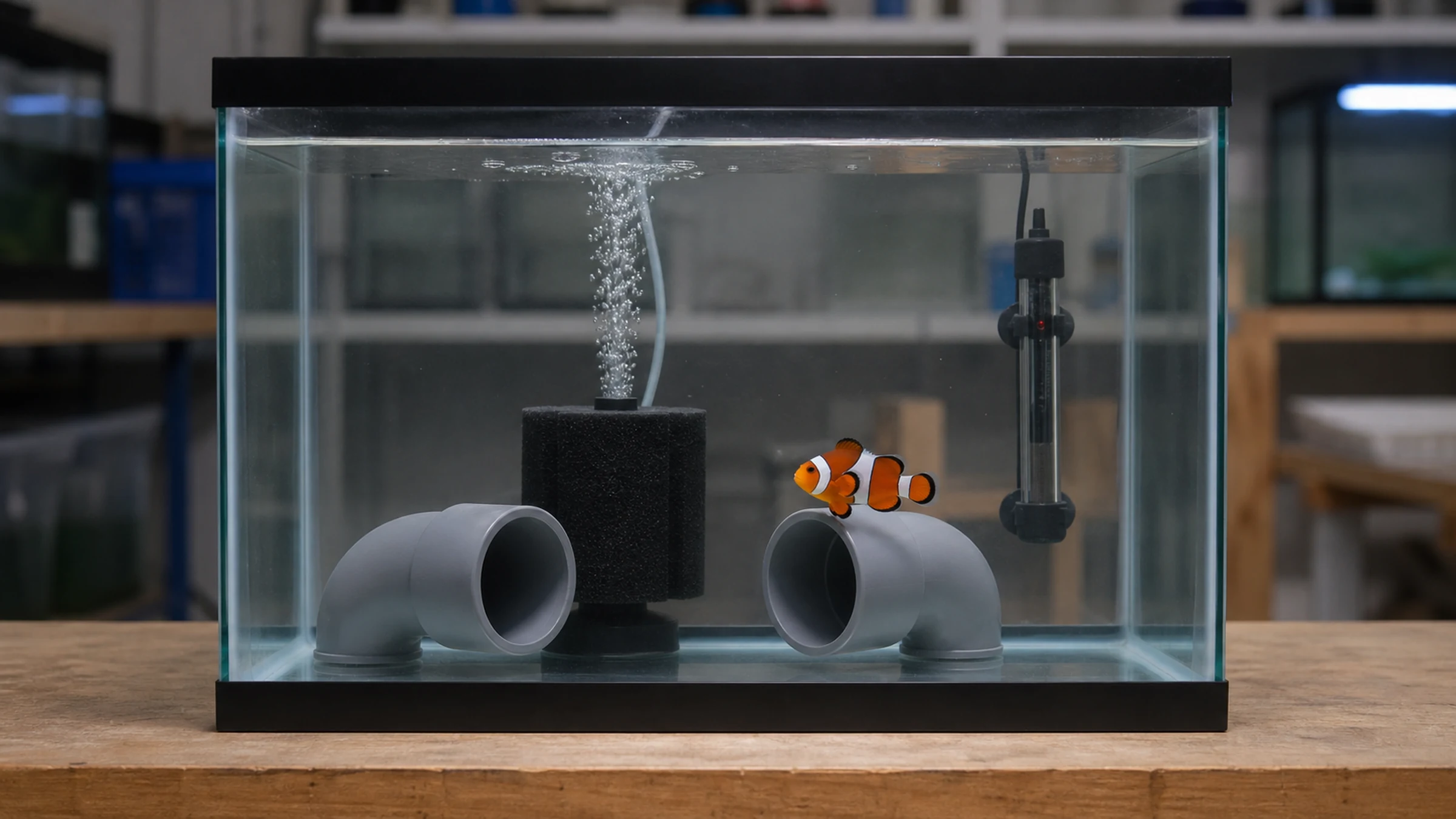
How to quarantine new saltwater fish against marine ich, velvet, and brooklynella: the QT tank, treatments, timelines, and the buy-clean shortcut.

What every reef parameter means and where to keep it: salinity, temperature, pH, alkalinity, calcium, magnesium, nitrate, and phosphate.
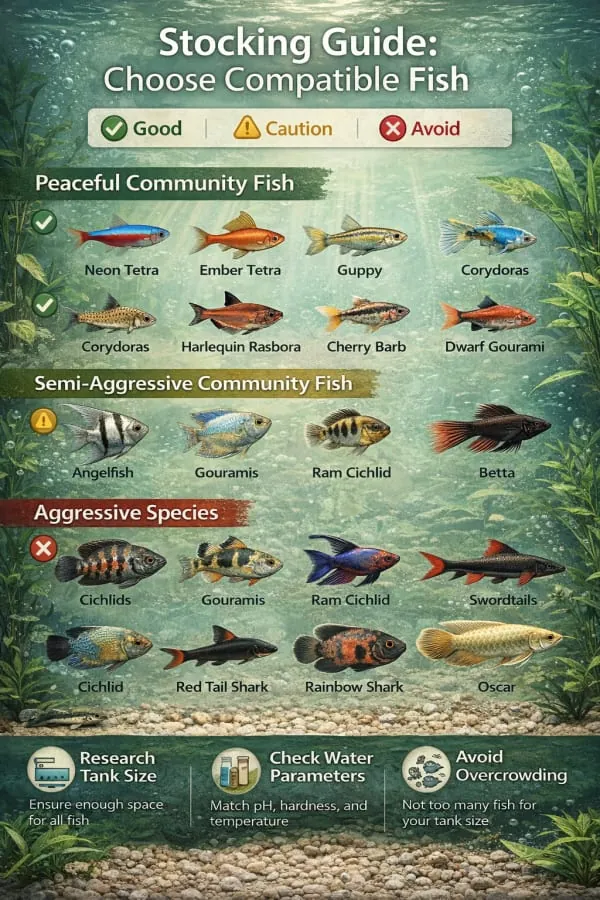
Choose compatible fish: school sizes, swimming zones, aggression, temperature and hardness matching, and honest bioload math for a peaceful community.
Keeping Scribbled Angelfish?
AquaLens identifies your fish and plants from a photo, tracks water chemistry, and flags health issues early — free on iOS and Android.