Spiny Lobster Care Guide
Panulirus versicolor · Saltwater Lobster
What Spiny Lobster look like
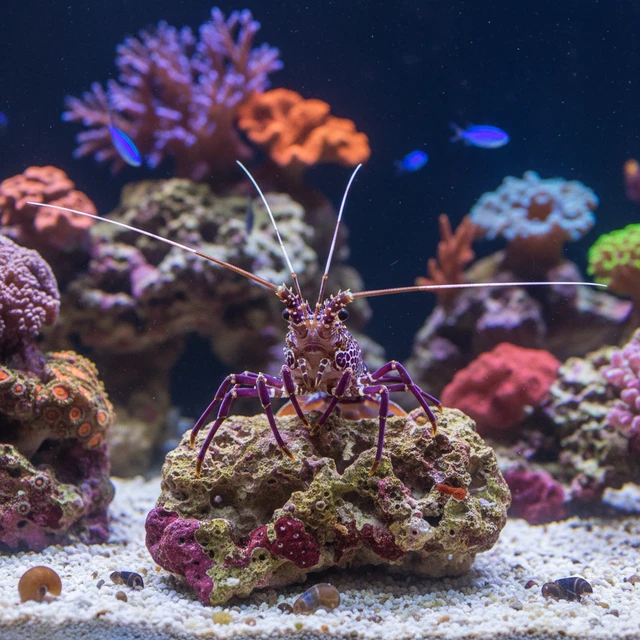
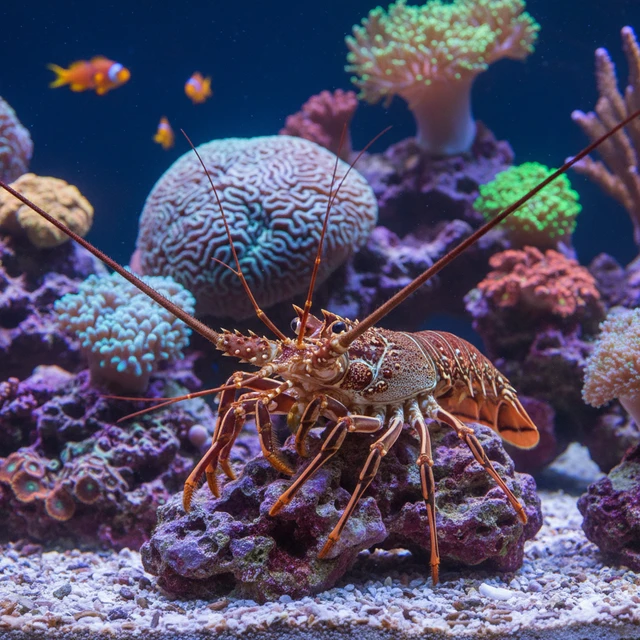
The Spiny Lobster, Panulirus versicolor, exhibits a robust and elongated body that can reach a maximum adult size of approximately 25 cm (10 inches) in carapace length. Its exoskeleton is characterized by a hard, spiny surface adorned with numerous tubercles and spines, providing both camouflage and protection against predators. The coloration ranges from a vibrant blue to reddish-brown, often with striking yellow or white bands across the antennae and body, which serve as a warning signal to potential threats. Sexual dimorphism is subtle, with females generally being larger than males. Notably, the first pair of antennae is significantly elongated, serving as sensory organs, while the second pair is shorter and more robust, aiding in locomotion. The absence of large claws, typical of true lobsters, is compensated by their ability to scuttle quickly across the substrate, utilizing their powerful pleopods for rapid movement.
Behavior & temperament
Spiny Lobsters are primarily nocturnal and exhibit a solitary lifestyle, often hiding in crevices or under rocks during the day. They are known to establish a hierarchy based on size and strength, with larger individuals asserting dominance over smaller ones. During the breeding season, males engage in elaborate courtship displays, which may include the presentation of their antennae and body posturing to attract females. Their temperament is generally non-aggressive towards conspecifics unless competing for territory or mates. Spiny Lobsters are also known to engage in communal sheltering, where multiple individuals may share a hiding spot, particularly in areas with high predation pressure.
Diet & feeding
Spiny Lobsters are omnivorous scavengers, primarily feeding on algae, detritus, and small invertebrates in their natural habitat. In captivity, they require a varied diet that includes high-quality pellets, fresh seafood, and occasional plant matter to ensure proper nutrition.
Behind the name
The genus name 'Panulirus' is derived from the Latin word 'panulus', meaning 'little feather', referring to the long, feathery antennae of these lobsters. The species name 'versicolor' is from Latin, meaning 'of various colors', indicative of the lobster's vibrant coloration.
Plan your tank
Check the numbers before you buy: tank volume, salinity, salt mix, water changes, and your ongoing care routine. Keeping reef? Start from the Saltwater & Reef hub.
Keep reading
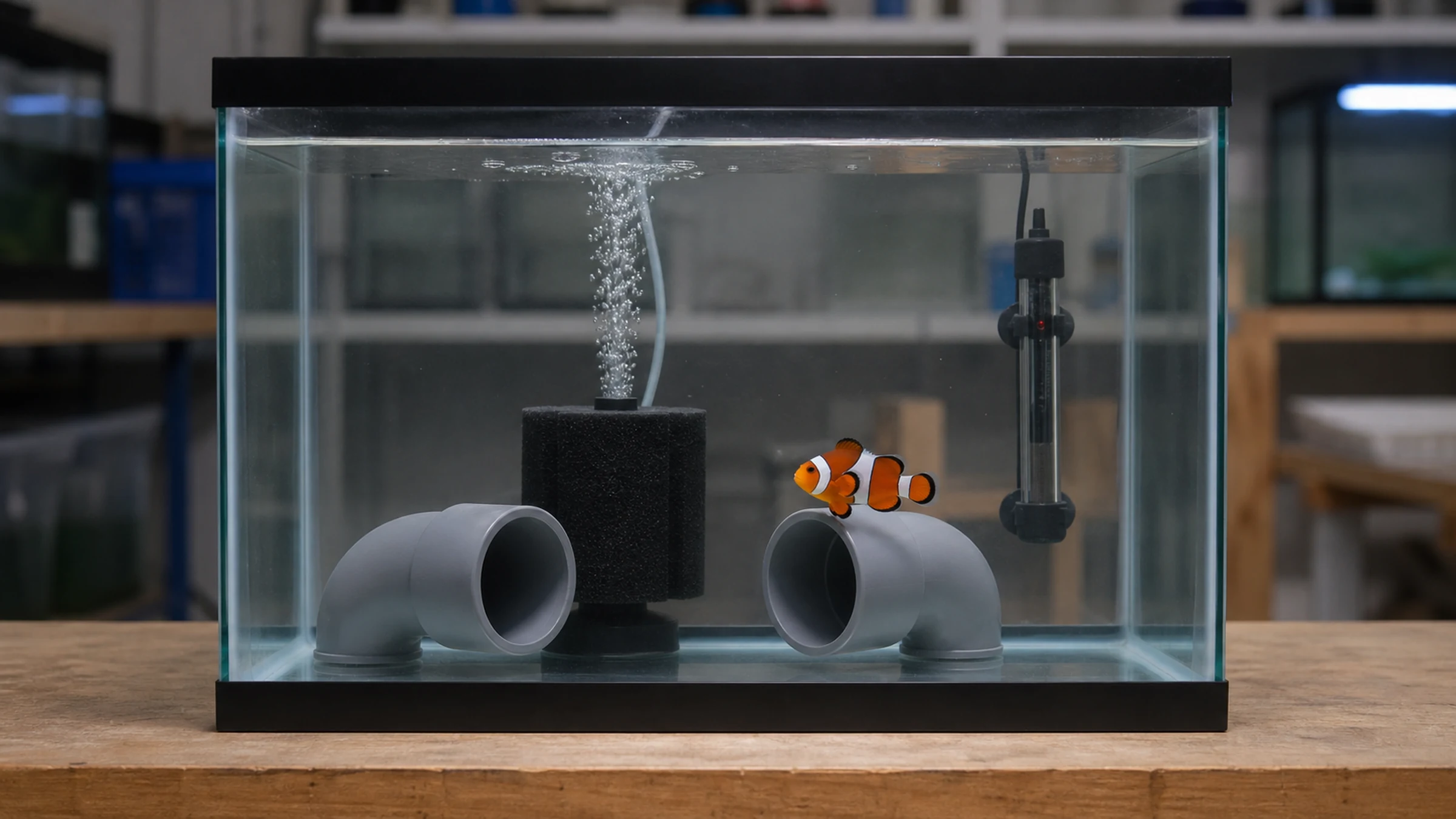
How to quarantine new saltwater fish against marine ich, velvet, and brooklynella: the QT tank, treatments, timelines, and the buy-clean shortcut.

What every reef parameter means and where to keep it: salinity, temperature, pH, alkalinity, calcium, magnesium, nitrate, and phosphate.

Choose compatible fish: school sizes, swimming zones, aggression, temperature and hardness matching, and honest bioload math for a peaceful community.
Keeping Spiny Lobster?
AquaLens identifies your fish and plants from a photo, tracks water chemistry, and flags health issues early — free on iOS and Android.