Spotted Mandarin Dragonet Care Guide
Synchiropus picturatus · Saltwater Dragonet
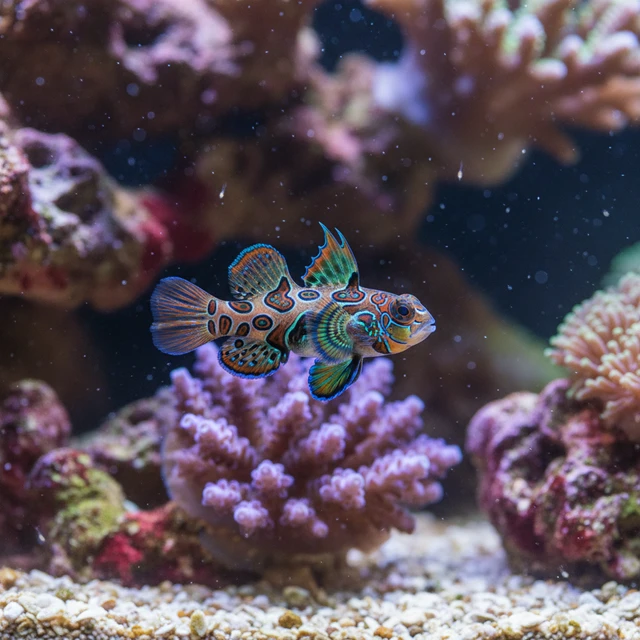
What Spotted Mandarin Dragonet look like
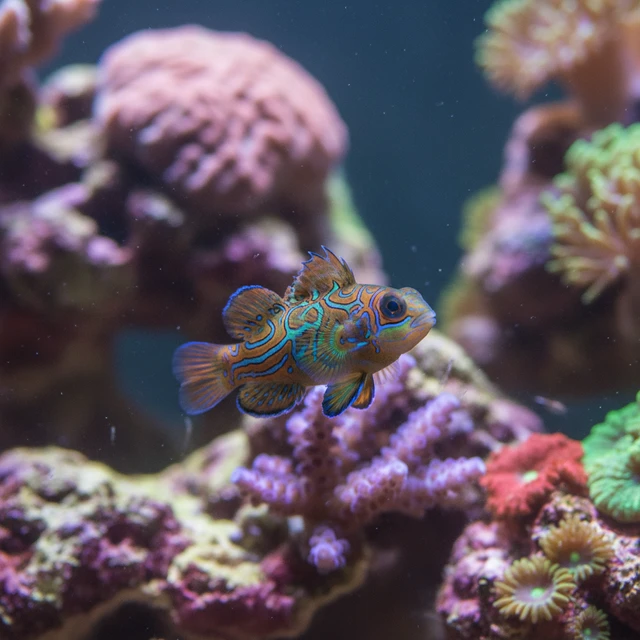
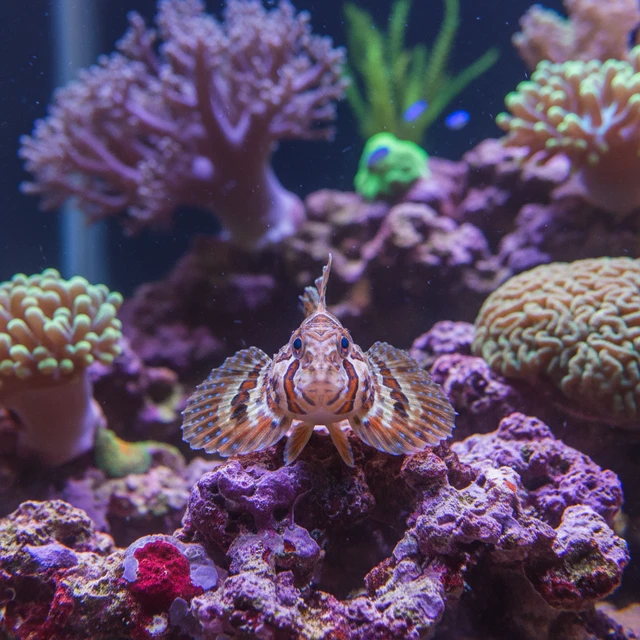
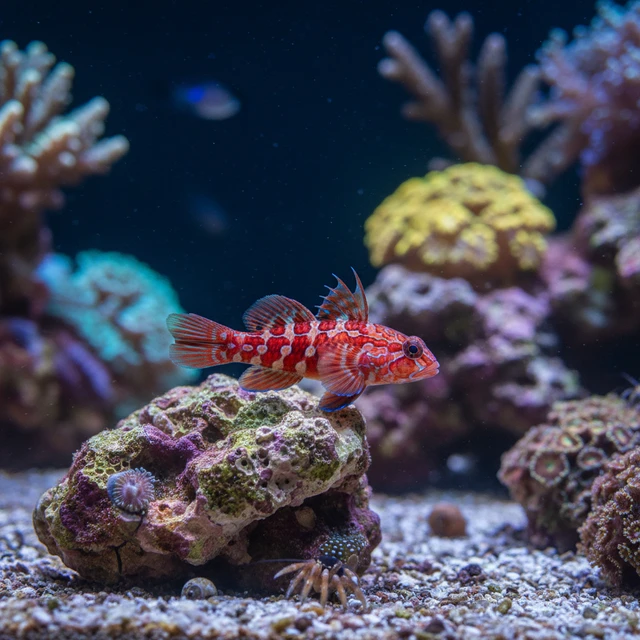
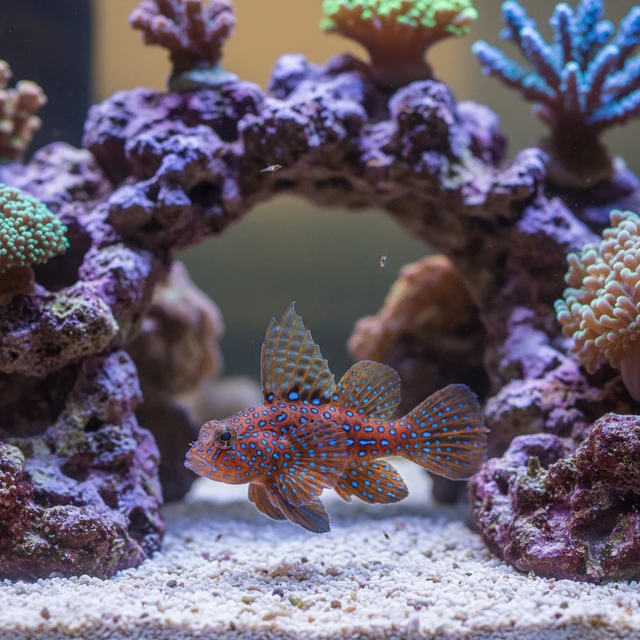
The Spotted Mandarin Dragonet (Synchiropus picturatus) exhibits a strikingly vibrant coloration characterized by a combination of bright blue and orange hues, with intricate patterns of spots and stripes that serve as camouflage among the reef substrate. Adults typically reach a maximum size of approximately 3 inches (7.5 cm) in length. Sexual dimorphism is evident, with males displaying elongated first dorsal fin rays and more pronounced coloration compared to females. This species possesses a unique body shape, featuring a laterally compressed body and large pectoral fins that aid in agile swimming. The presence of a lateral line system enhances its sensory perception, while its small, specialized teeth are adapted for grazing on small benthic organisms. Defensive adaptations include its cryptic coloration and the ability to quickly retreat into crevices when threatened.
Behavior & temperament
The Spotted Mandarin Dragonet is primarily a solitary species, often establishing a territory within its chosen habitat. It is a benthic fish, commonly found hovering near the substrate or darting among corals and rocks. Breeding behavior involves elaborate courtship displays, where males perform intricate dances to attract females. This species is generally peaceful and non-aggressive, though it may exhibit territorial behavior towards conspecifics. Its feeding behavior is characterized by meticulous foraging, using its elongated snout to sift through sand and rubble for small invertebrates, primarily copepods and amphipods.
Diet & feeding
In the wild, the Spotted Mandarin Dragonet primarily feeds on small crustaceans, particularly copepods and amphipods. In captivity, it requires a diet rich in live foods, such as copepods and other small invertebrates, to thrive.
Behind the name
The genus name 'Synchiropus' is derived from the Greek words 'syn' meaning 'together' and 'chiros' meaning 'hand', referring to the structure of the pectoral fins. The species name 'picturatus' comes from the Latin word 'pictura', meaning 'picture' or 'painting', alluding to its colorful appearance.
Plan your tank
Check the numbers before you buy: tank volume, salinity, salt mix, water changes, and your ongoing care routine. Keeping reef? Start from the Saltwater & Reef hub.
Keep reading
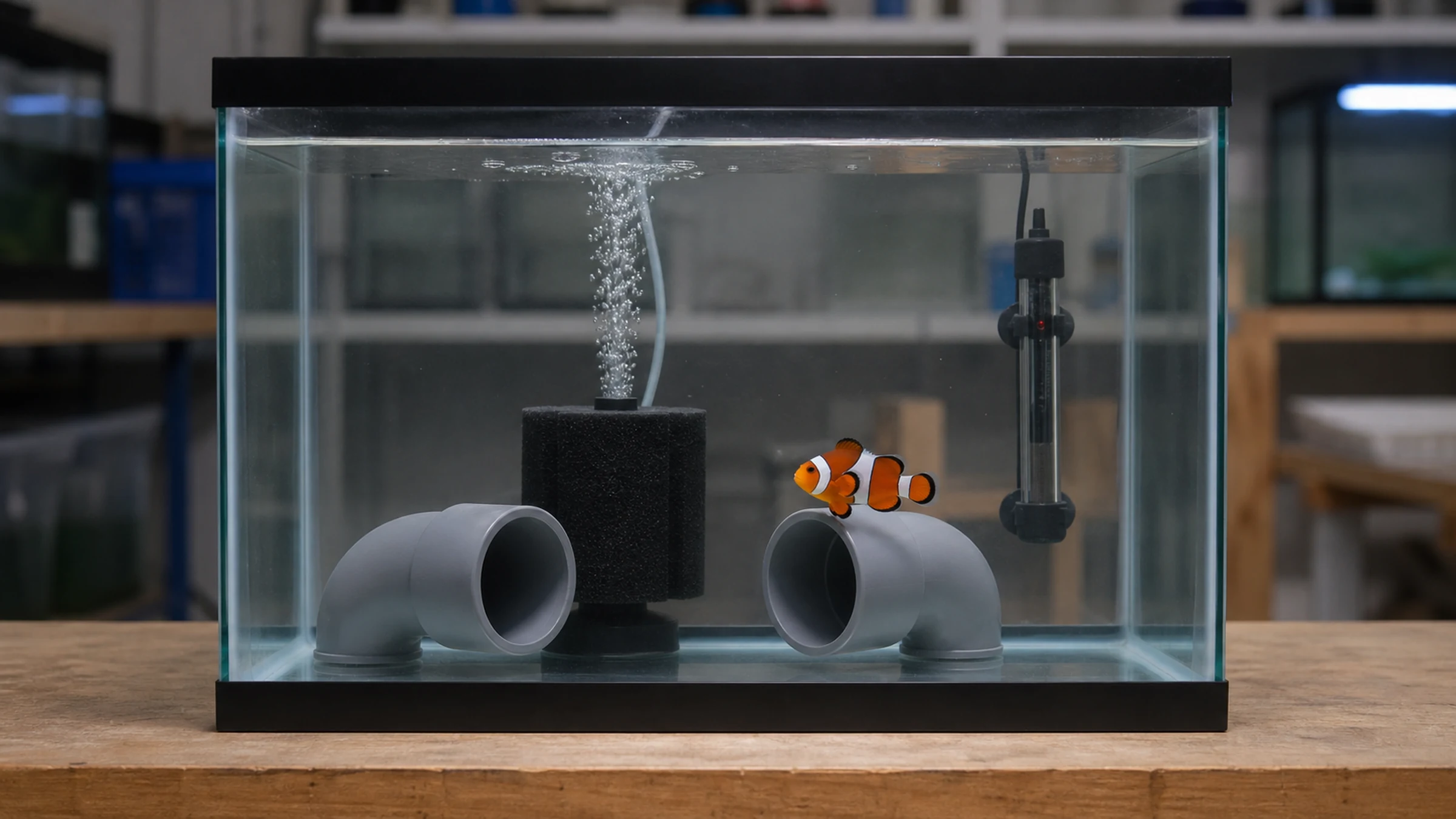
How to quarantine new saltwater fish against marine ich, velvet, and brooklynella: the QT tank, treatments, timelines, and the buy-clean shortcut.

What every reef parameter means and where to keep it: salinity, temperature, pH, alkalinity, calcium, magnesium, nitrate, and phosphate.

Choose compatible fish: school sizes, swimming zones, aggression, temperature and hardness matching, and honest bioload math for a peaceful community.
Keeping Spotted Mandarin Dragonet?
AquaLens identifies your fish and plants from a photo, tracks water chemistry, and flags health issues early — free on iOS and Android.