
Tiger Tail Sea Cucumber Care Guide
Holothuria thomasi · Saltwater Sea Cucumber
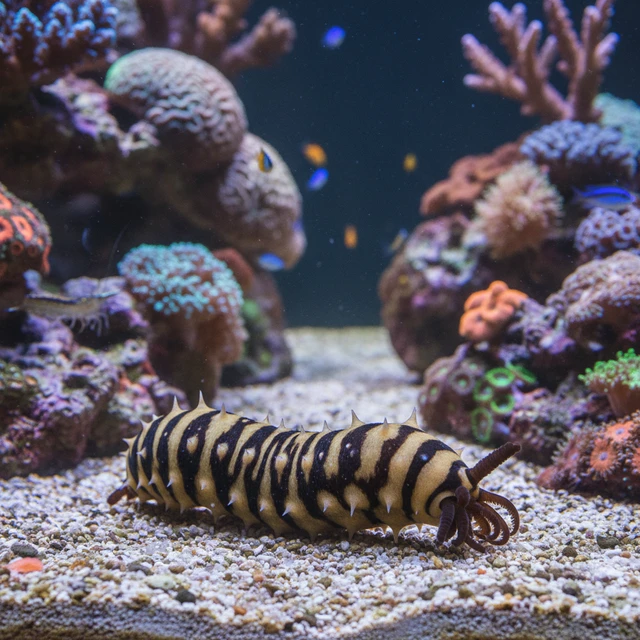
What Tiger Tail Sea Cucumber look like
Holothuria thomasi, commonly known as the Tiger Tail Sea Cucumber, exhibits a robust, elongated body that can reach lengths of up to 30 cm. Its surface is covered with a tough, leathery skin adorned with distinctive, dark brown to black coloration interspersed with lighter, irregular stripes, resembling a tiger's pattern. The body is cylindrical, tapering towards both ends, with a mouth surrounded by a crown of tentacles that are modified tube feet. Sexual dimorphism is minimal, though males may exhibit slightly more pronounced tentacle development during breeding seasons. As a defensive adaptation, this species can expel internal organs as a form of autotomy to deter predators, a process known as evisceration. Additionally, the presence of calcareous spicules within its body wall provides structural support and protection against predation.
Behavior & temperament
The Tiger Tail Sea Cucumber is primarily a benthic organism, exhibiting a solitary lifestyle on the ocean floor. It is known to be a detritivore, feeding on organic matter and sediment, which it processes through its tentacles. During feeding, it extends its tentacles to capture food particles from the surrounding substrate. This species has a slow, deliberate movement pattern, often burrowing into the sand or hiding among rocks for protection. While generally non-aggressive, it can exhibit defensive behaviors when threatened, such as retracting its tentacles and curling its body. Breeding occurs through external fertilization, with individuals releasing gametes into the water column during spawning events, typically synchronized with environmental cues.
Diet & feeding
Holothuria thomasi primarily feeds on detritus, organic matter, and microorganisms found in the sediment. In captivity, it requires a diet rich in finely crushed marine foods, such as spirulina, phytoplankton, and other organic supplements to thrive.
Behind the name
The genus name 'Holothuria' is derived from the Greek word 'holothourion', meaning 'a kind of sea cucumber', while the species name 'thomasi' honors the naturalist Thomas.
Plan your tank
Check the numbers before you buy: tank volume, salinity, salt mix, water changes, and your ongoing care routine. Keeping reef? Start from the Saltwater & Reef hub.
Keep reading
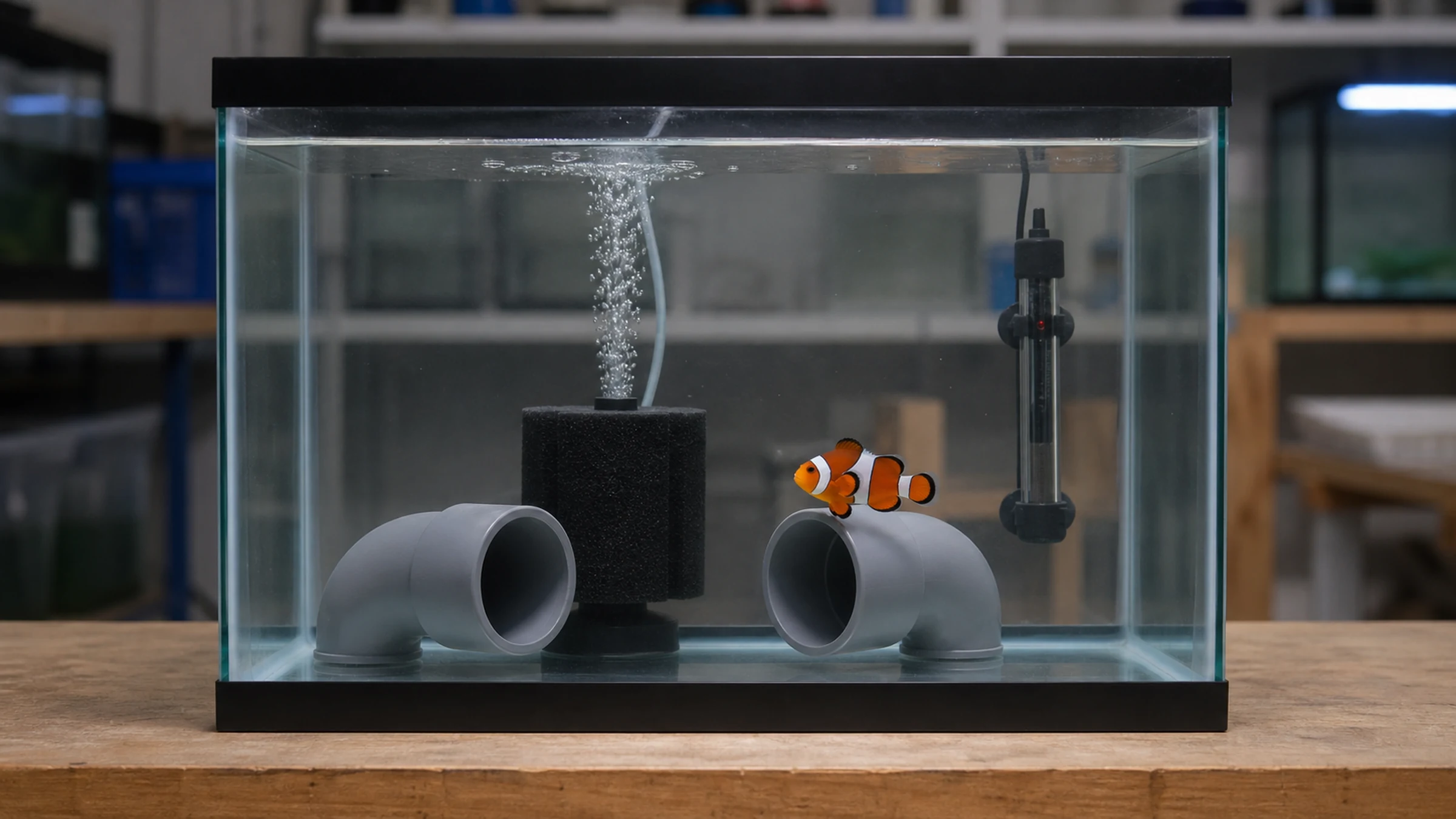
How to quarantine new saltwater fish against marine ich, velvet, and brooklynella: the QT tank, treatments, timelines, and the buy-clean shortcut.

What every reef parameter means and where to keep it: salinity, temperature, pH, alkalinity, calcium, magnesium, nitrate, and phosphate.

Choose compatible fish: school sizes, swimming zones, aggression, temperature and hardness matching, and honest bioload math for a peaceful community.
Keeping Tiger Tail Sea Cucumber?
AquaLens identifies your fish and plants from a photo, tracks water chemistry, and flags health issues early — free on iOS and Android.