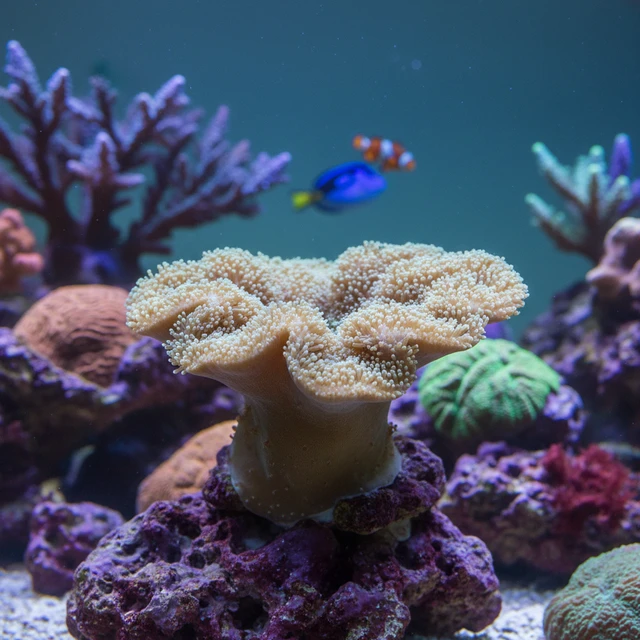
Toadstool Mushroom Leather Care Guide
Sarcophyton glaucum · Saltwater Soft Coral
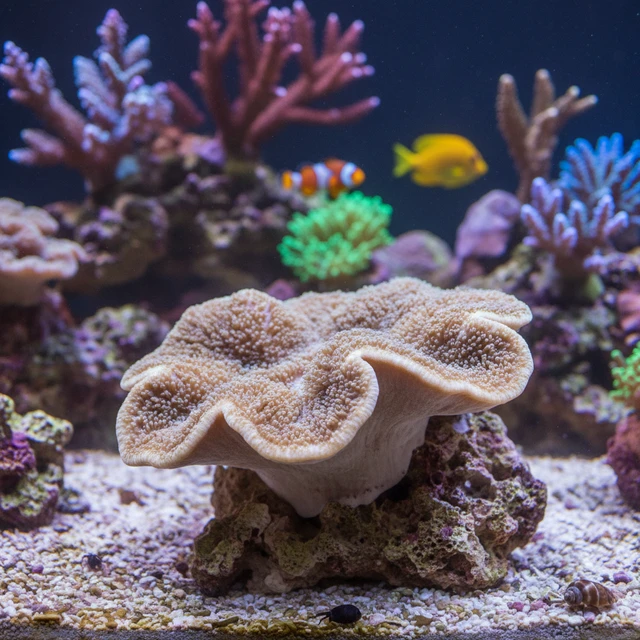
What Toadstool Mushroom Leather look like
Sarcophyton glaucum, commonly known as the Toadstool Mushroom Leather, exhibits a distinctive morphology characterized by a broad, umbrella-like cap that can reach up to 12 inches (30 cm) in diameter. The polyps are typically short and densely packed, with a smooth, leathery texture that gives the coral its characteristic appearance. The coloration ranges from pale yellow to greenish-brown, often with a mottled pattern. This species lacks a rigid skeleton, which allows for flexibility and movement in the water column. It possesses a well-defined central stalk that supports the cap, and the base is often wider, anchoring it securely to the substrate. Sexual dimorphism is minimal, but males may exhibit slightly smaller and less pronounced caps compared to females. Defensive adaptations include the secretion of mucous to deter predators and the presence of nematocysts, which can deliver a mild sting to potential threats.
Behavior & temperament
Sarcophyton glaucum is primarily a solitary coral, though it can form small colonies under optimal conditions. It exhibits a unique feeding behavior, extending its polyps during the night to capture plankton and organic detritus, while retracting during the day to minimize exposure to light and potential predation. The coral has a symbiotic relationship with zooxanthellae, which provide it with energy through photosynthesis. While generally peaceful, it can exhibit aggressive behavior towards neighboring corals through the release of chemical allelochemicals, which can inhibit the growth of competitors. The Toadstool Mushroom Leather is relatively sedentary but can slowly reposition itself if conditions are unfavorable.
Diet & feeding
Sarcophyton glaucum is primarily a filter feeder, capturing plankton and organic matter from the water column. In captivity, it thrives on a diet of finely chopped meaty foods, phytoplankton, and occasional coral-specific foods to enhance its health and coloration.
Behind the name
The genus name 'Sarcophyton' derives from the Greek words 'sarx' meaning 'flesh' and 'phyton' meaning 'plant', reflecting its fleshy appearance. The species name 'glaucum' comes from the Latin word for 'blue' or 'gray', referring to its typical coloration.
Plan your tank
Check the numbers before you buy: tank volume, salinity, salt mix, water changes, and your ongoing care routine. Keeping reef? Start from the Saltwater & Reef hub.
Keep reading
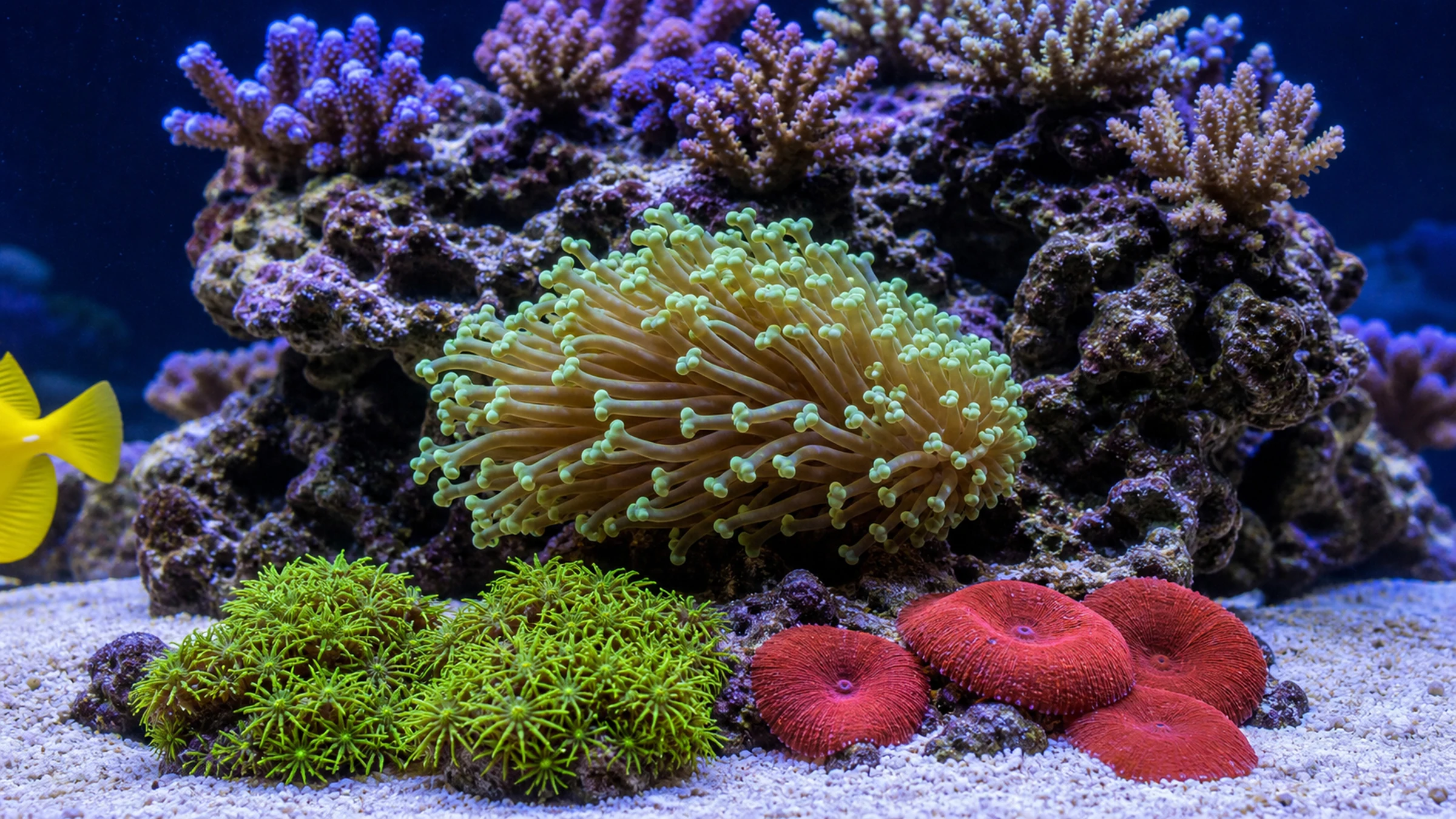
How to place corals by light and flow, PAR targets for softies, LPS, and SPS, dipping new corals for pests, and acclimating them without bleaching.

What every reef parameter means and where to keep it: salinity, temperature, pH, alkalinity, calcium, magnesium, nitrate, and phosphate.
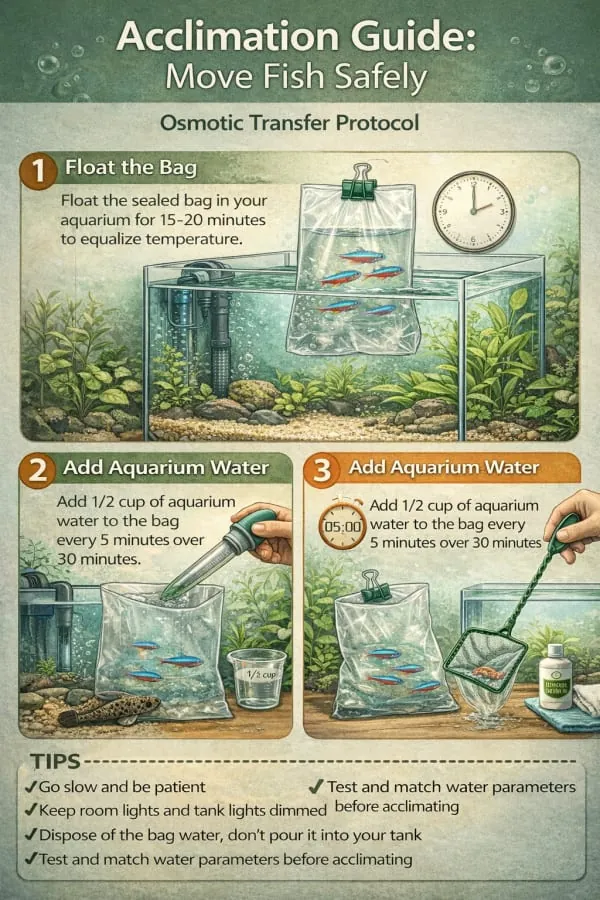
Acclimate new fish, shrimp, and coral safely: temperature floating, drip acclimation, plop-and-drop for shipped livestock, and the first 24 hours.
Keeping Toadstool Mushroom Leather?
AquaLens identifies your fish and plants from a photo, tracks water chemistry, and flags health issues early — free on iOS and Android.