Macmaster's Dwarf Cichlid Care Guide
Apistogramma macmasteri · Freshwater Fish
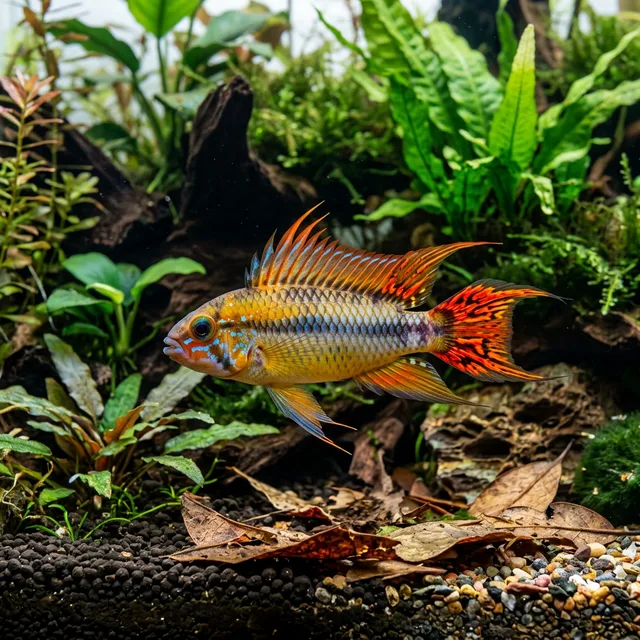
What Macmaster's Dwarf Cichlid look like
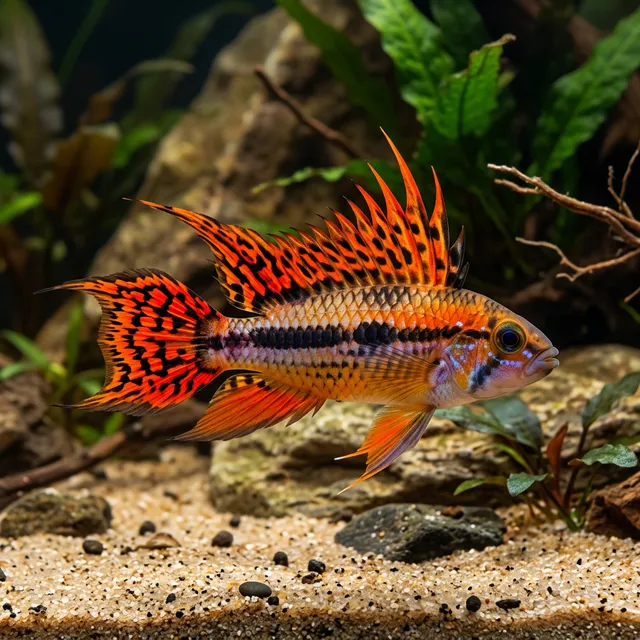
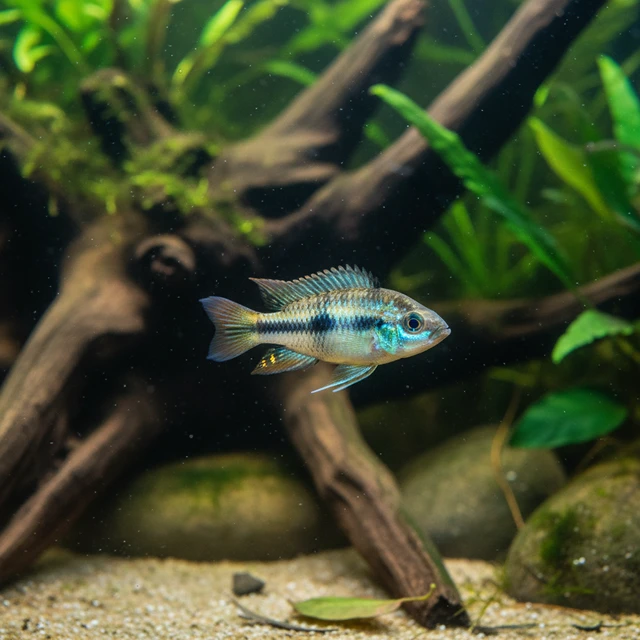
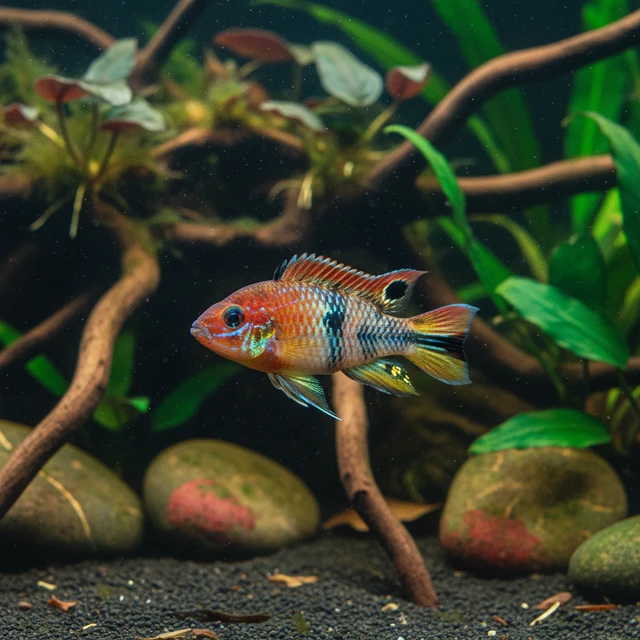
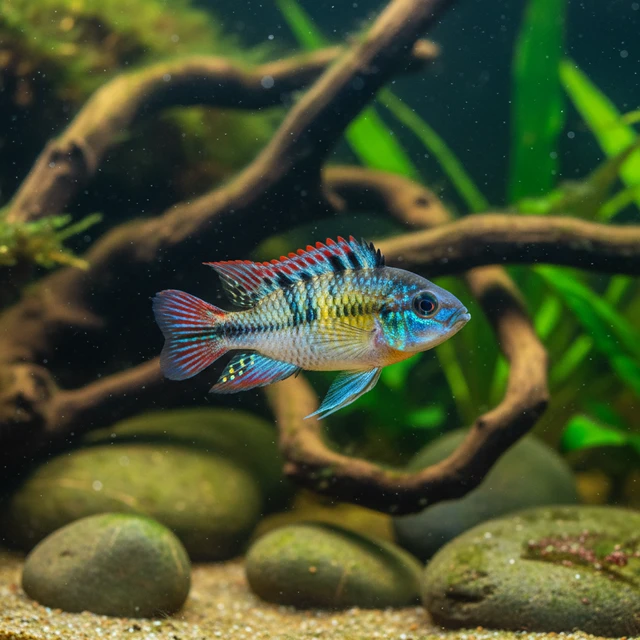
Apistogramma macmasteri, commonly known as Macmaster's Dwarf Cichlid, exhibits a robust and compact body that is characteristic of the genus Apistogramma. Adults can reach a maximum size of approximately 8 cm (3.1 inches), with males typically being larger and more vibrantly colored than females, showcasing pronounced sexual dimorphism. The species is adorned with a striking coloration, featuring a solid red hue that extends prominently over the shoulders and nape, accentuating the facial outline and the broad tail. Distinctive deep black zig-zag striping runs along the lateral line, providing a stark contrast to the vibrant red. The body is laterally compressed, facilitating agile movements in its natural habitat. Defensive adaptations include a set of sharp spines on the dorsal fin, which can be raised when threatened, and a robust body that allows for effective hiding among aquatic vegetation.
Behavior & temperament
Macmaster's Dwarf Cichlid is primarily a benthic dweller, often found in the lower strata of its aquatic environment, where it exhibits a territorial and somewhat aggressive temperament, particularly during breeding. This species is not an obligate schooler; instead, it tends to establish a hierarchy within small groups, with dominant males asserting control over territories. Breeding behavior is characterized by mouthbrooding, where females incubate fertilized eggs in their mouths until they are ready to be released as free-swimming fry. These cichlids are known for their complex social interactions, often engaging in displays of color and fin positioning to communicate dominance and attract mates.
Diet & feeding
In the wild, Apistogramma macmasteri is a carnivorous species that primarily feeds on small invertebrates and zooplankton. In captivity, it requires a diet rich in protein, including high-quality pellets, frozen or live foods such as brine shrimp and daphnia, to maintain optimal health and coloration.
Behind the name
Apistogramma (from Greek 'apisto-' meaning 'uncertain' and 'gramma' meaning 'line or writing'); macmasteri (named in honor of the ichthyologist who contributed to the study of cichlids).
Plan your tank
Check the numbers before you buy: tank volume, a stocking plan, cycle progress, water changes, and your ongoing care routine.
Keep reading

Choose compatible fish: school sizes, swimming zones, aggression, temperature and hardness matching, and honest bioload math for a peaceful community.
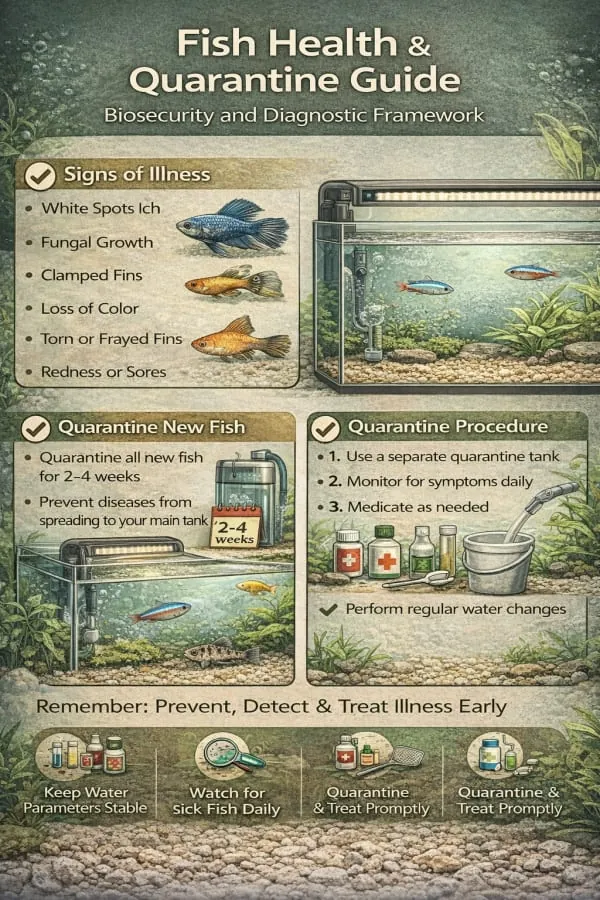
Quarantine new fish, spot the early warning signs, and treat disease without wrecking your tank. A practical freshwater fish health guide.

Acclimate new fish, shrimp, and coral safely: temperature floating, drip acclimation, plop-and-drop for shipped livestock, and the first 24 hours.
Keeping Macmaster's Dwarf Cichlid?
AquaLens identifies your fish and plants from a photo, tracks water chemistry, and flags health issues early — free on iOS and Android.