Apollo's Leporinus Care Guide
Leporinus apollo · Freshwater Fish
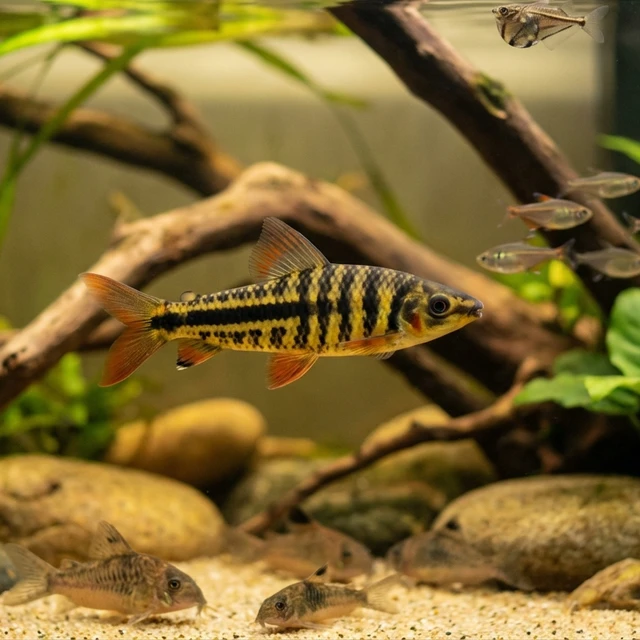
What Apollo's Leporinus look like
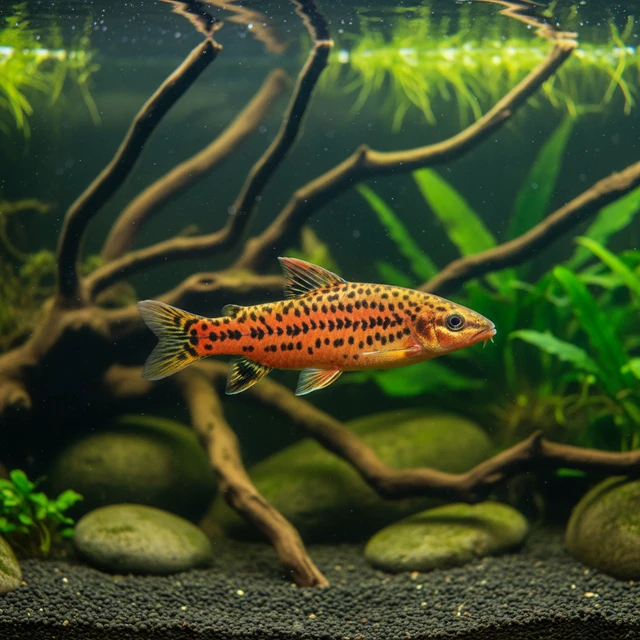
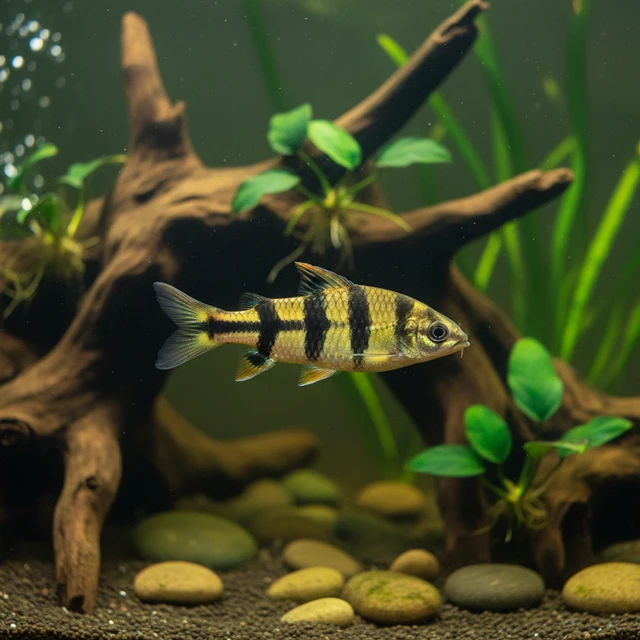
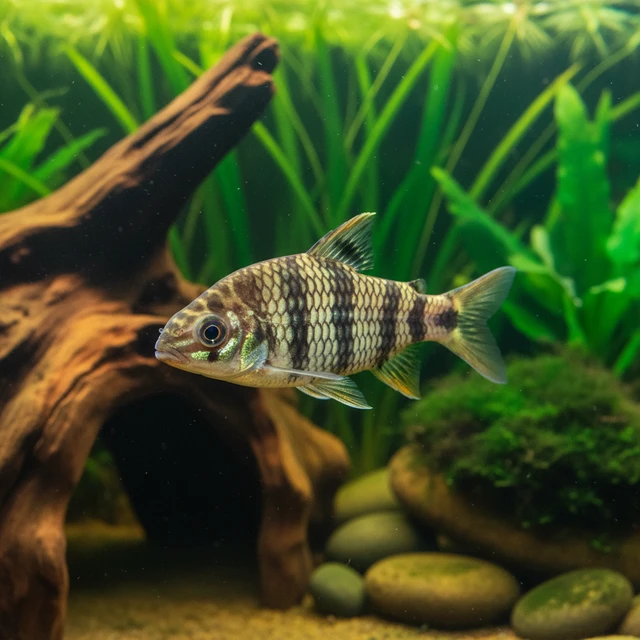
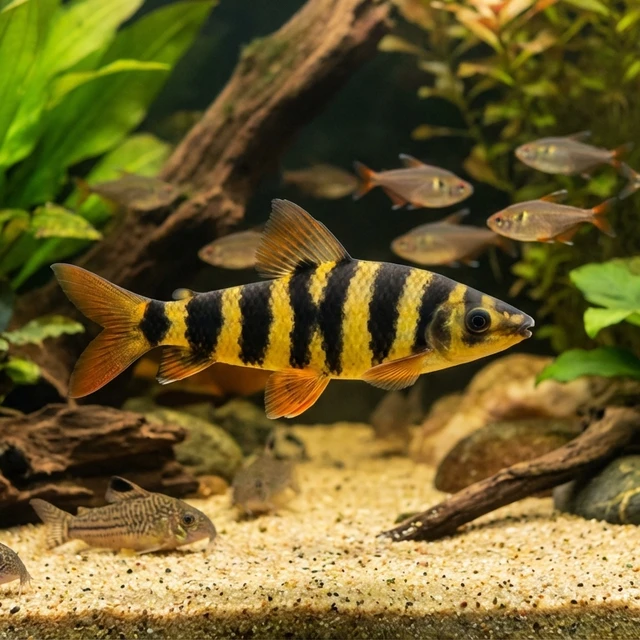
Leporinus apollo, commonly known as Apollo's Leporinus, exhibits a medium to large size, reaching a maximum adult length of approximately 8 to 10 inches. The species is characterized by its elongated, torpedo-shaped body that is laterally compressed, allowing for agile swimming. The coloration is a striking golden-silver adorned with bold, dark vertical or diagonal bands, which serve as a form of disruptive coloration in its natural habitat. Notably, Apollo's Leporinus possesses thick, fleshy lips adapted for scraping algae and detritus from surfaces, a feature that distinguishes it from other members of the Anostomidae family. The fish displays a unique swimming posture, often maintaining a slight head-down angle, which is indicative of its benthic feeding behavior. Defensive adaptations include its ability to swiftly maneuver through dense vegetation and its relatively robust body structure, which may deter smaller predators. The species does not exhibit significant sexual dimorphism, although males may be slightly larger and more colorful during breeding periods.
Behavior & temperament
Apollo's Leporinus is primarily a social fish that thrives in groups, often forming loose schools in the wild. It is typically found in the mid to lower water column, favoring areas with ample vegetation and submerged structures. The species exhibits a peaceful temperament but can display territorial behaviors, especially during breeding seasons. Breeding occurs through egg scattering, where females release eggs in open water, and males fertilize them externally. The fish is known to be relatively active and inquisitive, often exploring its environment and interacting with tank mates, although it may show aggression towards smaller or similarly shaped species.
Diet & feeding
In its natural habitat, Apollo's Leporinus is an omnivore, feeding on a varied diet that includes algae, plant matter, and small invertebrates. In captivity, it requires a balanced diet consisting of high-quality flake food, pellets, and occasional live or frozen foods like brine shrimp and bloodworms to ensure optimal health and coloration.
Behind the name
The genus name 'Leporinus' derives from the Latin 'leporinus', meaning 'hare-like', referencing the fish's elongated body and thick lips that resemble a hare's mouth. The species name 'apollo' is likely a nod to the Greek god Apollo, symbolizing beauty and light, reflecting the fish's striking coloration.
Plan your tank
Check the numbers before you buy: tank volume, a stocking plan, cycle progress, water changes, and your ongoing care routine.
Keep reading

Choose compatible fish: school sizes, swimming zones, aggression, temperature and hardness matching, and honest bioload math for a peaceful community.
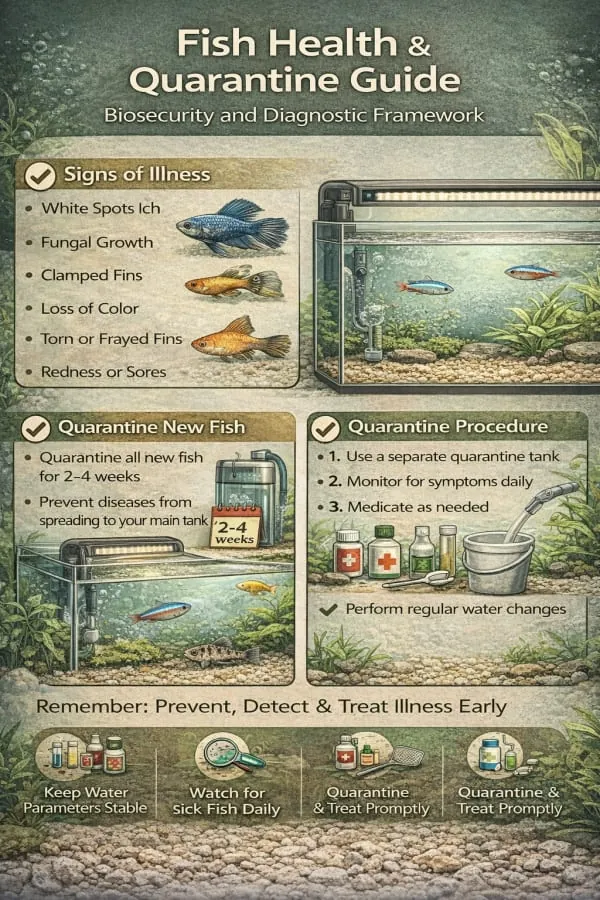
Quarantine new fish, spot the early warning signs, and treat disease without wrecking your tank. A practical freshwater fish health guide.
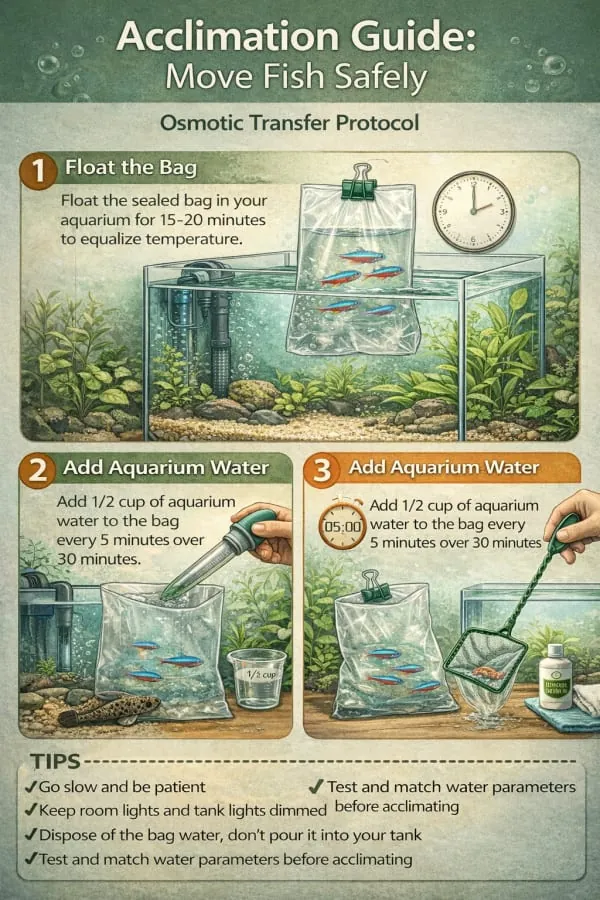
Acclimate new fish, shrimp, and coral safely: temperature floating, drip acclimation, plop-and-drop for shipped livestock, and the first 24 hours.
Keeping Apollo's Leporinus?
AquaLens identifies your fish and plants from a photo, tracks water chemistry, and flags health issues early — free on iOS and Android.