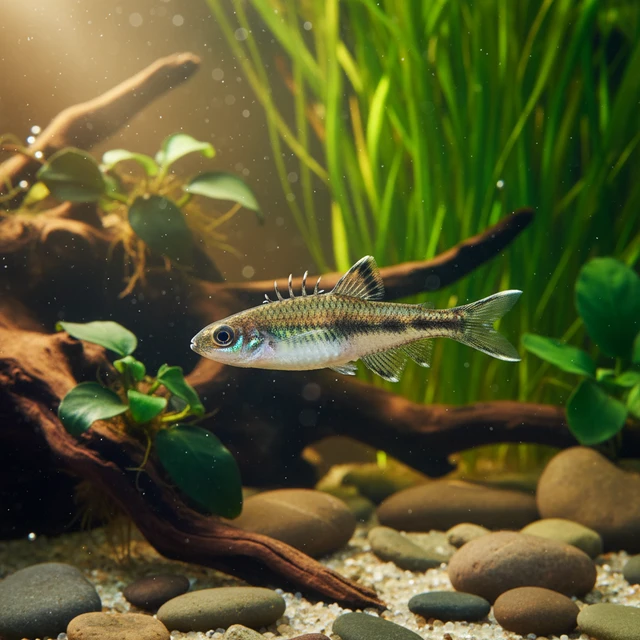
Armoured Stickleback Care Guide
Indostomus paradoxus · Freshwater Fish
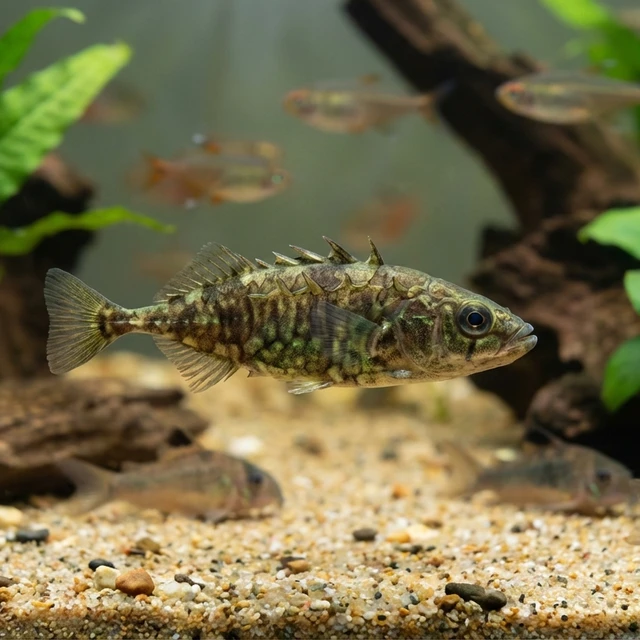
What Armoured Stickleback look like
The Armoured Stickleback (Indostomus paradoxus) exhibits a highly specialized morphology characterized by its diminutive size, typically reaching a maximum length of 1 inch (2.5 cm). Its body is elongated and laterally compressed, covered in distinctive bony armor rings that serve as a defensive adaptation against predation. The coloration ranges from brown to tan, providing effective camouflage within its natural habitat. Notably, the species possesses a tiny tubular snout, adapted for suction feeding on small invertebrates. The dorsal fin is composed of several tiny, separate spines, which can be raised as a defensive mechanism. This unique morphology, combined with its slow and deliberate movement, contributes to its classification as one of the most peculiar and diminutive aquarium fish, reminiscent of a miniature armored pipefish.
Behavior & temperament
Indostomus paradoxus is primarily a solitary species, exhibiting a low level of aggression towards conspecifics and other tank mates. It typically occupies the benthic zone of its habitat, where it can be found among submerged vegetation and detritus. The species is not an obligate schooler, but it may exhibit social interactions during breeding periods. Breeding behavior involves egg scattering, where females release eggs in suitable substrates, and males may exhibit territoriality during this time. The Armoured Stickleback is known for its deliberate swimming style, often remaining motionless for extended periods, which aids in its camouflage and predation strategy.
Diet & feeding
In the wild, the Armoured Stickleback is an omnivore, feeding on a diet primarily composed of small invertebrates and detritus. In captivity, it requires a varied diet that includes high-quality flake food, live or frozen micro-worms, and finely crushed pellets to ensure adequate nutrition.
Behind the name
Indostomus (from 'Indo-', relating to India, and 'stomus', meaning mouth); paradoxus (Greek for 'strange' or 'bizarre').
Plan your tank
Check the numbers before you buy: tank volume, a stocking plan, cycle progress, water changes, and your ongoing care routine.
Keep reading
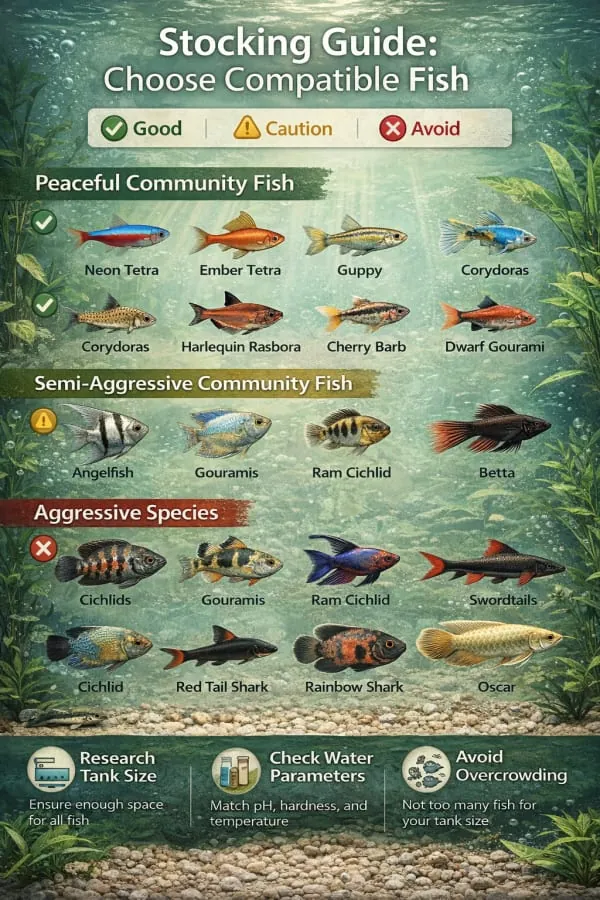
Choose compatible fish: school sizes, swimming zones, aggression, temperature and hardness matching, and honest bioload math for a peaceful community.
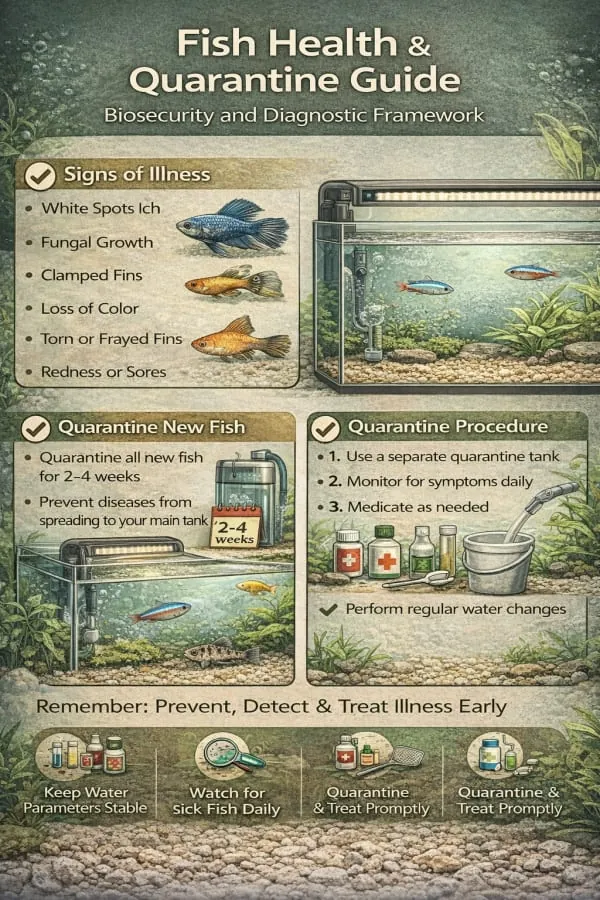
Quarantine new fish, spot the early warning signs, and treat disease without wrecking your tank. A practical freshwater fish health guide.
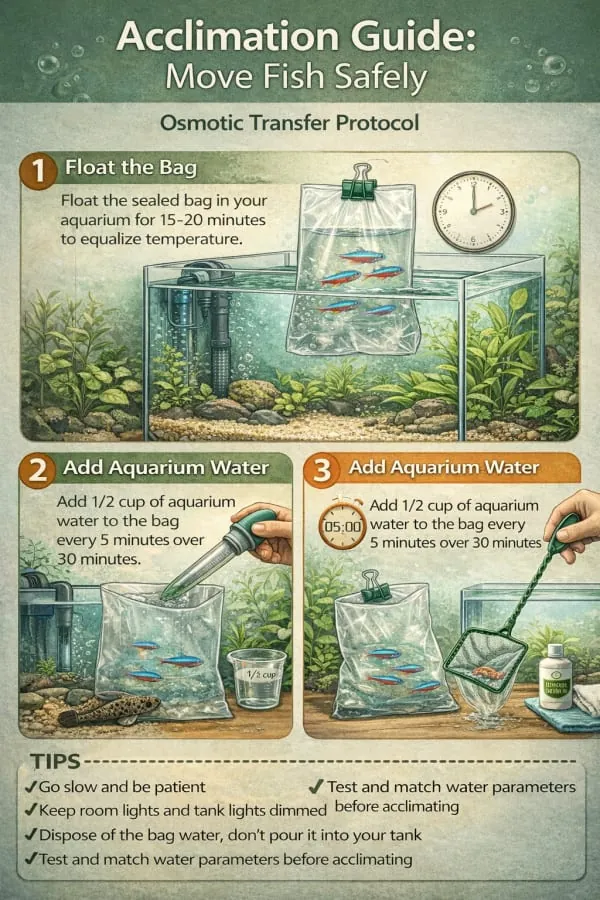
Acclimate new fish, shrimp, and coral safely: temperature floating, drip acclimation, plop-and-drop for shipped livestock, and the first 24 hours.
Keeping Armoured Stickleback?
AquaLens identifies your fish and plants from a photo, tracks water chemistry, and flags health issues early — free on iOS and Android.