Banded Pipefish Care Guide
Doryrhamphus dactyliophorus · Saltwater Pipefish
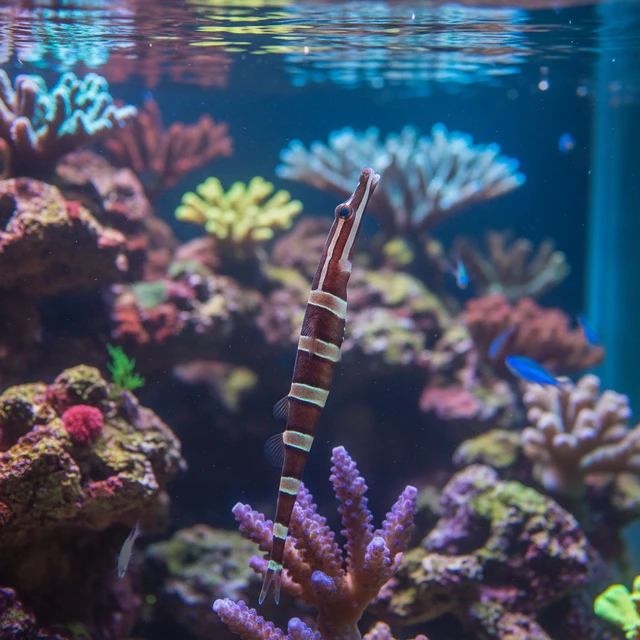
What Banded Pipefish look like
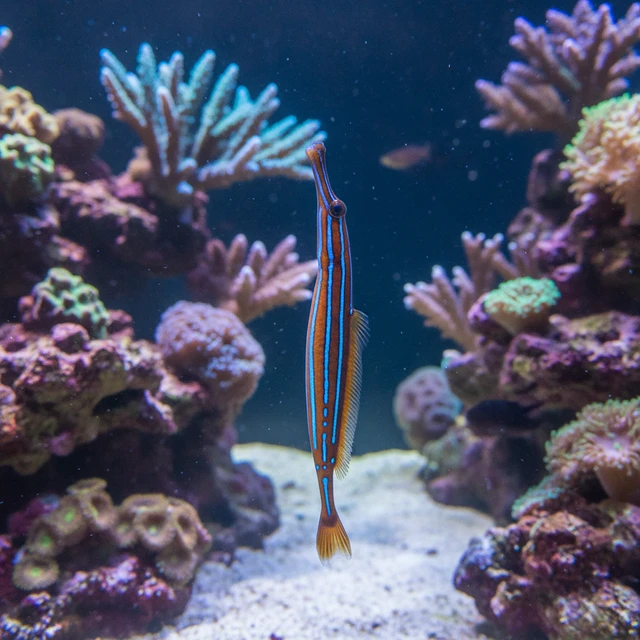
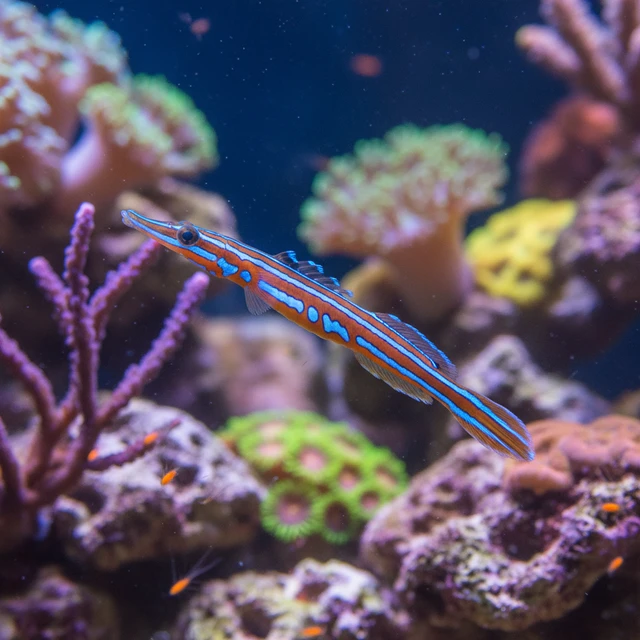
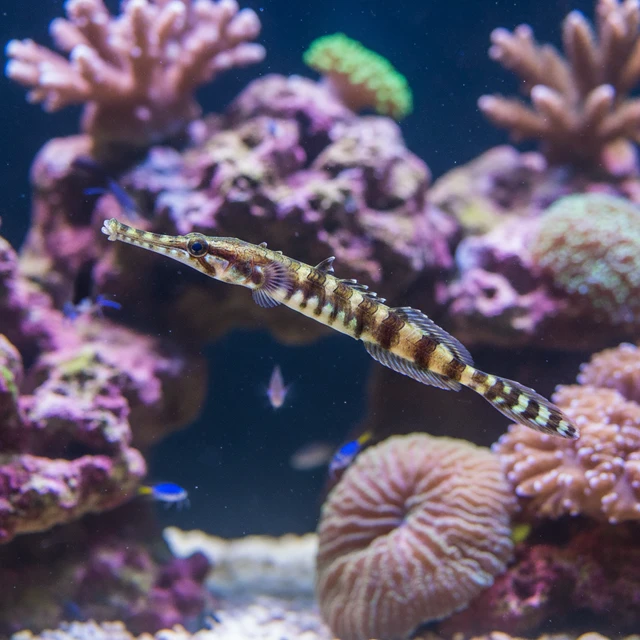
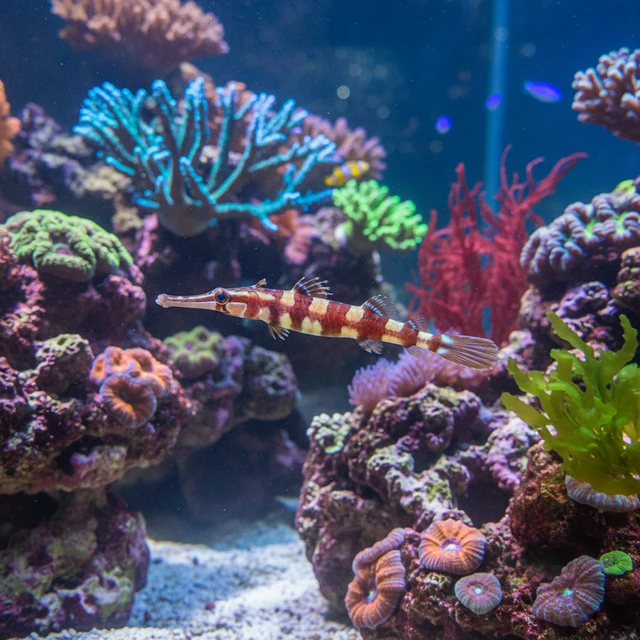
The Banded Pipefish (Doryrhamphus dactyliophorus) exhibits a slender, elongated body that can reach a maximum adult size of approximately 6 inches (15 cm). Its morphology is characterized by a series of distinctive vertical bands that alternate between dark and light colors, providing effective camouflage among seagrass and coral environments. Sexual dimorphism is subtle, with females generally being slightly larger and possessing a more pronounced abdomen due to their reproductive role. The species possesses a tubular snout equipped with small, specialized teeth adapted for suction feeding on small crustaceans and zooplankton. Additionally, the Banded Pipefish features a dorsal fin located far back on the body, which aids in maneuverability, and a reduced pelvic fin structure, enhancing its streamlined form for navigating through dense aquatic vegetation.
Behavior & temperament
Banded Pipefish are generally solitary or found in small groups, exhibiting a non-territorial behavior that allows them to coexist with other species in their habitat. They are primarily found in shallow waters, often hovering in the water column or among seagrass beds. Breeding behavior is characterized by a unique reproductive strategy where males carry fertilized eggs in a brood pouch, similar to seahorses. During courtship, males display vibrant coloration and engage in intricate swimming displays to attract females. Their temperament is generally peaceful, although they may exhibit mild aggression towards conspecifics during the breeding season. The species is known for its ability to remain motionless for extended periods, relying on camouflage to avoid predation.
Diet & feeding
In the wild, Banded Pipefish primarily feed on small crustaceans, such as copepods and mysid shrimp, as well as other zooplankton. In captivity, they require a diet consisting of live or frozen foods, including brine shrimp and finely chopped mysis shrimp, to ensure proper nutrition.
Behind the name
The genus name 'Doryrhamphus' is derived from the Greek words 'dory' meaning 'spear' and 'rhamphos' meaning 'beak', referring to the pipefish's elongated snout. The species name 'dactyliophorus' comes from the Greek 'dactylos' meaning 'finger' and 'phoros' meaning 'bearing', likely referencing the slender, finger-like appearance of the fish.
Plan your tank
Check the numbers before you buy: tank volume, salinity, salt mix, water changes, and your ongoing care routine. Keeping reef? Start from the Saltwater & Reef hub.
Keep reading
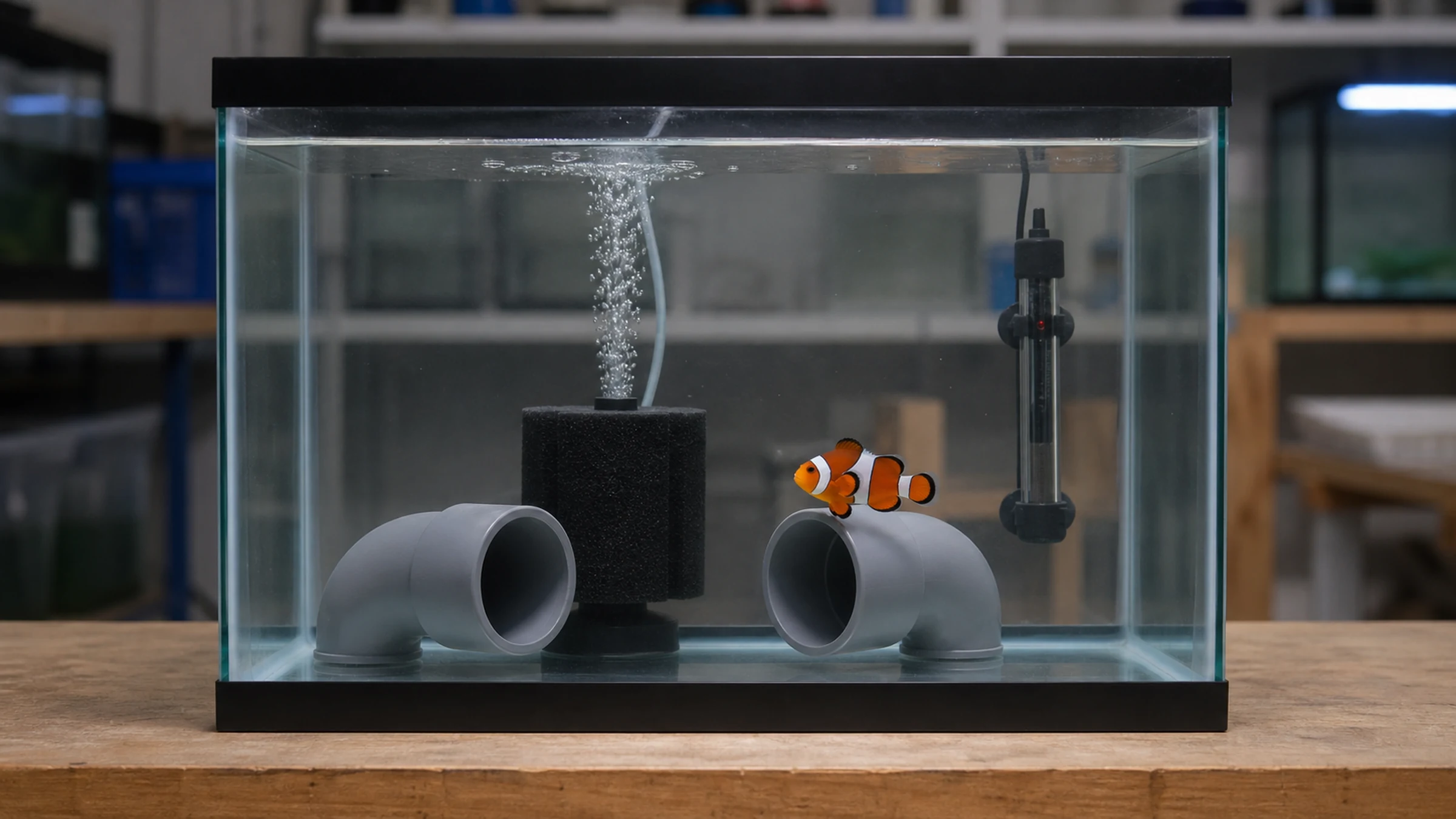
How to quarantine new saltwater fish against marine ich, velvet, and brooklynella: the QT tank, treatments, timelines, and the buy-clean shortcut.

What every reef parameter means and where to keep it: salinity, temperature, pH, alkalinity, calcium, magnesium, nitrate, and phosphate.
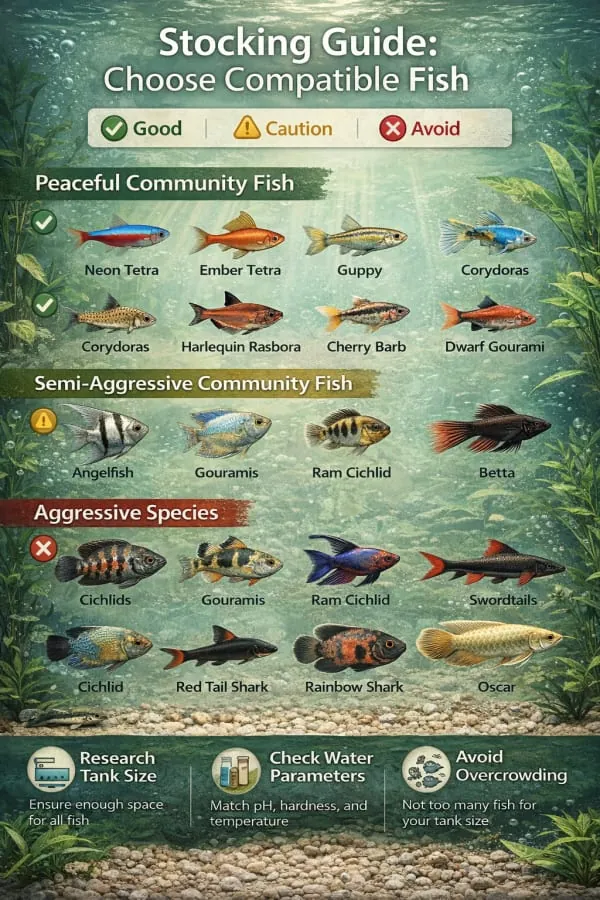
Choose compatible fish: school sizes, swimming zones, aggression, temperature and hardness matching, and honest bioload math for a peaceful community.
Keeping Banded Pipefish?
AquaLens identifies your fish and plants from a photo, tracks water chemistry, and flags health issues early — free on iOS and Android.