Bluestripe Pipefish Care Guide
Doryrhamphus excisus · Saltwater Pipefish
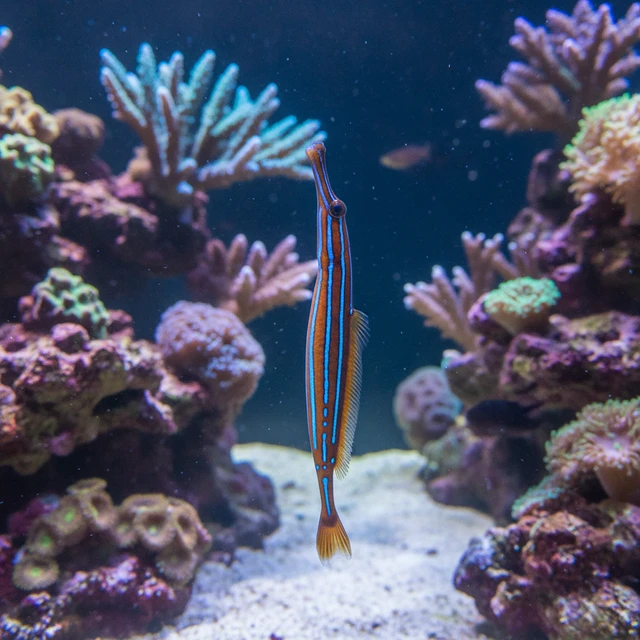
What Bluestripe Pipefish look like
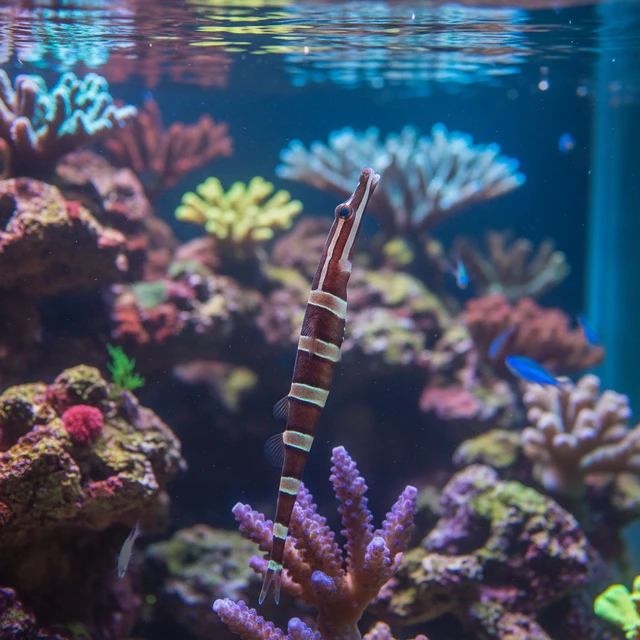
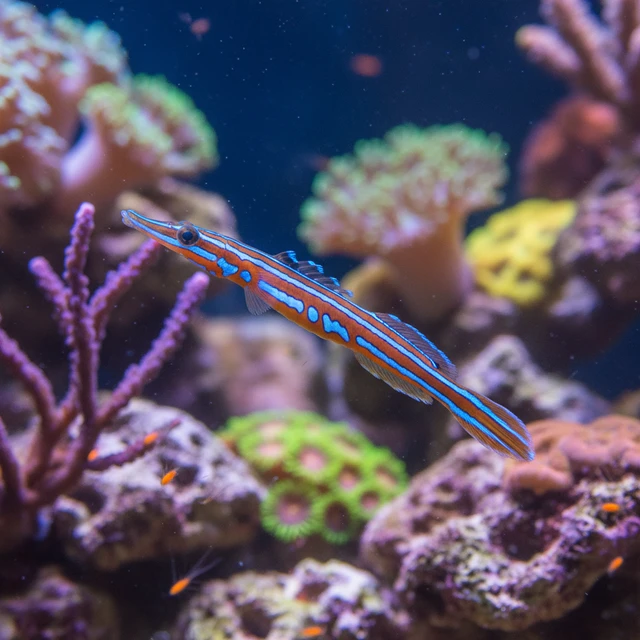
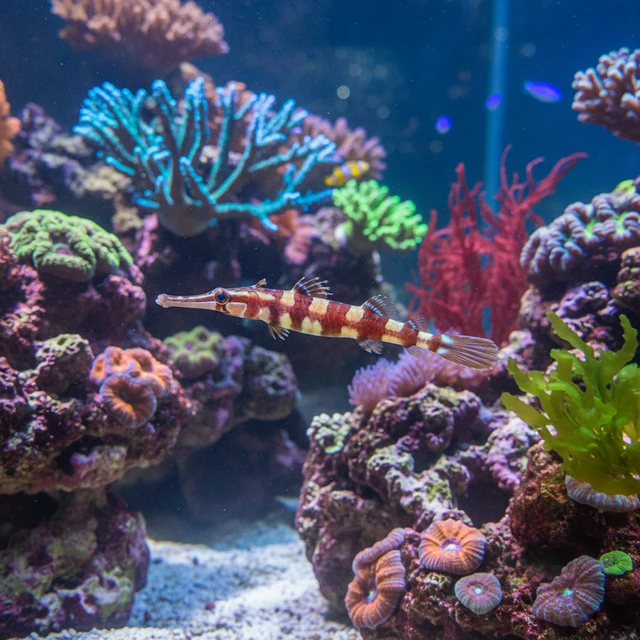
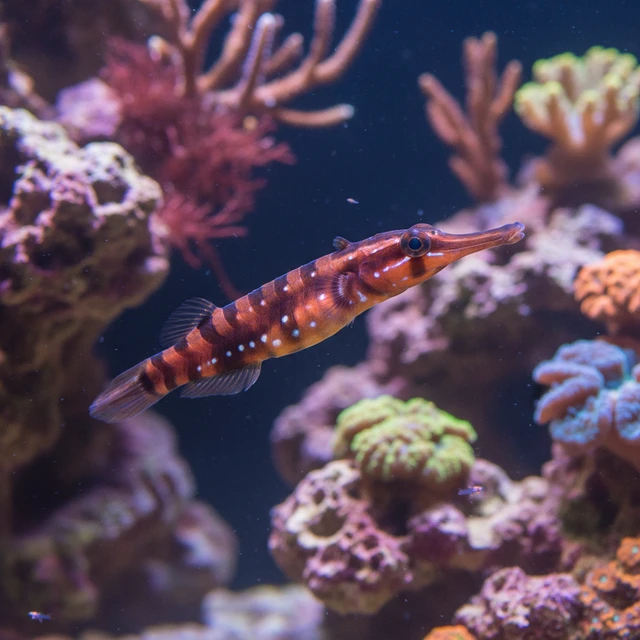
The Bluestripe Pipefish (Doryrhamphus excisus) exhibits a slender, elongated body that can reach a maximum adult size of approximately 6 inches (15 cm). Its morphology is characterized by a series of distinct, horizontal blue stripes that run along its body, contrasting sharply with its greenish-brown background coloration, which serves as effective camouflage among seagrasses and coral reefs. The head is elongated with a tubular snout, equipped with a small mouth adapted for feeding on small crustaceans and zooplankton. Sexual dimorphism is subtle; males possess a brood pouch located on their ventral side, which becomes more pronounced during breeding seasons. Defensive adaptations include the ability to remain motionless and blend into their surroundings, as well as the capability to swim in a serpentine manner to evade predators.
Behavior & temperament
Bluestripe Pipefish are generally found in pairs or small groups, exhibiting a social hierarchy that is often dictated by size and breeding status. They inhabit shallow waters, typically at the interface between coral reefs and seagrass beds, where they can be observed hovering in a vertical position among vegetation. Breeding behavior involves elaborate courtship displays, during which males and females engage in synchronized swimming and color changes. Males are responsible for carrying and nurturing the eggs in their brood pouch until they hatch. Their temperament is typically peaceful, although they may exhibit territorial behavior during the breeding season, particularly males defending their brood pouch.
Diet & feeding
In the wild, the Bluestripe Pipefish primarily feeds on small crustaceans, such as copepods and mysid shrimp, as well as zooplankton. In captivity, they require a diet consisting of finely crushed frozen or live foods, including brine shrimp and other small marine invertebrates.
Behind the name
The genus name 'Doryrhamphus' is derived from the Greek words 'dory' meaning 'spear' and 'rhamphos' meaning 'beak', referring to the pipefish's elongated snout. The species name 'excisus' is Latin for 'cut off' or 'shortened', likely referencing the pipefish's distinctive body shape.
Plan your tank
Check the numbers before you buy: tank volume, salinity, salt mix, water changes, and your ongoing care routine. Keeping reef? Start from the Saltwater & Reef hub.
Keep reading
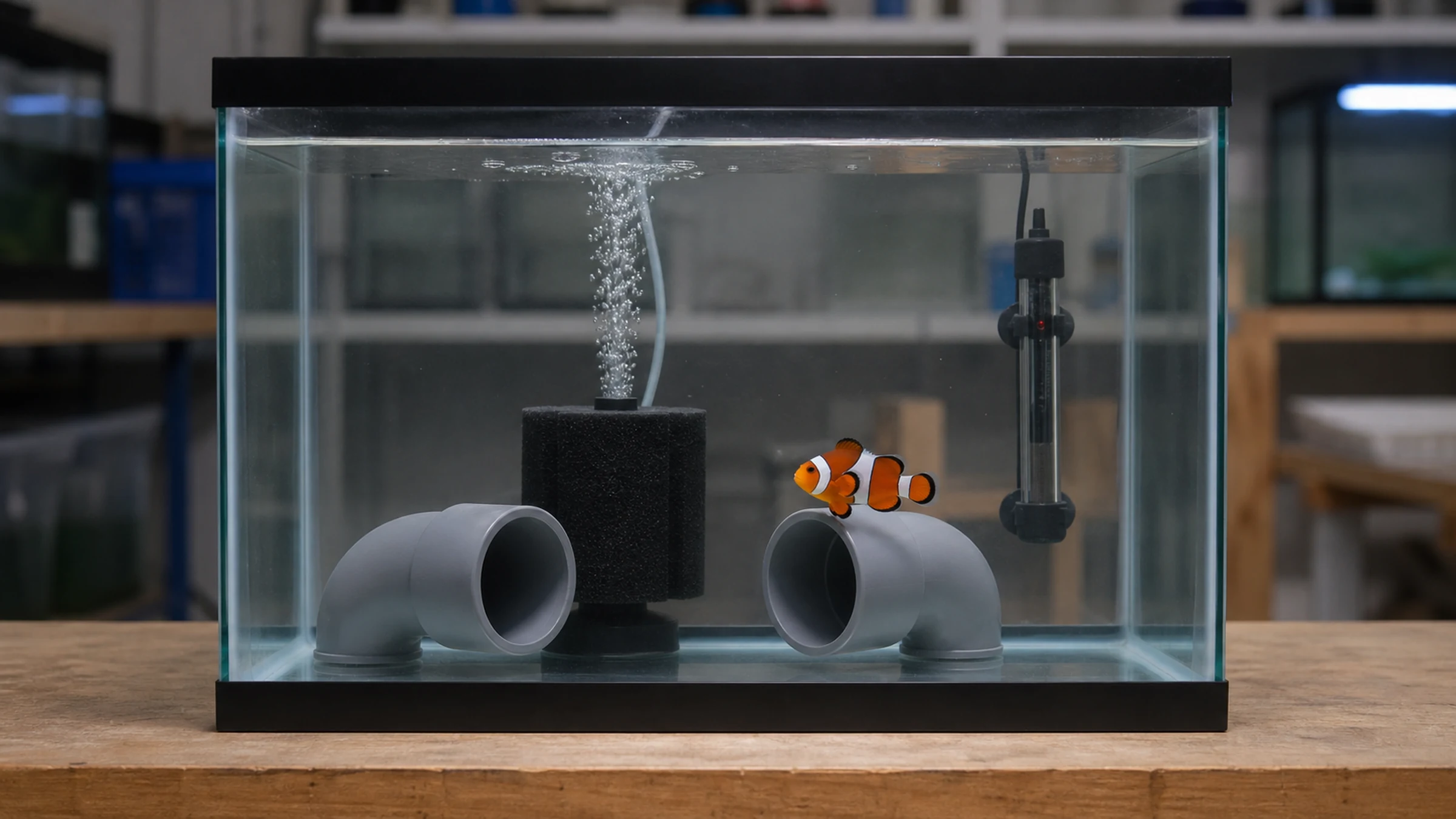
How to quarantine new saltwater fish against marine ich, velvet, and brooklynella: the QT tank, treatments, timelines, and the buy-clean shortcut.

What every reef parameter means and where to keep it: salinity, temperature, pH, alkalinity, calcium, magnesium, nitrate, and phosphate.

Choose compatible fish: school sizes, swimming zones, aggression, temperature and hardness matching, and honest bioload math for a peaceful community.
Keeping Bluestripe Pipefish?
AquaLens identifies your fish and plants from a photo, tracks water chemistry, and flags health issues early — free on iOS and Android.