Banjo Catfish Care Guide
Bunocephalus coracoideus · Freshwater Fish
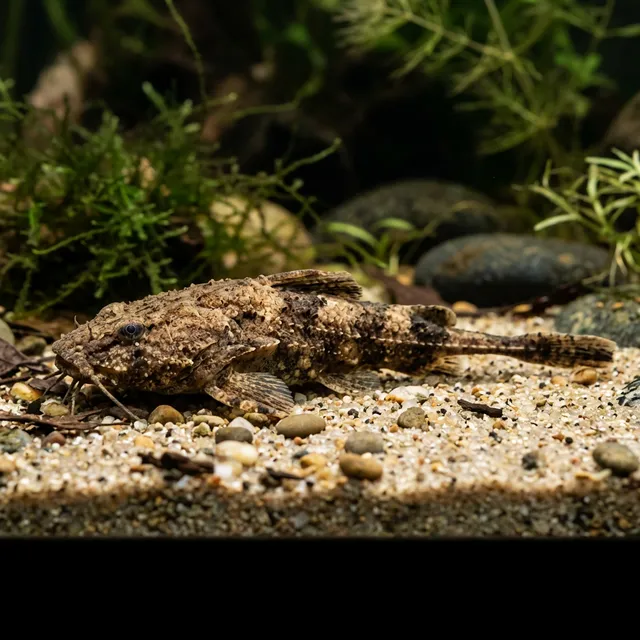
What Banjo Catfish look like
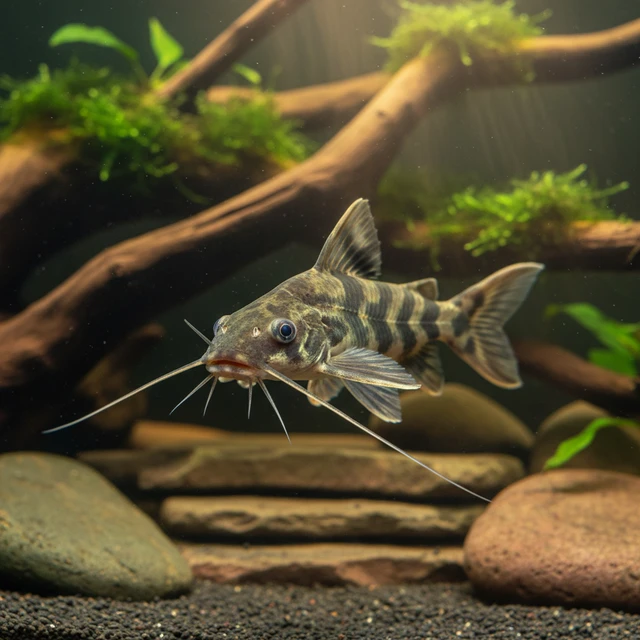
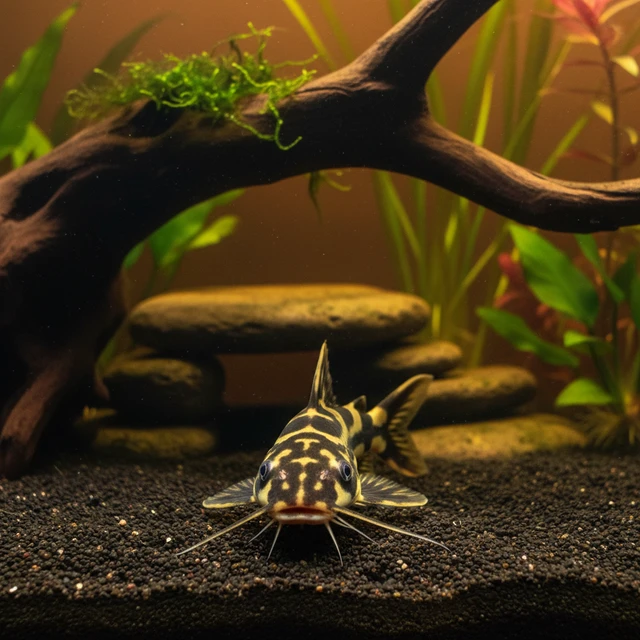
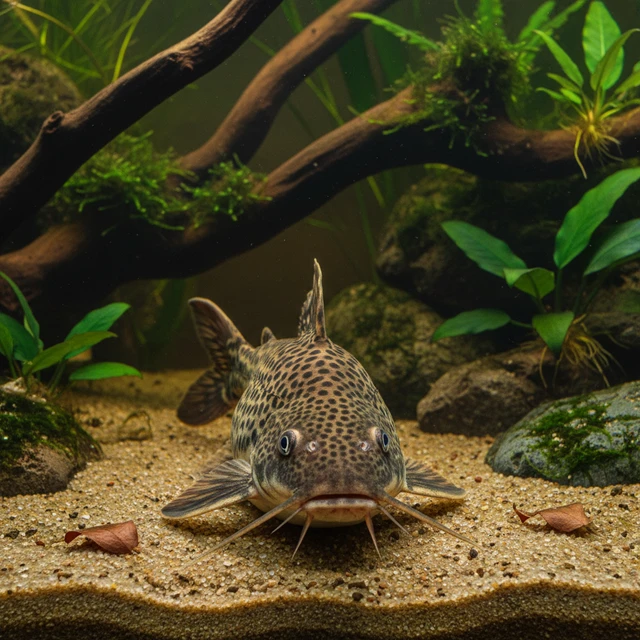
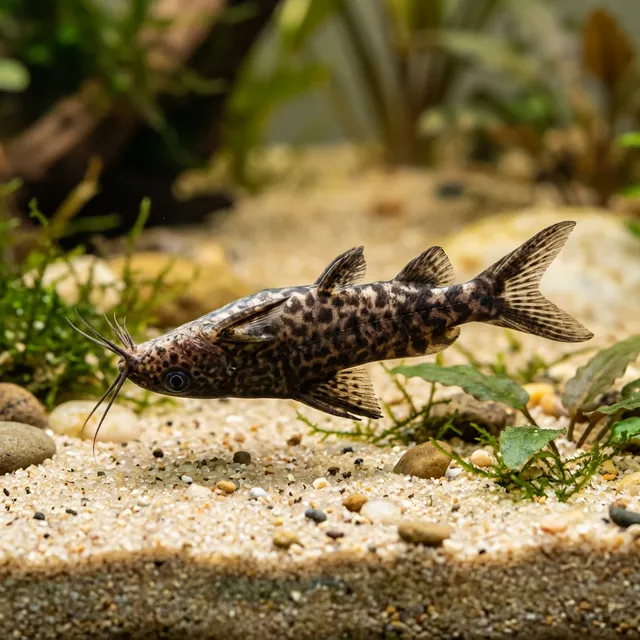
The Banjo Catfish (Bunocephalus coracoideus) exhibits a highly distinctive morphology characterized by its bizarre, laterally compressed body shape that resembles a banjo guitar. This species can reach a maximum adult size of approximately 20 cm (8 inches), with a notably wide, flat, and rough-textured head that tapers sharply to a slender caudal fin. The head features a broad, flattened snout and large, laterally positioned eyes, which provide excellent vision in low-light conditions. Sexual dimorphism is subtle, with males typically being slightly smaller and more slender than females. Defensive adaptations include its ability to bury itself in substrate, providing camouflage against predators. The species possesses a well-developed lateral line system, which aids in detecting vibrations in the water, and its dentition is adapted for a varied diet, featuring small, conical teeth suitable for grasping food items. The dorsal fin is elongated and low, contributing to its unique swimming posture, while the pectoral fins are broad and used for stabilization as it rests on the substrate.
Behavior & temperament
The Banjo Catfish is primarily a benthic dweller, often found resting motionless on the substrate of slow-moving waters in the Amazon basin. It exhibits solitary behavior, preferring to remain hidden among sand and debris, although it may occasionally be observed in small groups during feeding. This species is not an obligate schooler and does not display a social hierarchy. Breeding behavior is not extensively documented, but it is believed to be an egg scatterer, depositing eggs in sandy substrates. The temperament of Bunocephalus coracoideus is generally peaceful, though it may exhibit territoriality when confined in smaller spaces, particularly during breeding periods.
Diet & feeding
In the wild, the Banjo Catfish is an omnivore, feeding on a varied diet that includes detritus, small invertebrates, and plant matter. In captivity, it requires a balanced diet consisting of high-quality sinking pellets, frozen or live foods such as bloodworms and brine shrimp, and occasional vegetable matter to ensure optimal health.
Behind the name
Bunocephalus (from Greek 'buno' meaning 'bump' and 'kephalus' meaning 'head'); coracoideus (from Latin 'coracoideus' meaning 'like a coracoid', referring to the shape of the fish).
Plan your tank
Check the numbers before you buy: tank volume, a stocking plan, cycle progress, water changes, and your ongoing care routine.
Keep reading
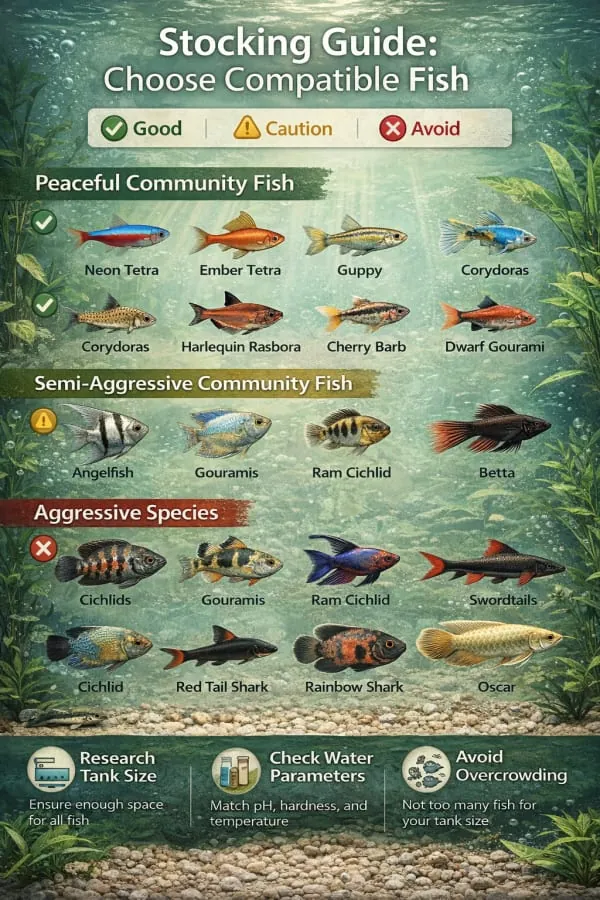
Choose compatible fish: school sizes, swimming zones, aggression, temperature and hardness matching, and honest bioload math for a peaceful community.
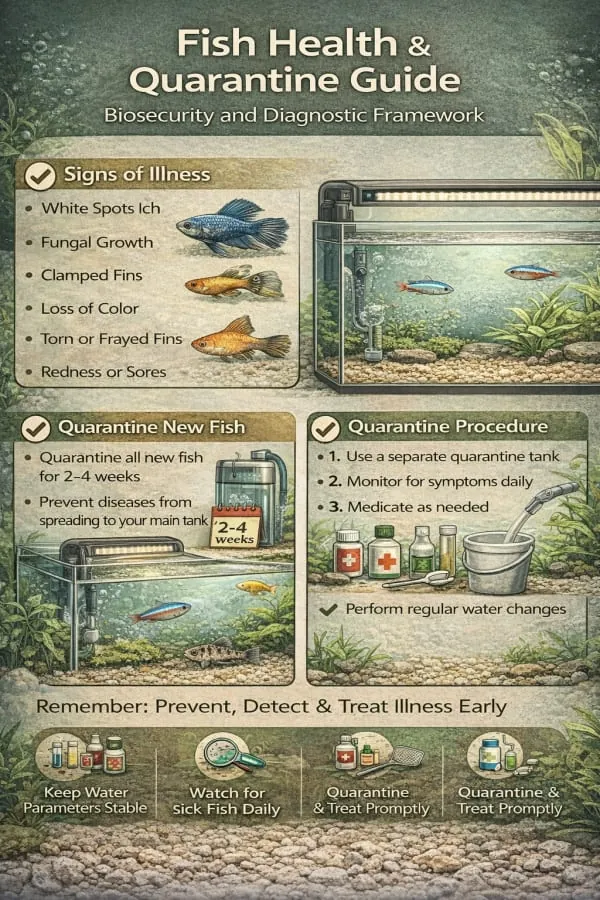
Quarantine new fish, spot the early warning signs, and treat disease without wrecking your tank. A practical freshwater fish health guide.
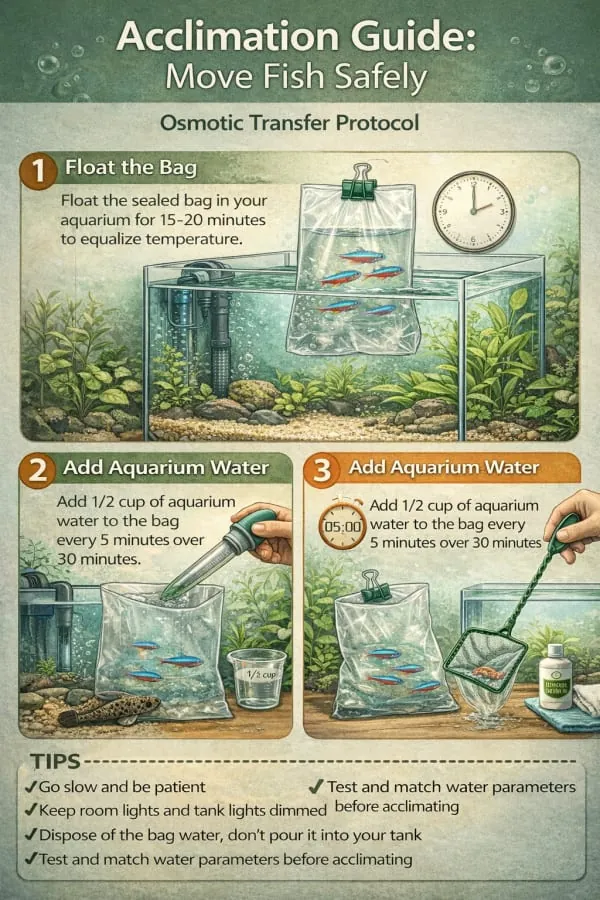
Acclimate new fish, shrimp, and coral safely: temperature floating, drip acclimation, plop-and-drop for shipped livestock, and the first 24 hours.
Keeping Banjo Catfish?
AquaLens identifies your fish and plants from a photo, tracks water chemistry, and flags health issues early — free on iOS and Android.