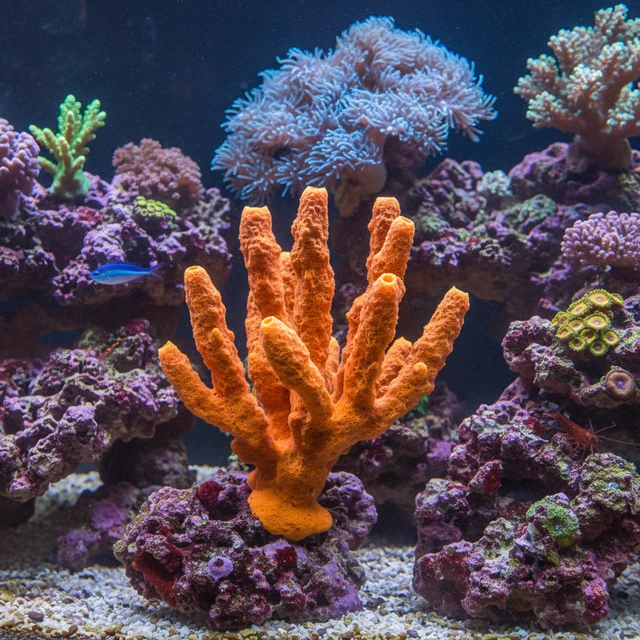
Blue Sponge Care Guide
Haliclona caerulea · Saltwater Sponge
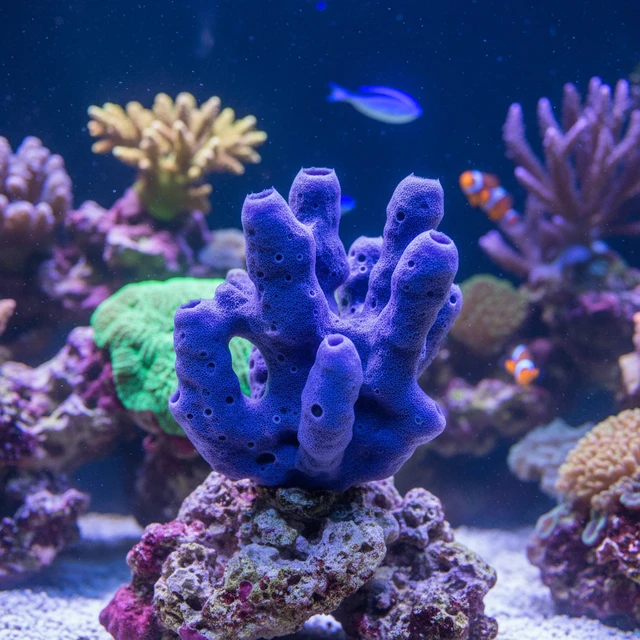
What Blue Sponge look like
Haliclona caerulea, commonly known as the Blue Sponge, is characterized by its vibrant blue coloration, which is attributed to the presence of specific pigments within its cells. This species exhibits a lobate, encrusting form, with a maximum adult size reaching approximately 30 cm in diameter. The sponge's surface is covered in a network of small oscula, which serve as water outlets, and its texture is soft and pliable, allowing for some degree of flexibility. Unlike many other sponges, H. caerulea does not display significant sexual dimorphism, as both sexes exhibit similar external features. Its defensive adaptations include the production of bioactive compounds that deter potential predators, and its porous structure allows for efficient water filtration, which is crucial for its feeding strategy. Additionally, the sponge's unique morphology includes a complex system of canals that facilitate water flow and nutrient uptake.
Behavior & temperament
Haliclona caerulea is primarily a sessile organism, firmly attached to substrates in shallow marine environments. It exhibits a passive feeding behavior, filtering plankton and organic particles from the water column through its oscula. The sponge does not engage in active movement but can expand and contract slightly in response to water flow and environmental conditions. While it does not possess stinging cells like some cnidarians, its bioactive compounds can deter herbivorous fish and other potential grazers. In terms of symbiotic relationships, H. caerulea may host various microorganisms and algae, contributing to its nutrient acquisition and overall health.
Diet & feeding
Haliclona caerulea is a filter feeder, primarily consuming plankton and organic detritus from the water column. In captivity, it requires a stable supply of phytoplankton and other fine particulate matter to thrive.
Behind the name
The genus name 'Haliclona' is derived from the Greek words 'hali' meaning 'sea' and 'klon' meaning 'branch', referring to the branching structure of many sponges in this group. The species name 'caerulea' comes from the Latin word for 'blue', indicating the sponge's distinctive coloration.
Plan your tank
Check the numbers before you buy: tank volume, salinity, salt mix, water changes, and your ongoing care routine. Keeping reef? Start from the Saltwater & Reef hub.
Keep reading
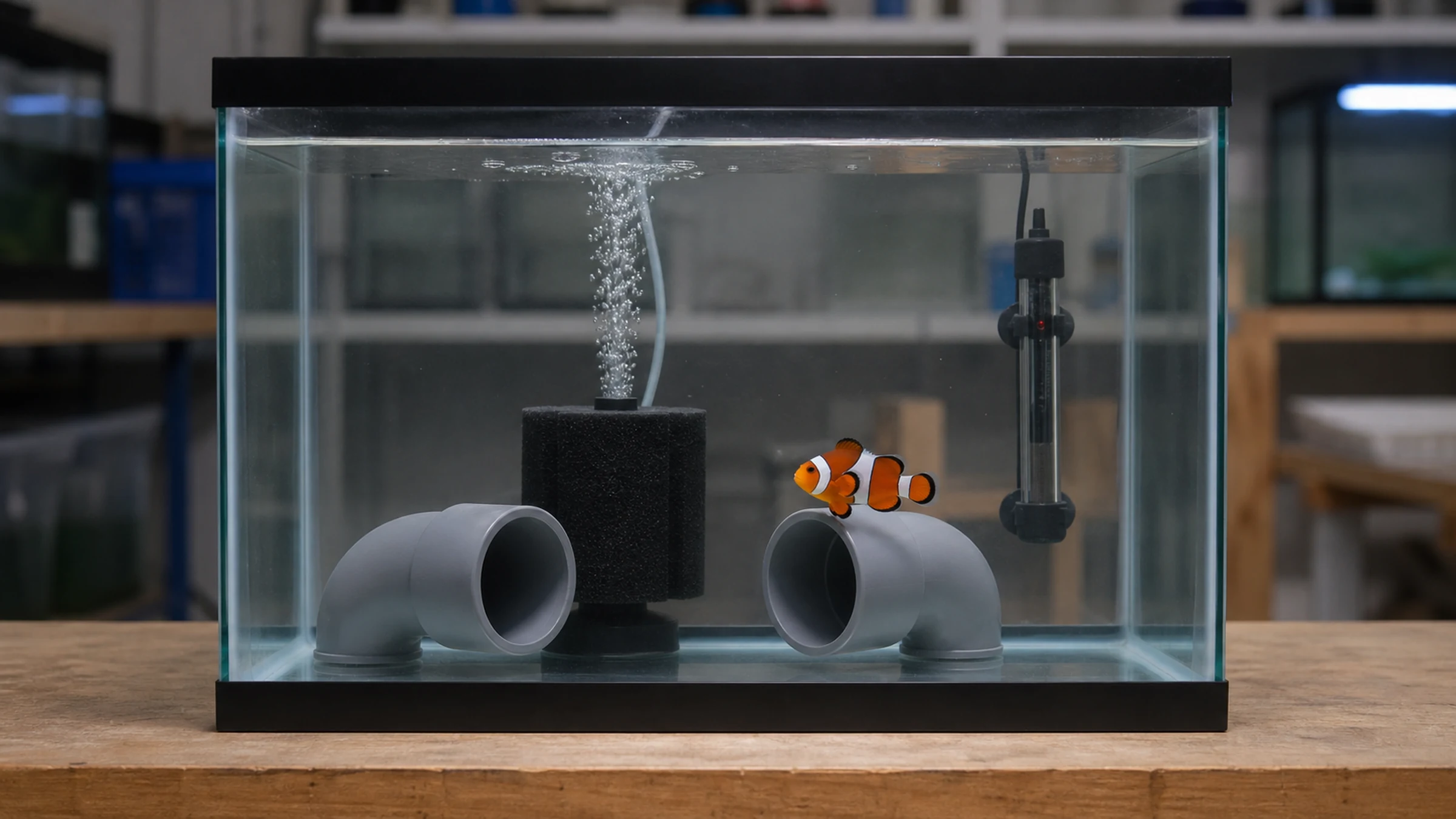
How to quarantine new saltwater fish against marine ich, velvet, and brooklynella: the QT tank, treatments, timelines, and the buy-clean shortcut.

What every reef parameter means and where to keep it: salinity, temperature, pH, alkalinity, calcium, magnesium, nitrate, and phosphate.

Choose compatible fish: school sizes, swimming zones, aggression, temperature and hardness matching, and honest bioload math for a peaceful community.
Keeping Blue Sponge?
AquaLens identifies your fish and plants from a photo, tracks water chemistry, and flags health issues early — free on iOS and Android.