Brittle Starfish Care Guide
Ophiocoma echinata · Saltwater Starfish
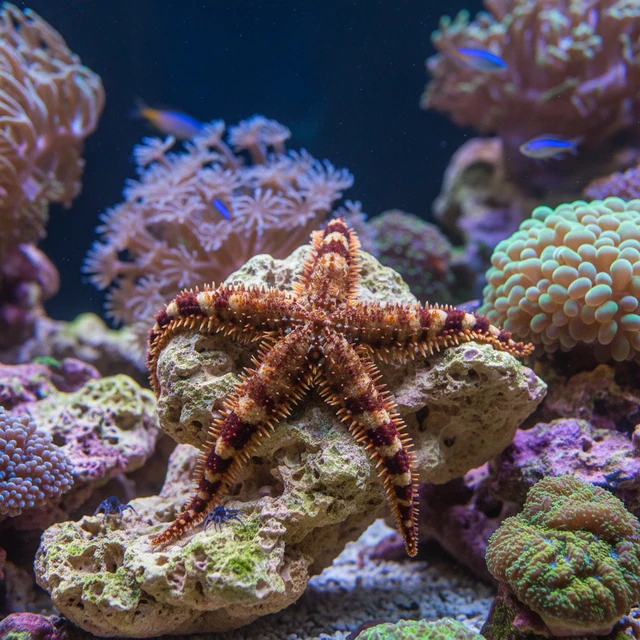
What Brittle Starfish look like
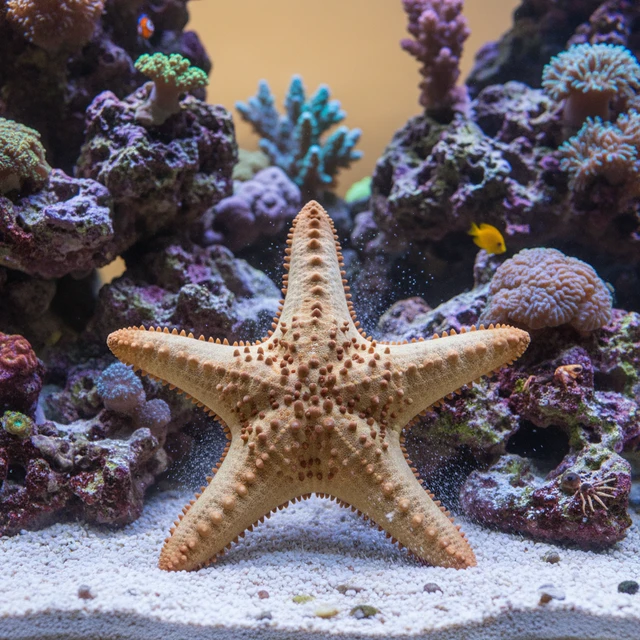
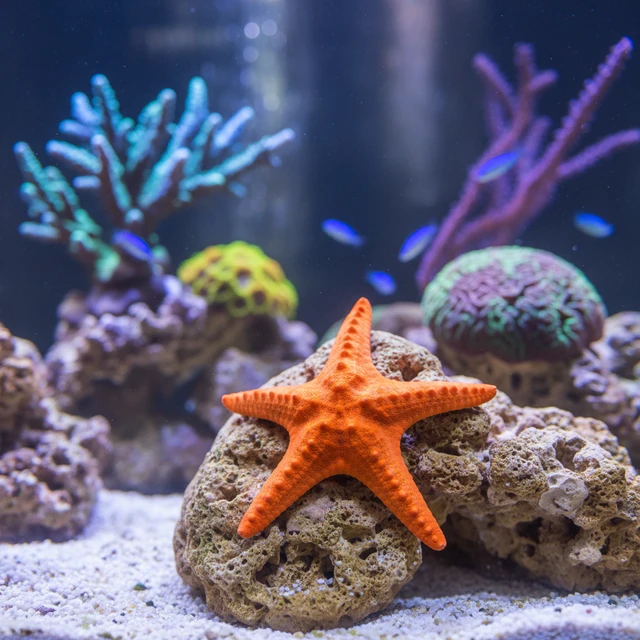
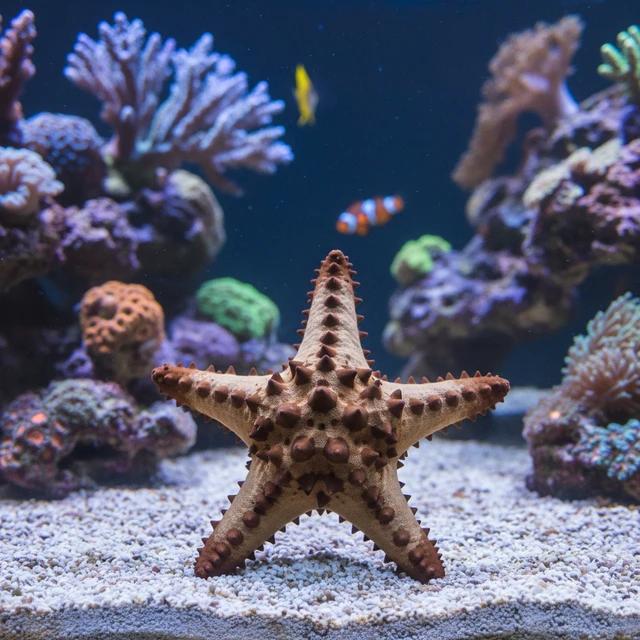
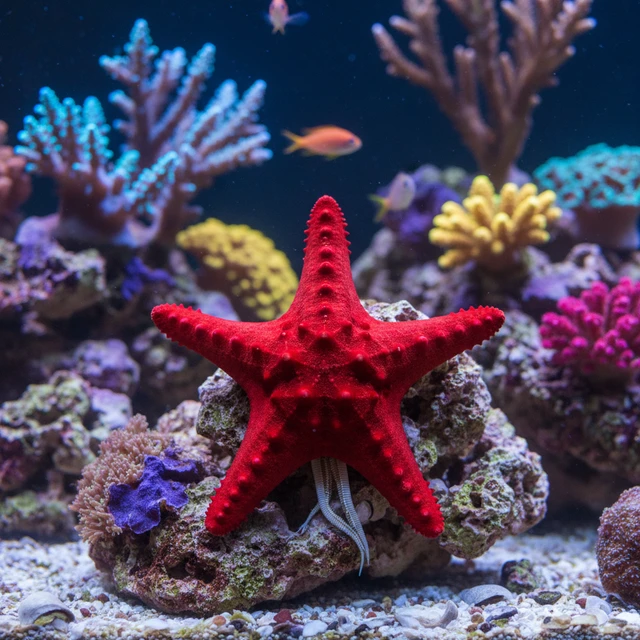
Ophiocoma echinata, commonly known as the brittle starfish, exhibits a distinctive morphology characterized by a central disc that can reach up to 10 cm in diameter, surrounded by five long, slender arms that can extend up to 30 cm in length. The arms are covered with small, overlapping plates, giving them a flexible yet robust appearance, which aids in locomotion and evasion from predators. The coloration ranges from brown to greenish hues, often with a mottled pattern that provides effective camouflage against the substrate. Sexual dimorphism is not pronounced in this species; however, males and females can be differentiated during the breeding season by the presence of specialized reproductive structures. Defensive adaptations include the ability to shed an arm when threatened, a process known as autotomy, which allows escape from predators while the lost limb can regenerate over time. Unique morphological features include a well-developed madreporite located on the upper surface of the central disc, and a complex system of tube feet that are utilized for locomotion and feeding.
Behavior & temperament
Ophiocoma echinata is primarily a nocturnal species, exhibiting a behavior of hiding under rocks or within crevices during the day and becoming more active at night. It is generally solitary but can be found in small groups in areas with abundant food resources. The brittle starfish is known for its rapid and agile movement, using its long arms to crawl across the substrate. Feeding behavior involves the use of its tube feet to capture detritus and small organic particles from the substrate, often employing a scavenging strategy. While not aggressive, it can exhibit defensive behaviors if threatened, such as curling its arms tightly around its disc. The species does not possess stinging capabilities but relies on its ability to escape and camouflage to avoid predation.
Diet & feeding
Ophiocoma echinata is primarily a detritivore, feeding on organic debris, microalgae, and small invertebrates found on the ocean floor. In captivity, it requires a diet supplemented with finely crushed marine foods and detritus to thrive.
Behind the name
The genus name 'Ophiocoma' is derived from the Greek words 'ophis' meaning 'snake' and 'komē' meaning 'hair', referring to the snake-like appearance of its long arms. The species name 'echinata' is derived from the Latin word 'echinus', meaning 'spiny', which describes its spiny appearance.
Plan your tank
Check the numbers before you buy: tank volume, salinity, salt mix, water changes, and your ongoing care routine. Keeping reef? Start from the Saltwater & Reef hub.
Keep reading
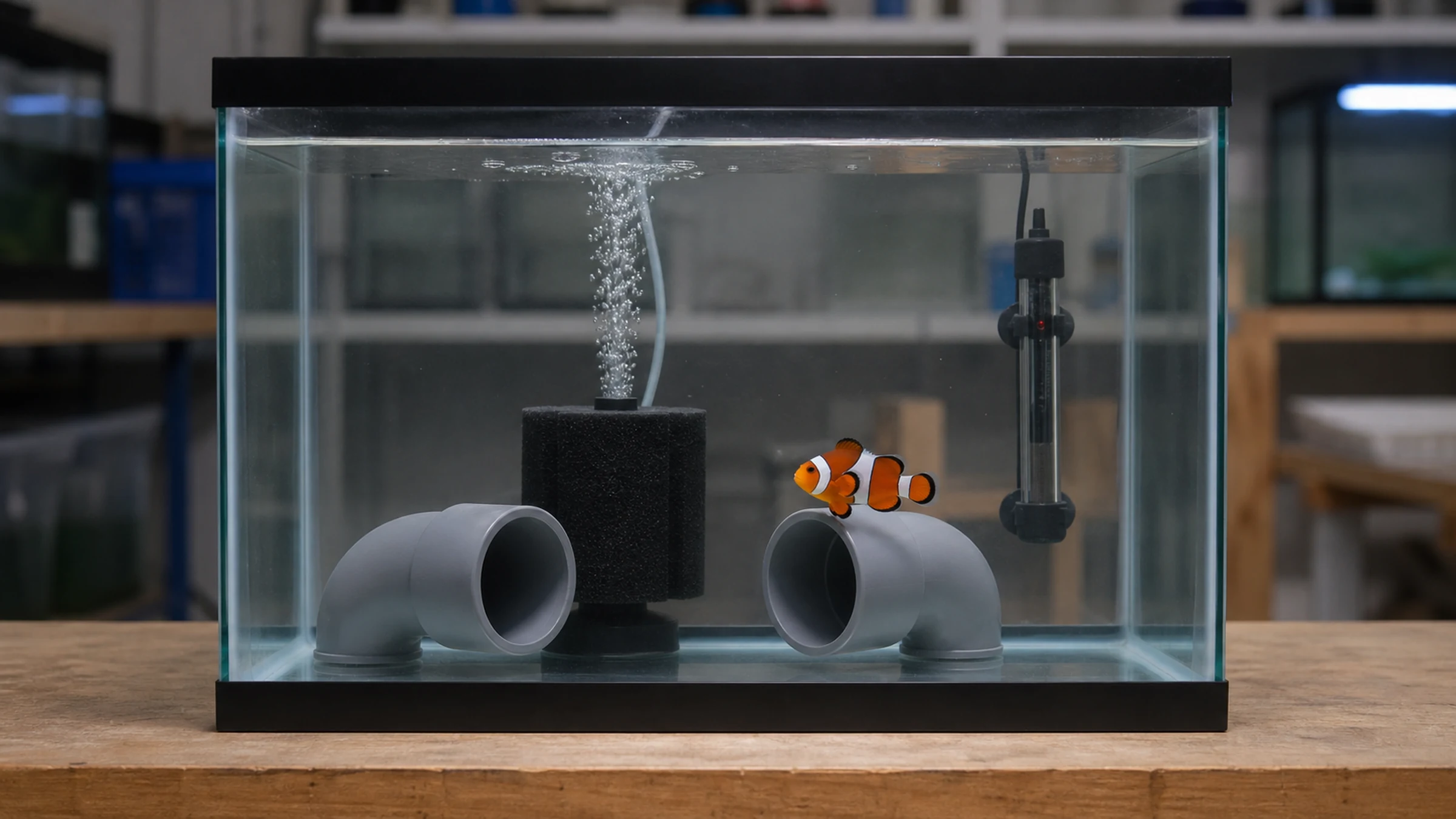
How to quarantine new saltwater fish against marine ich, velvet, and brooklynella: the QT tank, treatments, timelines, and the buy-clean shortcut.

What every reef parameter means and where to keep it: salinity, temperature, pH, alkalinity, calcium, magnesium, nitrate, and phosphate.

Choose compatible fish: school sizes, swimming zones, aggression, temperature and hardness matching, and honest bioload math for a peaceful community.
Keeping Brittle Starfish?
AquaLens identifies your fish and plants from a photo, tracks water chemistry, and flags health issues early — free on iOS and Android.