Butterfly Barb Care Guide
Barbus hulstaerti · Freshwater Fish
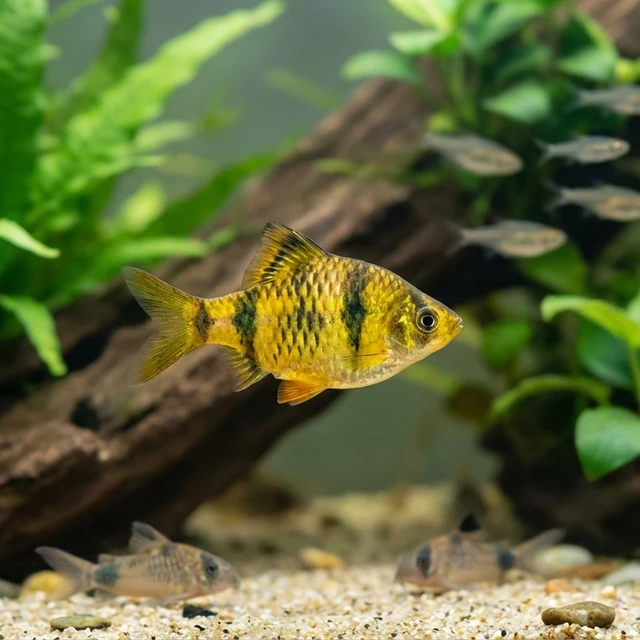
What Butterfly Barb look like
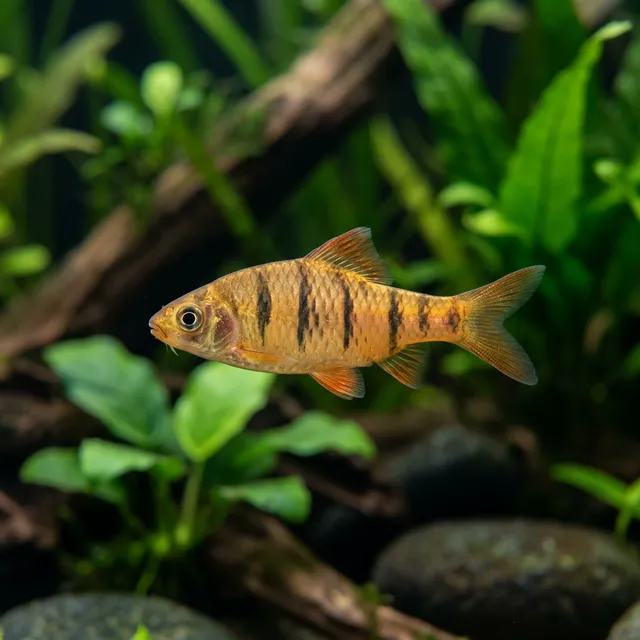
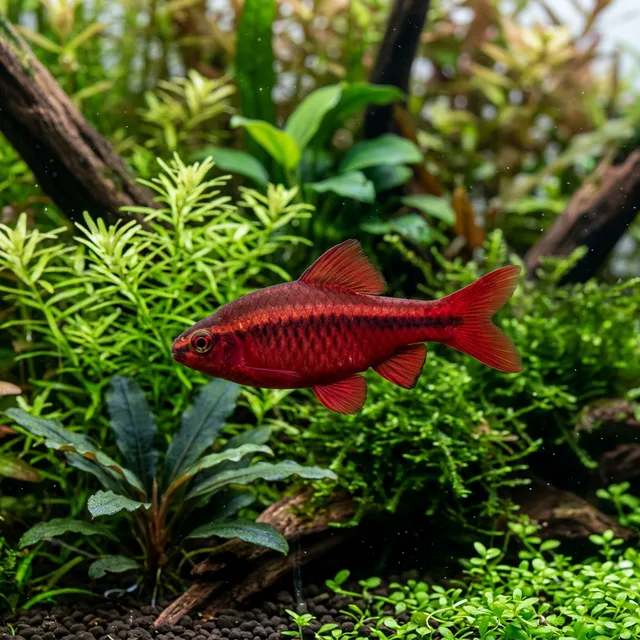
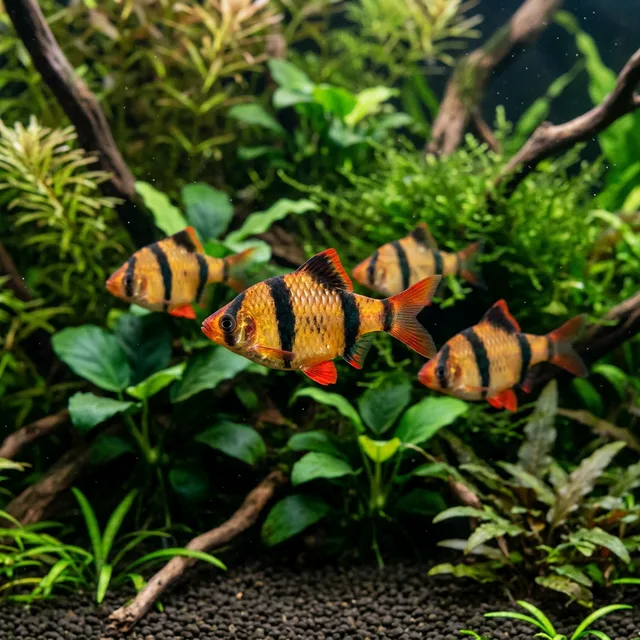
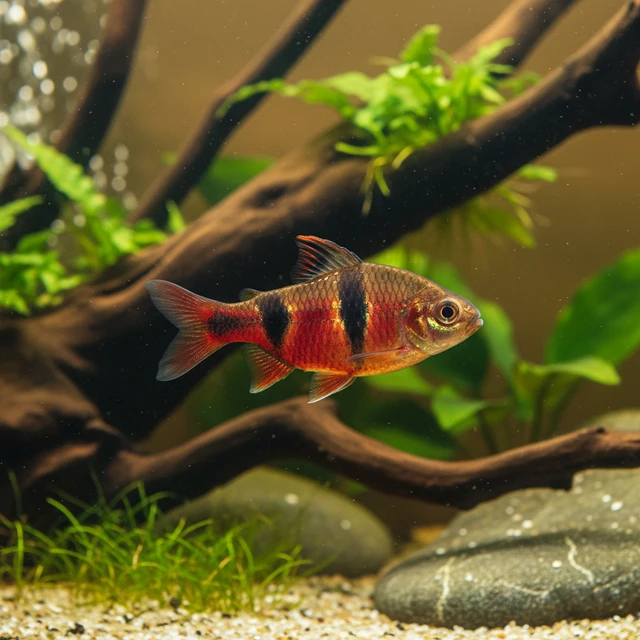
The Butterfly Barb (Barbus hulstaerti) exhibits a diminutive, laterally compressed body, typically reaching a maximum adult size of approximately 1.5 inches (3.8 cm). This species displays sexual dimorphism, with males often exhibiting more vibrant coloration and larger fins compared to the more subdued females. The body is adorned with striking, large dark blotches that form a distinctive butterfly-wing-like pattern against a pale golden background, enhancing its aesthetic appeal. The fins may exhibit a subtle yellow or orange tint, contributing to its overall coloration. Notably, the Butterfly Barb possesses a well-developed lateral line system, which aids in detecting movement in the water, and its dentition is adapted for an omnivorous diet, featuring small, conical teeth suitable for grazing on algae and consuming small invertebrates. Additionally, this species lacks an adipose fin, which is a characteristic feature of some other barb species, further distinguishing its morphology.
Behavior & temperament
The Butterfly Barb is a social species that thrives in small groups, often exhibiting schooling behavior, which provides safety in numbers. It primarily occupies the mid to upper levels of the water column, where it is most active during the day. This species is known for its peaceful temperament, making it an excellent candidate for community aquariums. During breeding, the Butterfly Barb engages in egg scattering, where females release eggs in open water, allowing for external fertilization by males. This reproductive strategy is typical of many barb species, and the eggs are often left to develop independently, requiring no parental care. The social hierarchy within groups is generally egalitarian, with no pronounced dominance behaviors observed.
Diet & feeding
In the wild, the Butterfly Barb is an omnivore, feeding on a varied diet that includes small invertebrates, algae, and plant matter. In captivity, it thrives on a balanced diet of high-quality flake foods, supplemented with live or frozen foods such as brine shrimp and daphnia, along with vegetable matter to ensure optimal health.
Behind the name
Barbus (barbel); hulstaerti (named in honor of a person, possibly a collector or researcher associated with the species).
Plan your tank
Check the numbers before you buy: tank volume, a stocking plan, cycle progress, water changes, and your ongoing care routine.
Keep reading

Choose compatible fish: school sizes, swimming zones, aggression, temperature and hardness matching, and honest bioload math for a peaceful community.
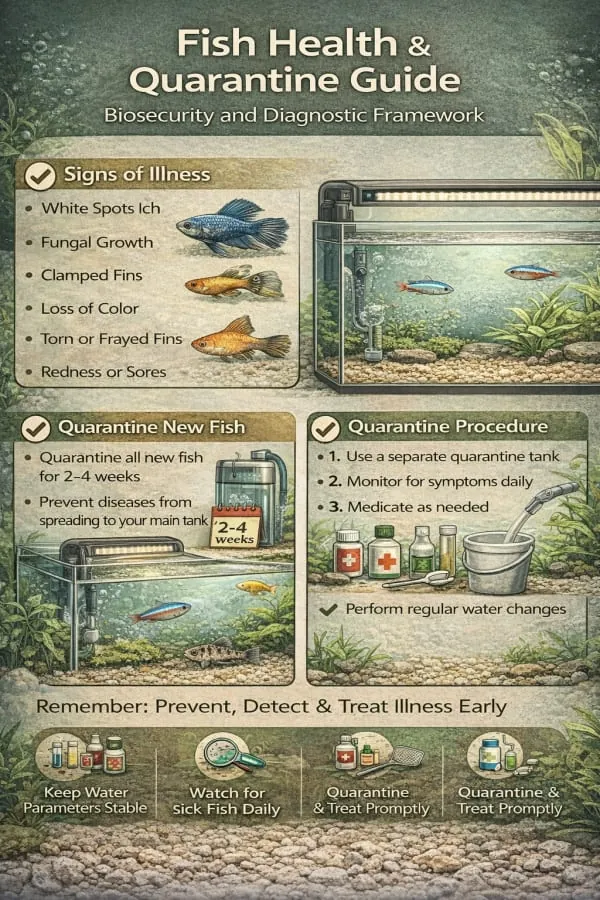
Quarantine new fish, spot the early warning signs, and treat disease without wrecking your tank. A practical freshwater fish health guide.

Acclimate new fish, shrimp, and coral safely: temperature floating, drip acclimation, plop-and-drop for shipped livestock, and the first 24 hours.
Keeping Butterfly Barb?
AquaLens identifies your fish and plants from a photo, tracks water chemistry, and flags health issues early — free on iOS and Android.