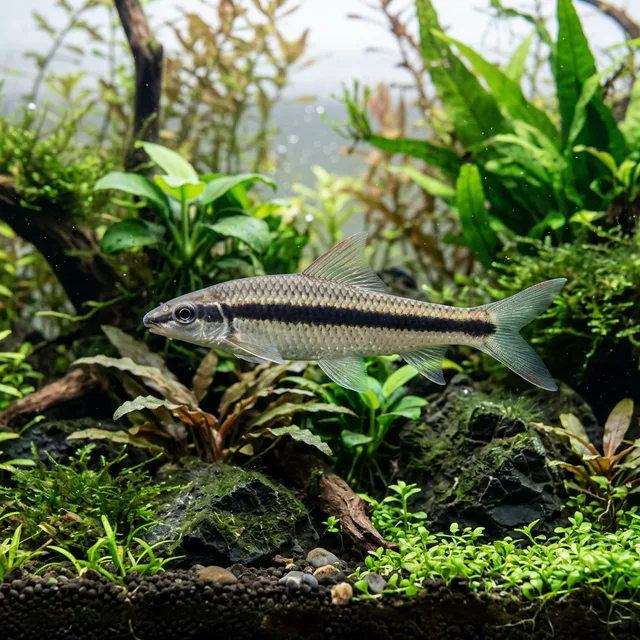
Chinese Algae Eater Care Guide
Gyrinocheilus aymonieri · Freshwater Fish
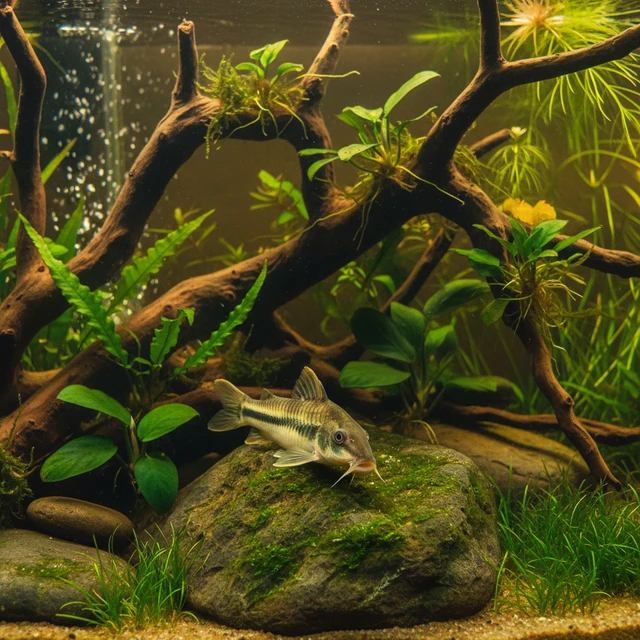
What Chinese Algae Eater look like
Gyrinocheilus aymonieri, commonly known as the Chinese Algae Eater, exhibits a fusiform body shape that is elongated and laterally compressed, allowing for efficient movement in its aquatic environment. Adults can reach a maximum size of approximately 20 cm (8 inches), though they are often smaller in captivity. Sexual dimorphism is subtle, with males typically exhibiting a more slender body and a slightly more pronounced coloration, particularly during breeding periods. A distinctive feature of this species is its large, downward-facing sucker mouth, which is highly adapted for grazing on algae and biofilm. The body coloration ranges from a golden-brown to olive-green, often with darker mottling, and the skin is smooth, lacking the armored plates found in some other algae-eating species. Additionally, the Chinese Algae Eater possesses a well-defined lateral line and a small adipose fin, contributing to its streamlined appearance.
Behavior & temperament
The Chinese Algae Eater is primarily a benthic fish that exhibits a solitary to semi-social behavior, often found foraging alone or in small groups. It is not an obligate schooler, but it can be seen in loose aggregations, particularly in areas with abundant algae. This species is known for its territorial nature, especially as it matures, and can display aggressive behaviors towards other fish, particularly those with slime coats, as it may attempt to graze on them. Breeding behavior is characterized by egg scattering, where females release eggs onto surfaces, and males fertilize them externally. The Chinese Algae Eater is generally considered to have a moderate temperament, but caution should be exercised when housing it with smaller or more docile species.
Diet & feeding
In the wild, Gyrinocheilus aymonieri primarily feeds on algae, detritus, and biofilm, making it an obligate herbivore. In captivity, it requires a diet rich in vegetable matter, including spirulina-based foods, blanched vegetables, and algae wafers to maintain optimal health.
Behind the name
Gyrinocheilus (from Greek 'gyrino' meaning 'whirlpool' and 'cheilus' meaning 'lip'); aymonieri (named in honor of the French naturalist, Aymonier).
Plan your tank
Check the numbers before you buy: tank volume, a stocking plan, cycle progress, water changes, and your ongoing care routine.
Keep reading
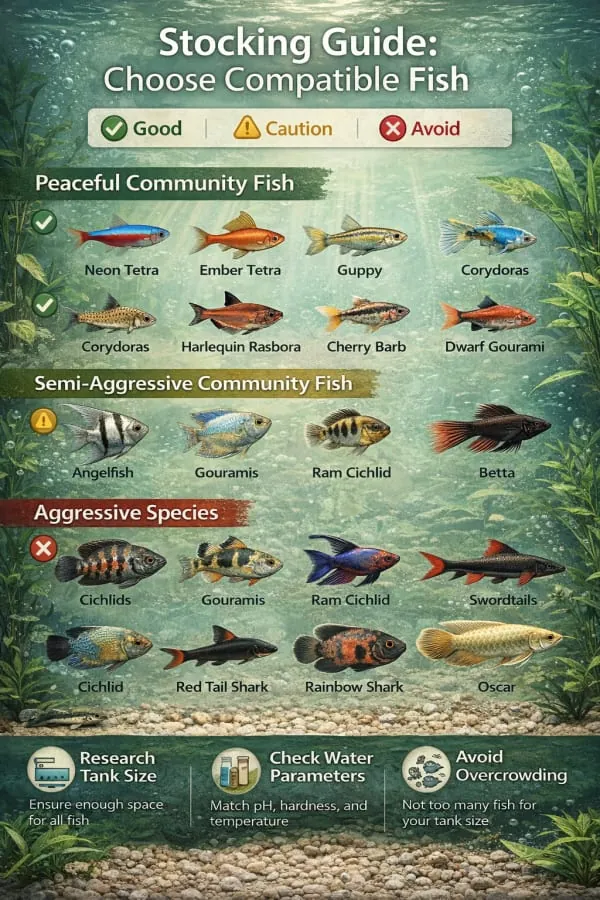
Choose compatible fish: school sizes, swimming zones, aggression, temperature and hardness matching, and honest bioload math for a peaceful community.
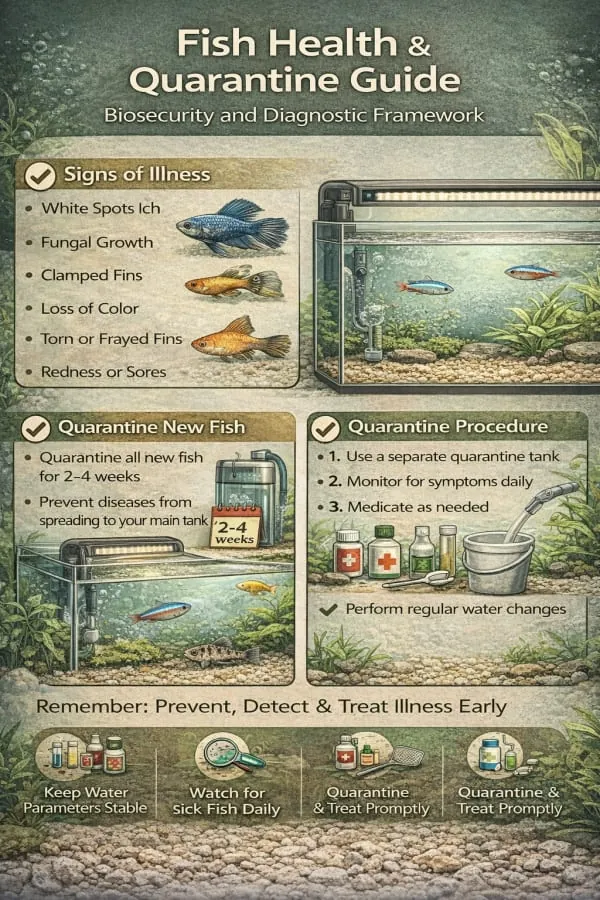
Quarantine new fish, spot the early warning signs, and treat disease without wrecking your tank. A practical freshwater fish health guide.
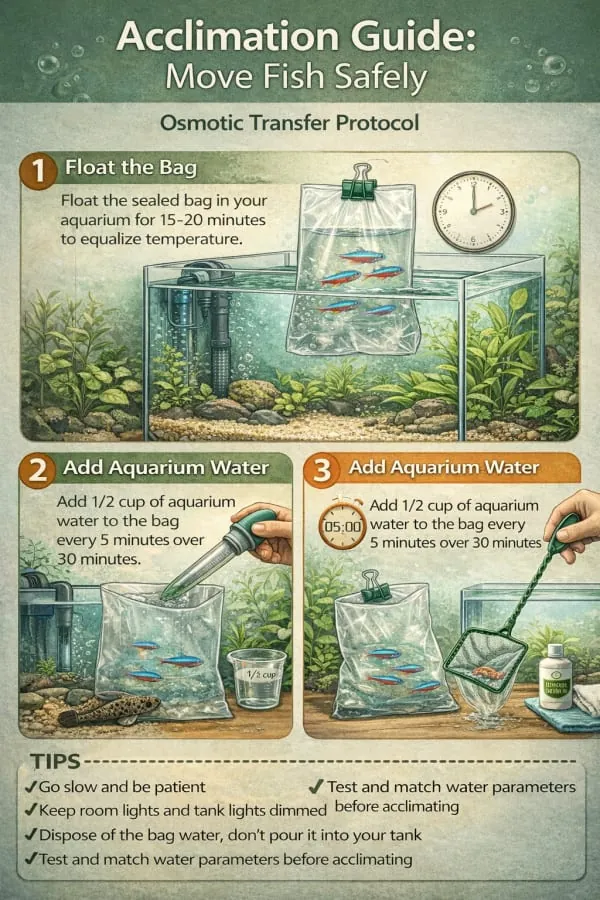
Acclimate new fish, shrimp, and coral safely: temperature floating, drip acclimation, plop-and-drop for shipped livestock, and the first 24 hours.
Keeping Chinese Algae Eater?
AquaLens identifies your fish and plants from a photo, tracks water chemistry, and flags health issues early — free on iOS and Android.