
Golden Clam Care Guide
Corbicula fluminea · Freshwater Invert
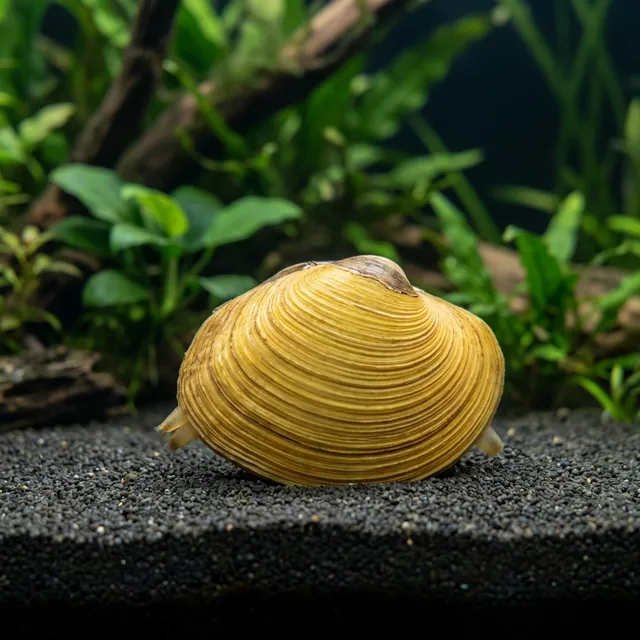
What Golden Clam look like
Corbicula fluminea, commonly known as the Golden Clam, exhibits a distinctive bivalve morphology characterized by a smooth, oval-shaped shell that can reach a maximum adult size of 5 to 15 cm. The shell is typically golden to yellowish in color, often with a glossy finish, and features concentric growth lines that can be observed upon close inspection. This species lacks pronounced sexual dimorphism, as both males and females exhibit similar external characteristics. Defensive adaptations include the ability to burrow into sediment, providing protection from predators. Unique morphological features include a well-developed siphon system that allows for efficient filter feeding and respiration, as well as a smooth interior shell surface that aids in reducing friction during burrowing.
Behavior & temperament
Golden Clams are primarily benthic organisms, residing within the substrate of freshwater bodies. They exhibit a solitary lifestyle but can be found in dense aggregations in favorable habitats, indicating a degree of social interaction during feeding and reproduction. These clams are filter feeders, utilizing their siphons to extract particulate matter from the water column. Breeding behavior involves external fertilization, where eggs are released into the water, making them an egg scatterer. Their temperament is generally passive, with minimal aggression observed, as they primarily focus on feeding and burrowing rather than territorial disputes.
Diet & feeding
In their natural habitat, Golden Clams are omnivorous, feeding on a diet composed of detritus, phytoplankton, and organic matter. In captivity, they require a varied diet that includes high-quality sinking pellets, algae wafers, and occasional live or frozen foods to ensure optimal health and growth.
Behind the name
The genus name Corbicula is derived from the Latin word 'corbis', meaning 'basket', while the species name fluminea translates to 'of the river', indicating its habitat in freshwater environments.
Plan your tank
Check the numbers before you buy: tank volume, a stocking plan, cycle progress, water changes, and your ongoing care routine.
Keep reading

Choose compatible fish: school sizes, swimming zones, aggression, temperature and hardness matching, and honest bioload math for a peaceful community.

Quarantine new fish, spot the early warning signs, and treat disease without wrecking your tank. A practical freshwater fish health guide.

Acclimate new fish, shrimp, and coral safely: temperature floating, drip acclimation, plop-and-drop for shipped livestock, and the first 24 hours.
Keeping Golden Clam?
AquaLens identifies your fish and plants from a photo, tracks water chemistry, and flags health issues early — free on iOS and Android.