Clove Polyps Care Guide
Clavularia viridis · Saltwater Soft Coral
What Clove Polyps look like
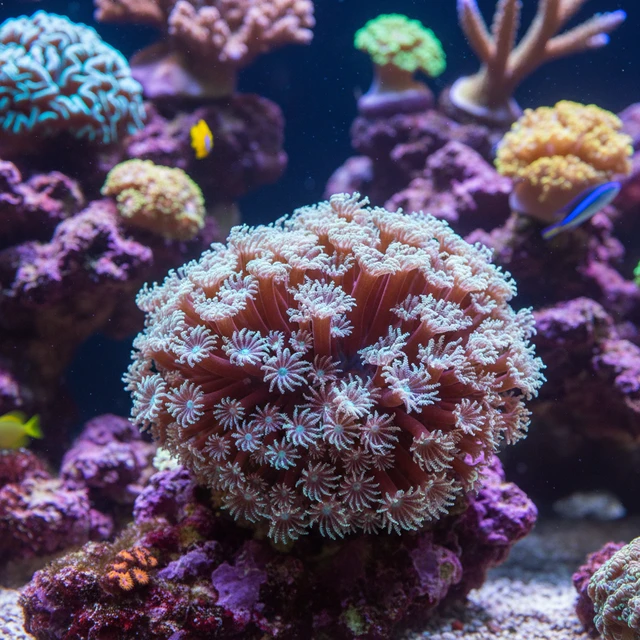
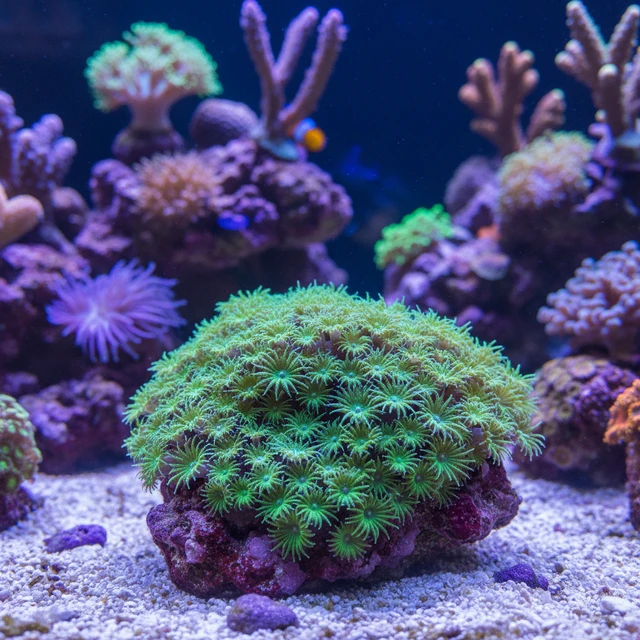
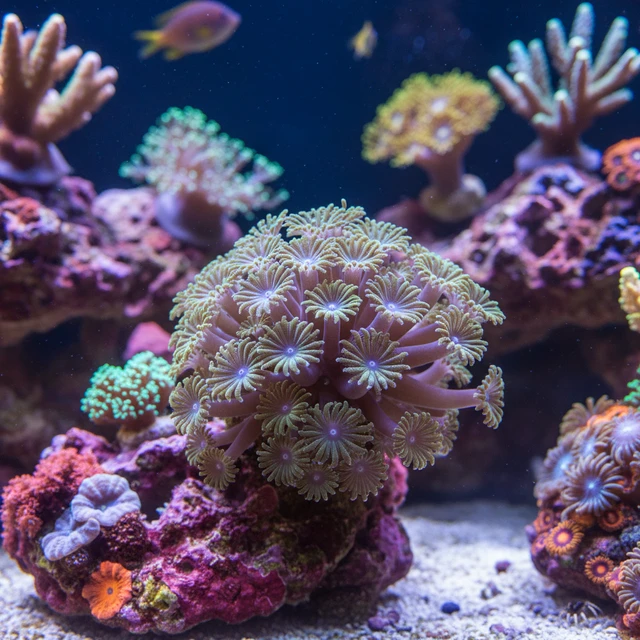
Clavularia viridis, commonly known as Clove Polyps, exhibits a distinctive morphology characterized by its elongated, slender polyps that can reach up to 2 inches (5 cm) in height. The polyps are typically green to yellow-green in color, with a prominent, tubular structure that allows for significant extension during feeding. The base of the polyps is connected to a fleshy mat, which can vary in color from brown to green, providing a robust anchoring mechanism. Clove Polyps possess a unique arrangement of tentacles, typically numbering 8 per polyp, which are equipped with small nematocysts for capturing planktonic food. This species does not exhibit sexual dimorphism, and its defensive adaptations include the ability to retract polyps rapidly when threatened, as well as the potential to produce toxins that deter predators.
Behavior & temperament
Clove Polyps are primarily colonial and exhibit a gregarious behavior, often forming extensive mats on substrates. They are typically found in shallow waters, where they extend their polyps to capture zooplankton and phytoplankton during the day, utilizing their tentacles for feeding. Clove Polyps engage in a form of passive feeding, relying on water currents to bring food to them. They exhibit minimal movement, primarily extending and retracting their polyps in response to environmental stimuli. While they are not aggressive, they can compete with neighboring corals for space and light, and they may utilize their nematocysts defensively against potential threats.
Diet & feeding
Clavularia viridis is a filter feeder, primarily consuming zooplankton and phytoplankton in the wild. In captivity, they thrive on a diet supplemented with liquid coral foods and finely powdered foods to ensure proper nutrition.
Behind the name
The genus name 'Clavularia' is derived from the Latin word 'clavula,' meaning 'little key,' which refers to the shape of the polyps, while the species name 'viridis' is Latin for 'green,' indicating the typical coloration of this coral.
Plan your tank
Check the numbers before you buy: tank volume, salinity, salt mix, water changes, and your ongoing care routine. Keeping reef? Start from the Saltwater & Reef hub.
Keep reading
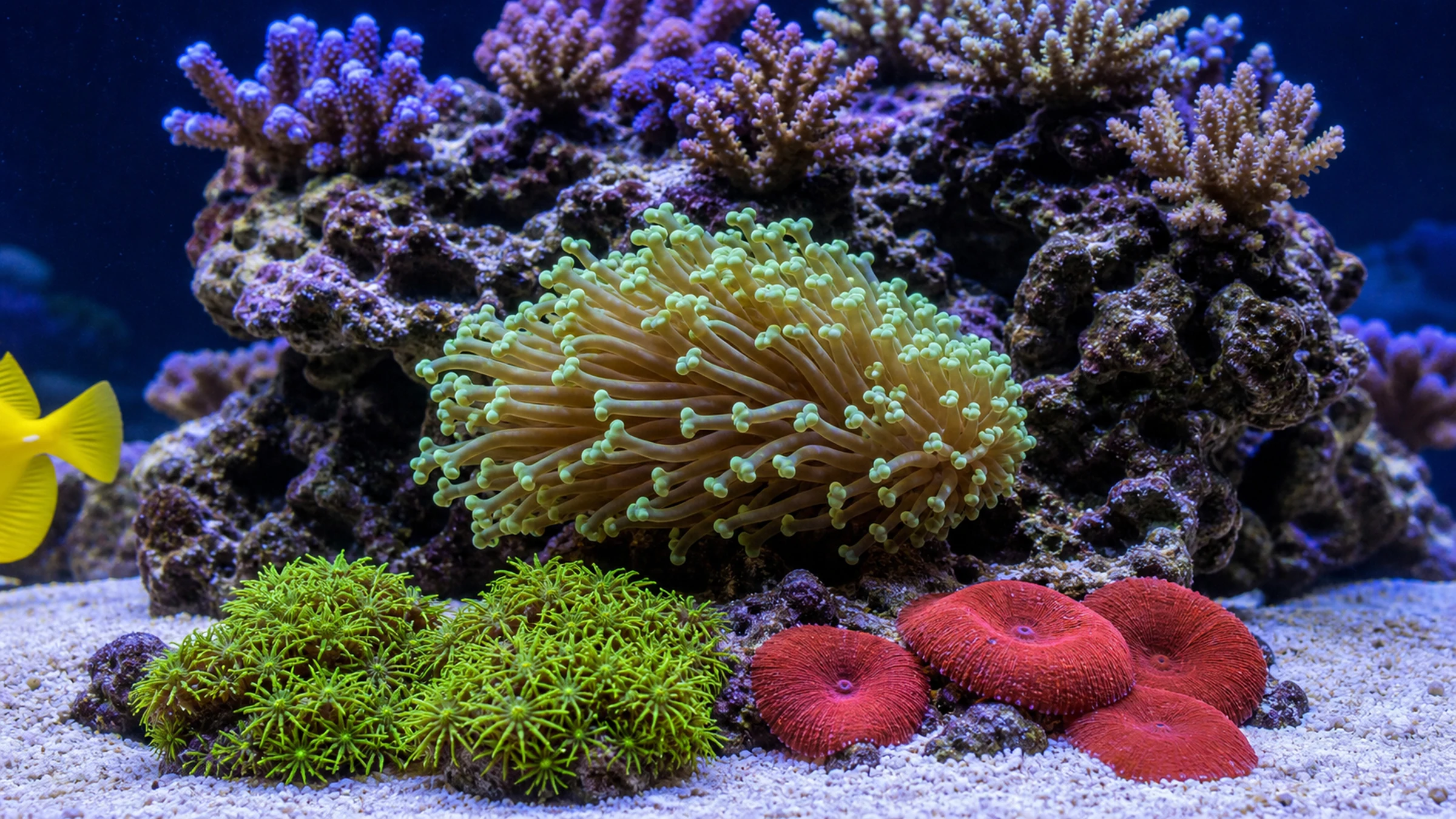
How to place corals by light and flow, PAR targets for softies, LPS, and SPS, dipping new corals for pests, and acclimating them without bleaching.
What every reef parameter means and where to keep it: salinity, temperature, pH, alkalinity, calcium, magnesium, nitrate, and phosphate.

Acclimate new fish, shrimp, and coral safely: temperature floating, drip acclimation, plop-and-drop for shipped livestock, and the first 24 hours.
Keeping Clove Polyps?
AquaLens identifies your fish and plants from a photo, tracks water chemistry, and flags health issues early — free on iOS and Android.