Copperband Butterflyfish Care Guide
Chelmon rostratus · Saltwater Butterflyfish
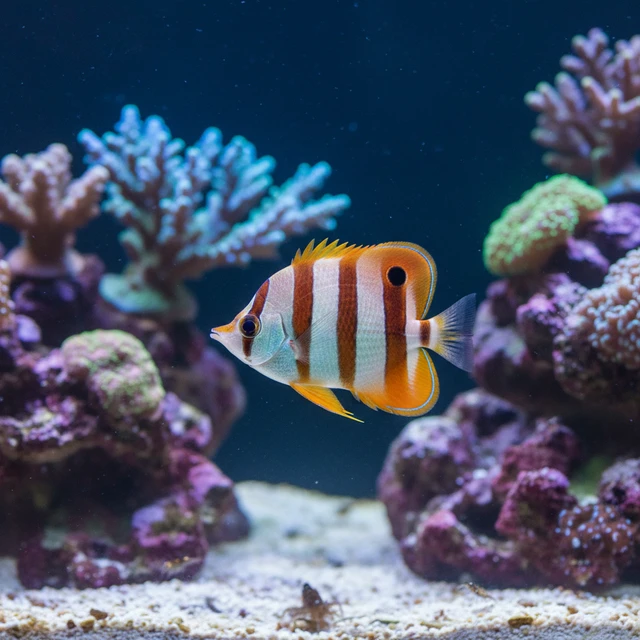
What Copperband Butterflyfish look like
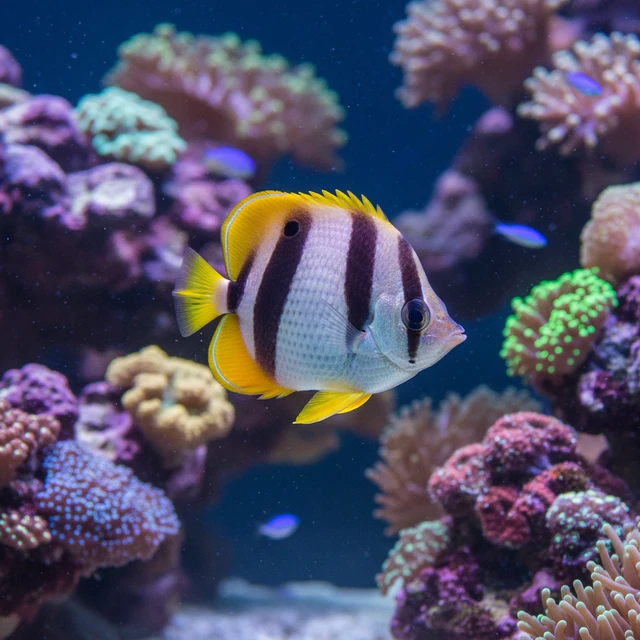
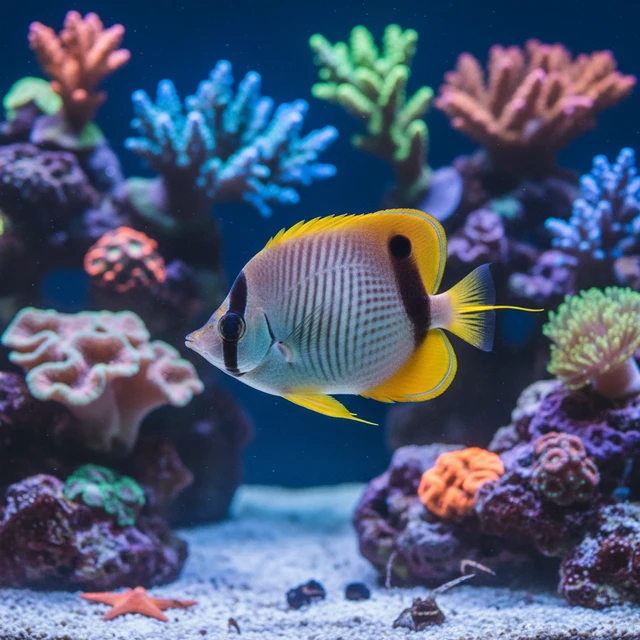
The Copperband Butterflyfish, Chelmon rostratus, exhibits a distinctive and elongated body shape, reaching a maximum adult size of approximately 7 inches (18 cm). Its coloration is characterized by a striking pattern of vertical orange to yellow bands against a white to pale blue background, which serves as a form of camouflage among coral reefs. The species displays sexual dimorphism, with males typically possessing slightly larger dorsal fins and more pronounced coloration than females. Notable morphological adaptations include a long, slender snout that is specialized for probing into crevices to extract prey, and a series of small, sharp teeth adapted for grazing on coral polyps and small invertebrates. The presence of a lateral line system allows for enhanced sensory perception in its environment, aiding in predator avoidance and foraging.
Behavior & temperament
Copperband Butterflyfish are generally considered to be peaceful and social creatures, often found in pairs or small groups within their natural habitat. They inhabit the upper to mid-levels of the reef, exhibiting a tendency to hover near coral formations while foraging. Breeding behavior involves monogamous pair bonding, with males displaying courtship rituals that include circling and synchronized swimming. Their temperament is typically non-aggressive, although they may exhibit territorial behavior towards conspecifics or similar species. In terms of feeding, they utilize their elongated snouts to extract small invertebrates and coral polyps, showcasing a unique foraging technique that involves careful probing and manipulation of their surroundings.
Diet & feeding
Copperband Butterflyfish are primarily carnivorous, feeding on small invertebrates, particularly polyps of coral and other sessile organisms. In captivity, they require a varied diet that includes live or frozen foods such as brine shrimp, mysis shrimp, and specialized coral foods to thrive.
Behind the name
The genus name 'Chelmon' is derived from the Greek words 'chele,' meaning 'claw,' and 'mon,' meaning 'single,' referring to the fish's unique morphology. The species name 'rostratus' comes from the Latin word 'rostrum,' meaning 'snout,' highlighting the fish's elongated snout.
Plan your tank
Check the numbers before you buy: tank volume, salinity, salt mix, water changes, and your ongoing care routine. Keeping reef? Start from the Saltwater & Reef hub.
Keep reading
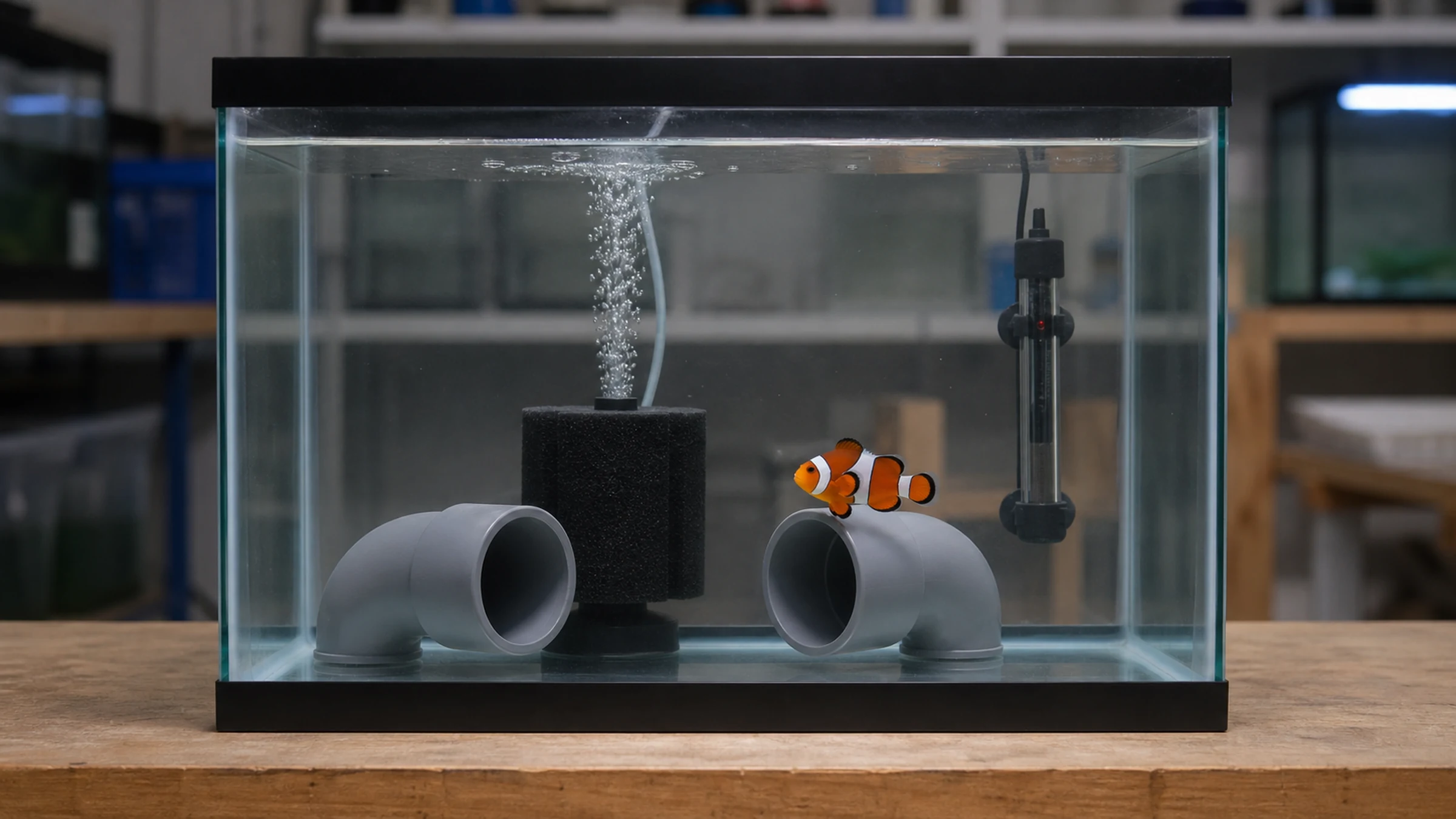
How to quarantine new saltwater fish against marine ich, velvet, and brooklynella: the QT tank, treatments, timelines, and the buy-clean shortcut.

What every reef parameter means and where to keep it: salinity, temperature, pH, alkalinity, calcium, magnesium, nitrate, and phosphate.
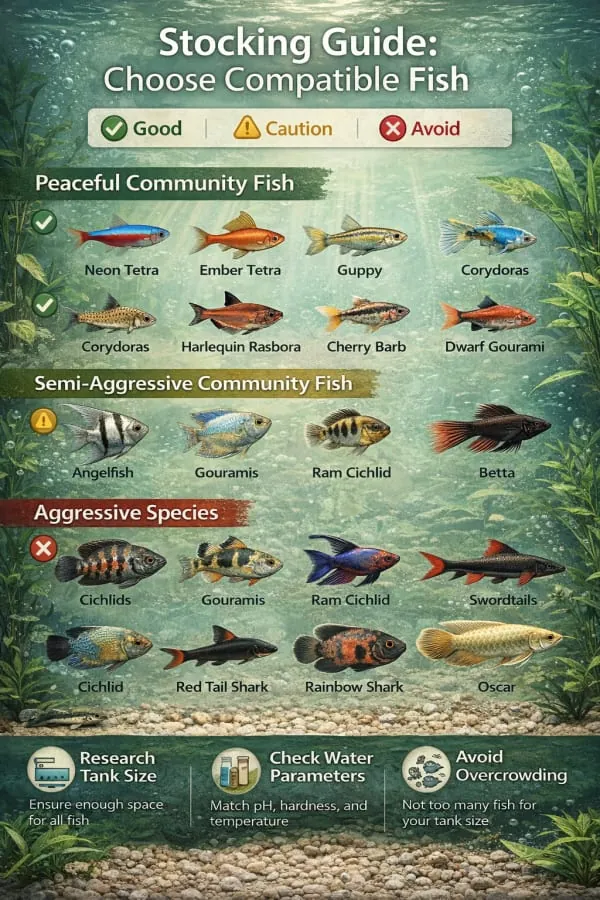
Choose compatible fish: school sizes, swimming zones, aggression, temperature and hardness matching, and honest bioload math for a peaceful community.
Keeping Copperband Butterflyfish?
AquaLens identifies your fish and plants from a photo, tracks water chemistry, and flags health issues early — free on iOS and Android.