Three-Line Cory Care Guide
Corydoras trilineatus · Freshwater Fish
What Three-Line Cory look like
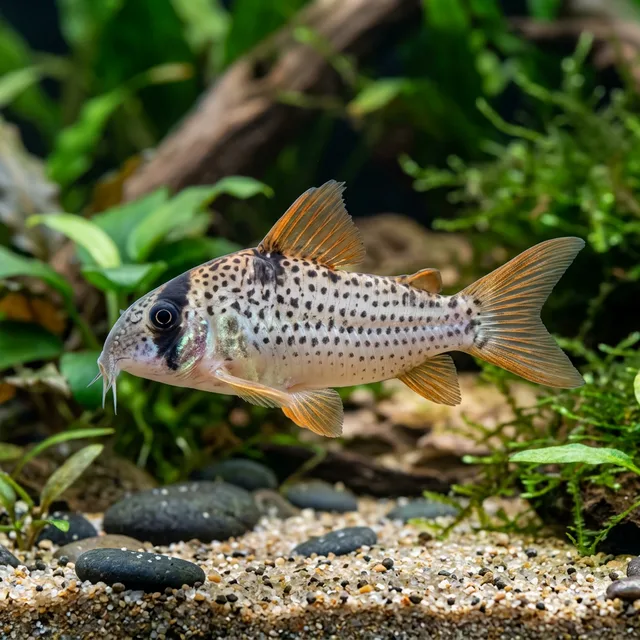
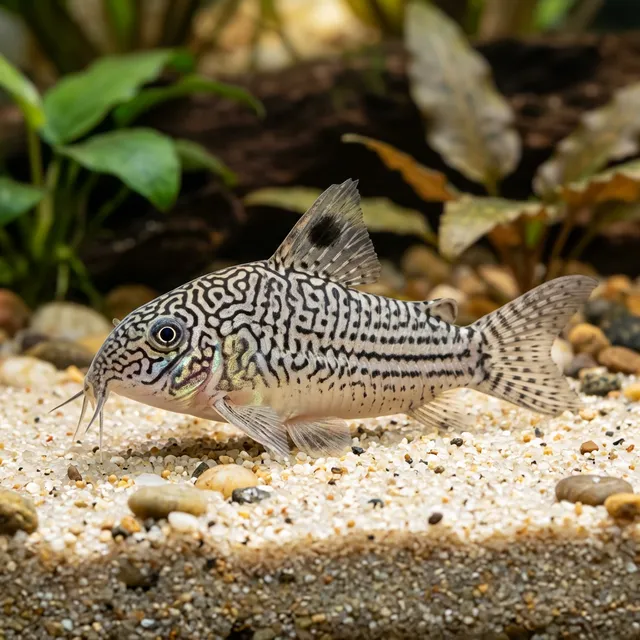
Corydoras trilineatus, commonly known as the Three-Line Cory, exhibits a medium-sized, laterally compressed body that typically reaches a maximum adult size of approximately 2 to 2.5 inches (5 to 6.4 cm). The species is characterized by a pale silver body adorned with a dense network of dark, squiggly lines, forming a reticulated maze-like pattern that extends across the head and body. This pattern is a distinguishing feature that differentiates it from similar species, such as Corydoras julii, which displays isolated dots instead of interconnected lines. The dorsal fin is marked by a bold dark spot, enhancing its visual appeal. Sexual dimorphism is subtle, with females generally being slightly larger and rounder than males, particularly when gravid. Defensive adaptations include a bony armor composed of numerous plates, which provides protection against predators, and the presence of barbels that aid in foraging along the substrate. Additionally, the species possesses an adipose fin and a well-developed lateral line system, which aids in detecting vibrations in the water column.
Behavior & temperament
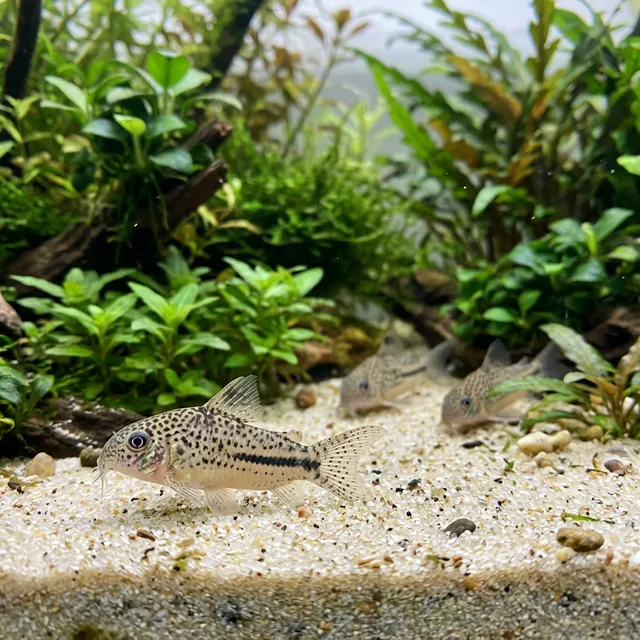
The Three-Line Cory is a social fish that thrives in groups, exhibiting a tendency to form schools in the mid to lower water column, often dwelling near the substrate where it forages for food. This species is primarily benthic, utilizing its barbels to sift through substrate materials in search of detritus and small invertebrates. Breeding behavior is characterized by egg scattering, where females release eggs in a communal setting, typically on flat surfaces or plant leaves, which are then fertilized by males. The temperament of Corydoras trilineatus is generally peaceful and non-aggressive, making it an ideal inhabitant for community aquariums. However, they may exhibit slight territoriality during breeding periods, especially among males.
Diet & feeding
In the wild, the Three-Line Cory is an omnivore, primarily feeding on detritus, small invertebrates, and plant matter. In captivity, it requires a varied diet that includes high-quality sinking pellets, frozen or live foods such as bloodworms and brine shrimp, as well as blanched vegetables to ensure optimal health and coloration.
Behind the name
Corydoras (from Greek 'kory' meaning helmet; 'doras' meaning skin) refers to the armored nature of the fish, while 'trilineatus' is derived from Latin, meaning 'three lines', which describes the distinctive markings on its body.
Plan your tank
Check the numbers before you buy: tank volume, a stocking plan, cycle progress, water changes, and your ongoing care routine.
Keep reading

Choose compatible fish: school sizes, swimming zones, aggression, temperature and hardness matching, and honest bioload math for a peaceful community.

Quarantine new fish, spot the early warning signs, and treat disease without wrecking your tank. A practical freshwater fish health guide.

Acclimate new fish, shrimp, and coral safely: temperature floating, drip acclimation, plop-and-drop for shipped livestock, and the first 24 hours.
Keeping Three-Line Cory?
AquaLens identifies your fish and plants from a photo, tracks water chemistry, and flags health issues early — free on iOS and Android.