Costello Tetra Care Guide
Hemigrammus hyanuary · Freshwater Fish
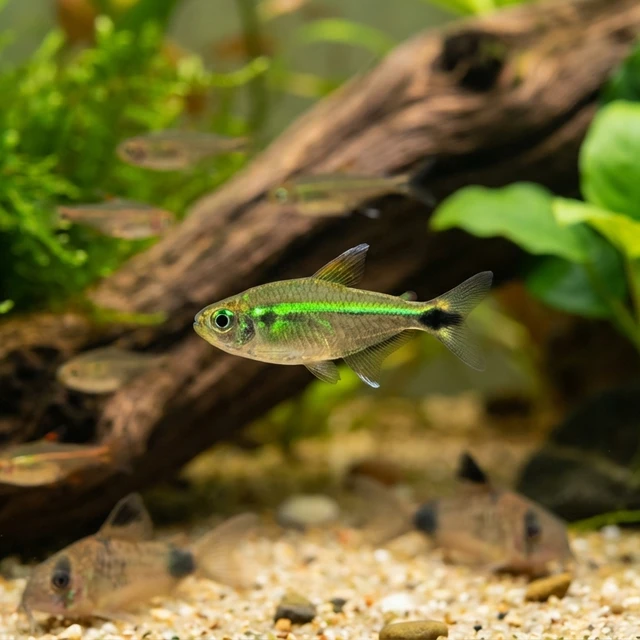
What Costello Tetra look like
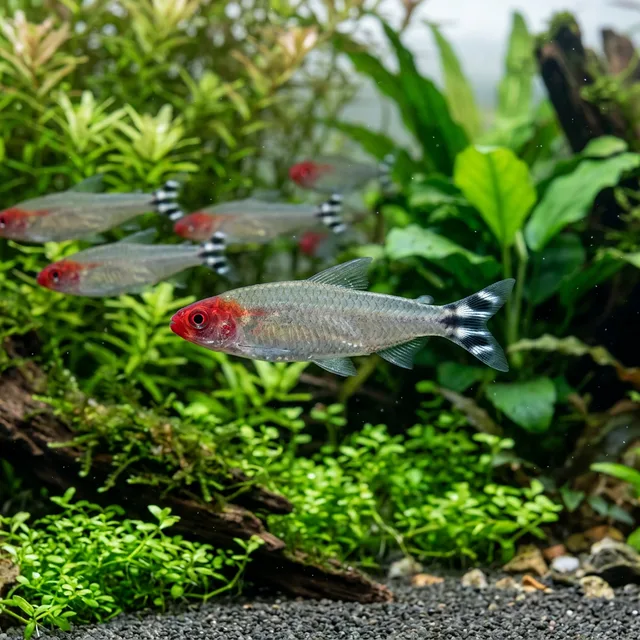
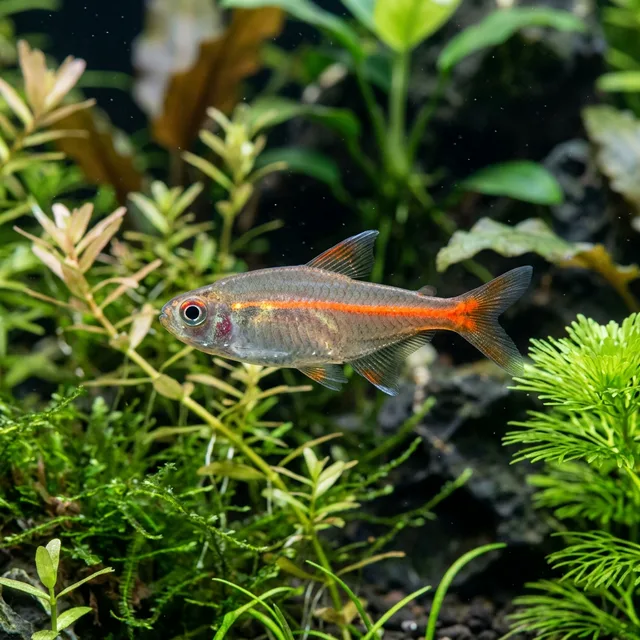
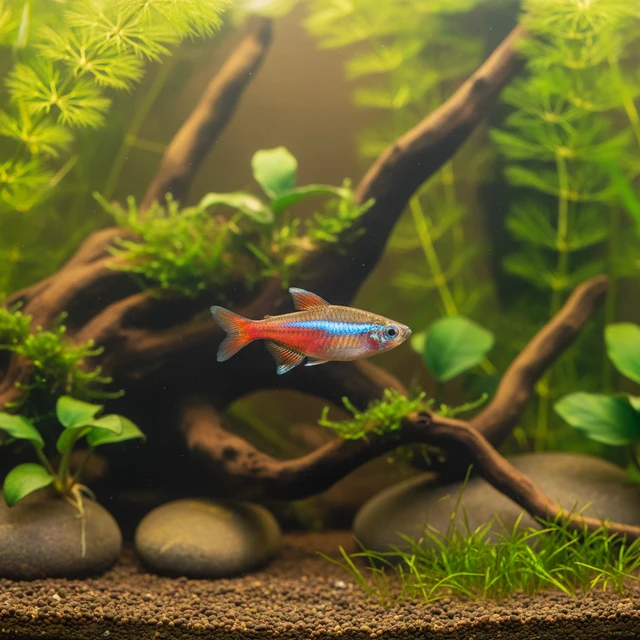
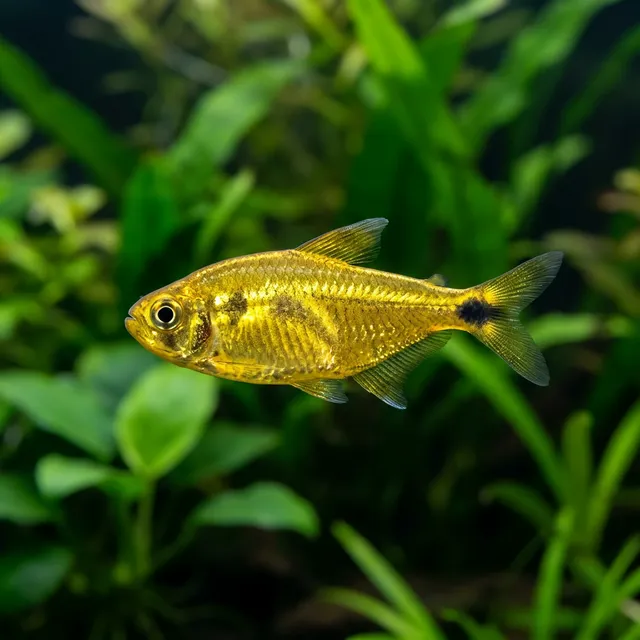
The Costello Tetra (Hemigrammus hyanuary) exhibits a laterally compressed, fusiform body that typically reaches a maximum adult size of approximately 2 inches (5 cm). Its physical appearance is characterized by a lustrous silver body adorned with a striking iridescent green-gold horizontal stripe that runs along the midline, serving as a key identifying feature. Additionally, a prominent dark spot is located at the base of the caudal fin, further distinguishing it from other small tetras. Sexual dimorphism is subtle, with females generally appearing slightly fuller-bodied than males during breeding periods. The species possesses a well-developed lateral line system, which aids in detecting vibrations in the water, and its dentition consists of small, conical teeth adapted for an omnivorous diet. The dorsal fin is moderately sized and positioned towards the rear of the body, while the anal fin is elongated, contributing to its agile swimming capabilities. Defensive adaptations include schooling behavior, which provides safety in numbers against potential predators.
Behavior & temperament
Costello Tetras are typically found in small, loose schools within the mid to upper water column of their natural habitat, exhibiting a social hierarchy where individuals establish dominance through subtle displays of aggression. They are primarily pelagic, often seen darting among vegetation and submerged structures. Breeding behavior is characterized by egg scattering, where females release eggs in open water, allowing them to adhere to aquatic plants or substrate. Their temperament is generally peaceful, making them suitable for community tanks; however, they can exhibit territoriality during breeding periods. In captivity, providing ample space and hiding spots can help reduce stress and aggression among individuals.
Diet & feeding
In the wild, Costello Tetras are omnivorous, feeding on a varied diet that includes small invertebrates, plant matter, and detritus. In captivity, they thrive on a balanced diet of high-quality flake food, supplemented with live or frozen foods such as brine shrimp and daphnia, as well as finely chopped vegetables.
Behind the name
Hemigrammus (half line); hyanuary (referring to the month of January, possibly indicating the time of discovery or collection).
Plan your tank
Check the numbers before you buy: tank volume, a stocking plan, cycle progress, water changes, and your ongoing care routine.
Keep reading

Choose compatible fish: school sizes, swimming zones, aggression, temperature and hardness matching, and honest bioload math for a peaceful community.
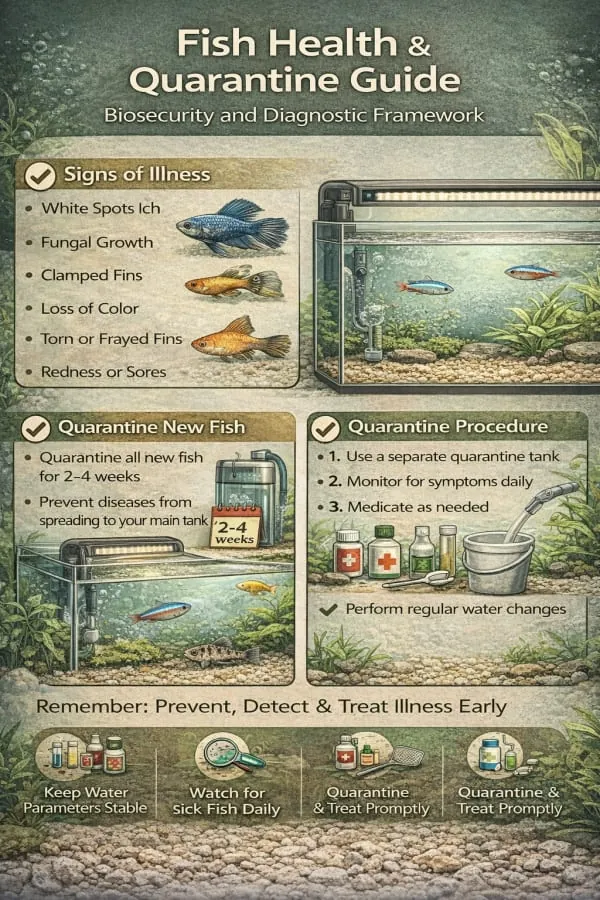
Quarantine new fish, spot the early warning signs, and treat disease without wrecking your tank. A practical freshwater fish health guide.
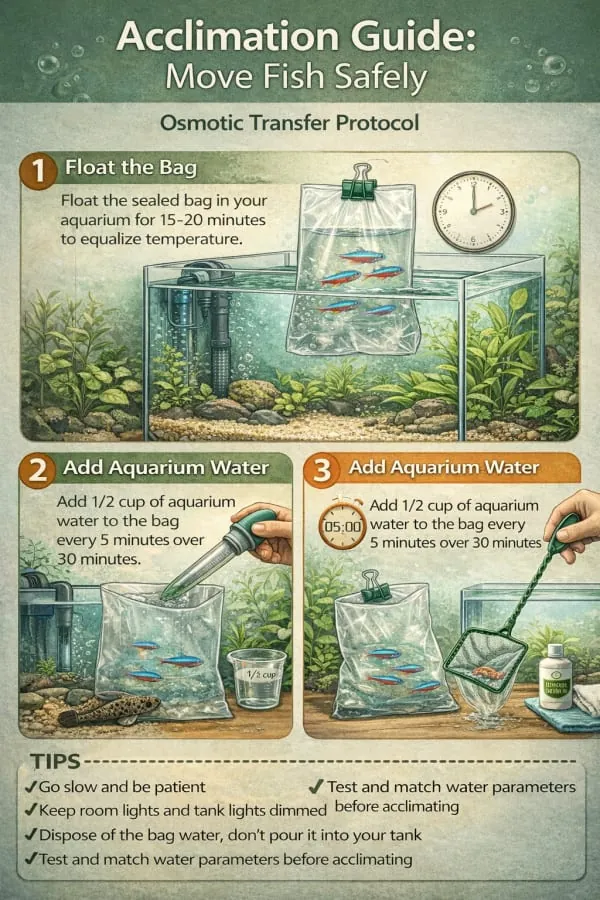
Acclimate new fish, shrimp, and coral safely: temperature floating, drip acclimation, plop-and-drop for shipped livestock, and the first 24 hours.
Keeping Costello Tetra?
AquaLens identifies your fish and plants from a photo, tracks water chemistry, and flags health issues early — free on iOS and Android.