Dwarf Pipefish Care Guide
Doryichthys deokhatoides · Freshwater Fish
What Dwarf Pipefish look like
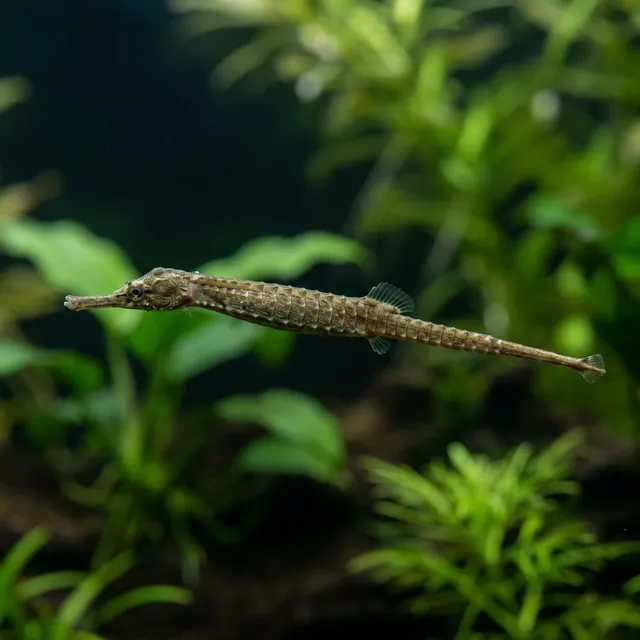
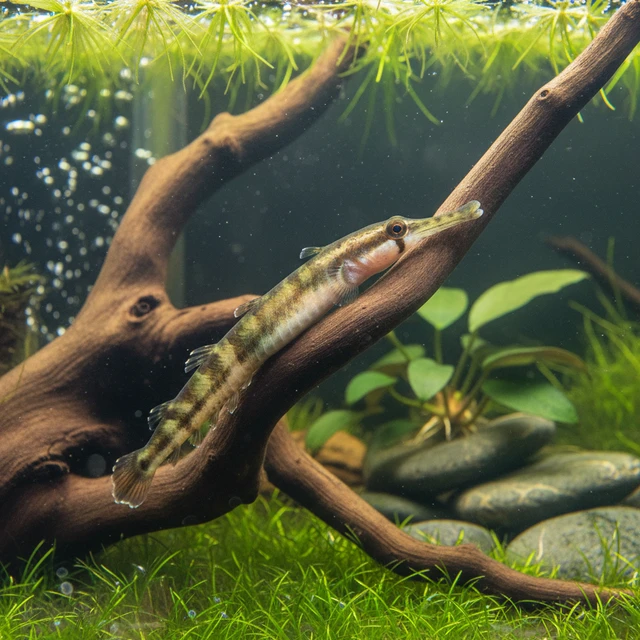
The Dwarf Pipefish (Doryichthys deokhatoides) exhibits a highly specialized morphology characterized by an elongated, rigid, tube-like body that can reach a maximum adult size of approximately 3 to 5 inches. Its body is covered in bony rings, providing structural support and protection, which is a unique adaptation among freshwater fishes. The snout is notably long and tubular, facilitating its feeding habits, while its coloration ranges from brown to greenish, allowing for effective camouflage in its natural habitat. The dorsal fin is small and situated towards the rear, enabling the fish to navigate through aquatic vegetation with a subtle undulating motion. Unlike typical fish, the Dwarf Pipefish lacks scales and instead possesses a smooth, elongated body, which contributes to its distinct appearance. Defensive adaptations include its ability to blend seamlessly into its surroundings, thereby evading predators.
Behavior & temperament
Doryichthys deokhatoides is primarily a solitary species, though it may occasionally be found in loose aggregations, particularly during breeding periods. It inhabits the benthic zone of freshwater environments, often associating with dense aquatic vegetation where it can utilize its elongated body to remain concealed. The breeding behavior of the Dwarf Pipefish involves a unique reproductive strategy where males brood fertilized eggs in a specialized pouch, similar to seahorses. This mouthbrooding behavior enhances the survival rate of offspring. In terms of temperament, the Dwarf Pipefish is generally peaceful but can exhibit territoriality during breeding seasons, particularly among males vying for mates.
Diet & feeding
In the wild, the Dwarf Pipefish is an omnivore, feeding primarily on small crustaceans, zooplankton, and detritus. In captivity, it requires a varied diet that includes live or frozen foods such as brine shrimp, daphnia, and finely crushed flakes or pellets to ensure proper nutrition.
Behind the name
Doryichthys (from Greek 'dory' meaning spear and 'ichthys' meaning fish); deokhatoides (derived from 'deokhato' meaning small and 'oides' indicating resemblance).
Plan your tank
Check the numbers before you buy: tank volume, a stocking plan, cycle progress, water changes, and your ongoing care routine.
Keep reading

Choose compatible fish: school sizes, swimming zones, aggression, temperature and hardness matching, and honest bioload math for a peaceful community.
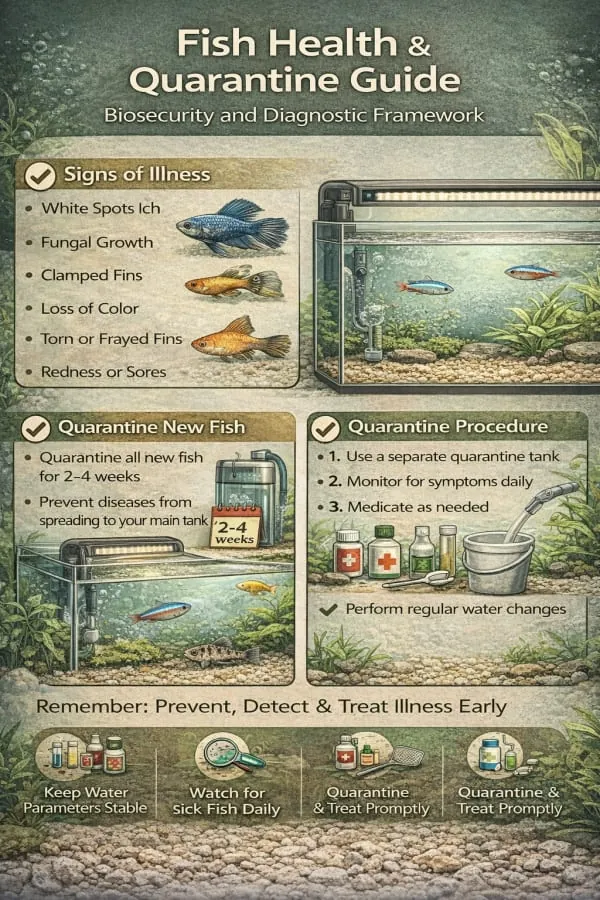
Quarantine new fish, spot the early warning signs, and treat disease without wrecking your tank. A practical freshwater fish health guide.

Acclimate new fish, shrimp, and coral safely: temperature floating, drip acclimation, plop-and-drop for shipped livestock, and the first 24 hours.
Keeping Dwarf Pipefish?
AquaLens identifies your fish and plants from a photo, tracks water chemistry, and flags health issues early — free on iOS and Android.