Flag Tailed Panda Corydoras Care Guide
Corydoras oiapoquensis · Freshwater Fish
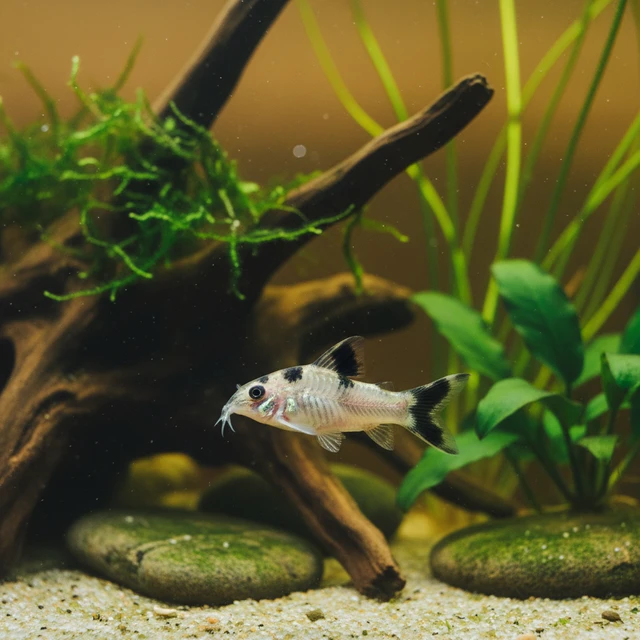
What Flag Tailed Panda Corydoras look like
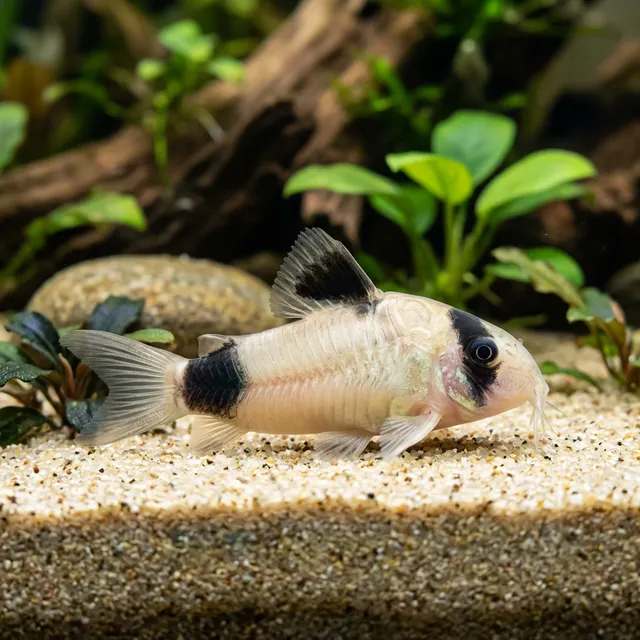
Corydoras oiapoquensis, commonly known as the Flag Tailed Panda Corydoras, exhibits a small, armored body that typically reaches a maximum adult size of approximately 2 inches (5 cm). This species is characterized by its pale, almost translucent body, which is adorned with a distinctive dark eye mask reminiscent of a panda's facial markings. The caudal fin is particularly striking, displaying a unique pattern of alternating dark and light bands that resemble a flag, hence the common name. The body is laterally compressed, facilitating agile movements in its benthic habitat. Notable morphological features include the presence of bony plates covering the body, a pair of prominent barbels that aid in foraging, and an adipose fin that contributes to its streamlined shape. Sexual dimorphism is subtle, with females being slightly larger and rounder than males, especially during breeding periods when they carry eggs.
Behavior & temperament
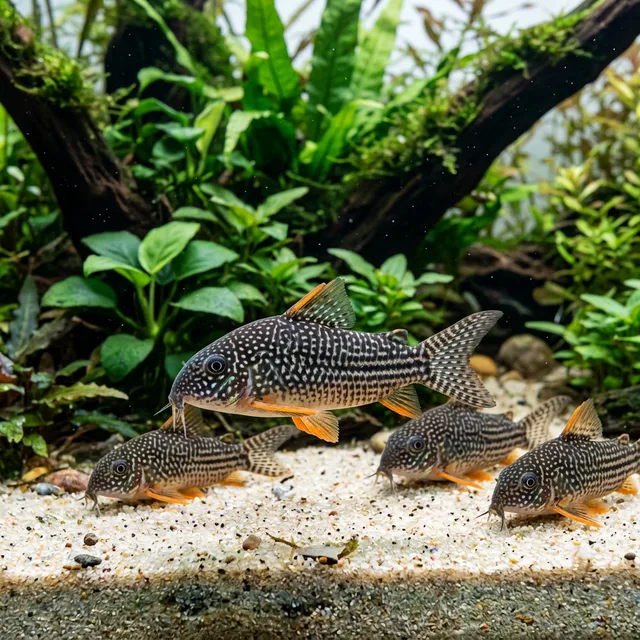
The Flag Tailed Panda Corydoras is a social fish that thrives in groups, exhibiting a strong tendency to form schools within its natural habitat. It primarily inhabits the benthic zone of freshwater rivers and streams in South America, where it forages among the substrate for food. This species is known for its peaceful temperament, making it an ideal candidate for community tanks. Breeding behavior involves egg scattering, where females lay adhesive eggs on flat surfaces, often in the presence of males. The species displays minimal aggression, preferring to avoid confrontation and instead relying on its schooling behavior for safety.
Diet & feeding
In the wild, Corydoras oiapoquensis is an omnivore, feeding on a varied diet of detritus, small invertebrates, and plant matter. In captivity, it requires a balanced diet that includes high-quality sinking pellets, frozen or live foods such as bloodworms and brine shrimp, as well as occasional vegetable matter to ensure optimal health.
Behind the name
Corydoras (from Greek 'korydallos', meaning 'helmeted'; referring to the bony plates) oiapoquensis (derived from the Oyapoque River in South America, its native habitat).
Plan your tank
Check the numbers before you buy: tank volume, a stocking plan, cycle progress, water changes, and your ongoing care routine.
Keep reading

Choose compatible fish: school sizes, swimming zones, aggression, temperature and hardness matching, and honest bioload math for a peaceful community.

Quarantine new fish, spot the early warning signs, and treat disease without wrecking your tank. A practical freshwater fish health guide.

Acclimate new fish, shrimp, and coral safely: temperature floating, drip acclimation, plop-and-drop for shipped livestock, and the first 24 hours.
Keeping Flag Tailed Panda Corydoras?
AquaLens identifies your fish and plants from a photo, tracks water chemistry, and flags health issues early — free on iOS and Android.