
Giant Pikehead Care Guide
Luciocephalus pulcher · Freshwater Fish
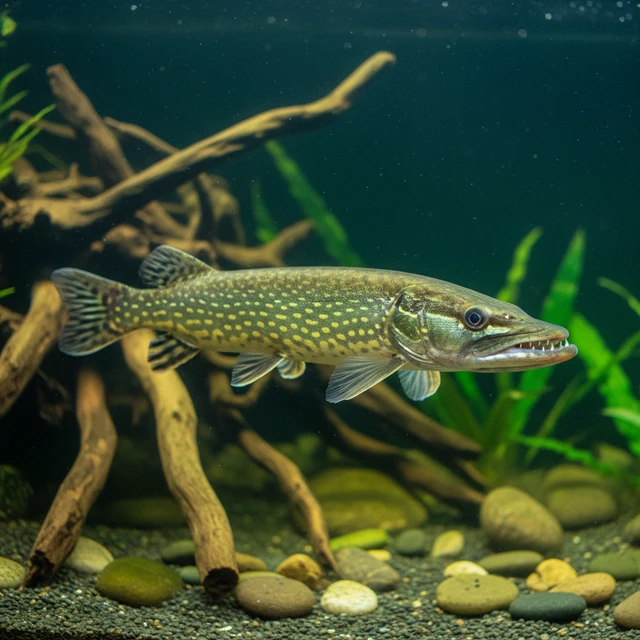
What Giant Pikehead look like
Luciocephalus pulcher, commonly known as the Giant Pikehead, exhibits a highly distinctive morphology characterized by its elongated, fusiform body and an exceptionally pointed, pike-like head. This species can reach a maximum adult size of approximately 5 to 15 inches, with individuals typically measuring around 5 to 7 inches in captivity. Sexual dimorphism is subtle, with males often displaying slightly more vibrant coloration during breeding. The mouth is notably small yet capable of significant extension, allowing for an ambush predation strategy. The body is adorned with a mottled brown coloration, providing effective camouflage in its natural habitat. Unique morphological features include a pronounced lateral line system, which aids in detecting vibrations in the water, and a well-developed adipose fin that contributes to its streamlined swimming capabilities. Defensive adaptations are minimal, as the species relies on its ambush tactics and coloration for concealment rather than physical defenses.
Behavior & temperament
The Giant Pikehead is primarily a solitary ambush predator, exhibiting a territorial nature, particularly during breeding periods. It typically occupies the benthic zone of its aquatic environment, where it can effectively utilize its elongated head and extendable mouth to capture prey. This species is not an obligate schooler, preferring to hunt alone rather than in groups. Breeding behavior involves egg scattering, with females laying eggs in secluded areas to ensure the safety of the offspring. The temperament of Luciocephalus pulcher can be described as moderately aggressive, particularly towards smaller fish or those that invade its territory, making it essential to consider tank mates carefully.
Diet & feeding
In the wild, the Giant Pikehead is an omnivorous predator, primarily feeding on smaller fish and invertebrates. In captivity, it requires a varied diet that includes high-quality pellets, live or frozen foods such as brine shrimp and bloodworms, to mimic its natural feeding habits.
Behind the name
Luciocephalus (from Latin 'lucius' meaning pike; 'cephalus' meaning head) and pulcher (Latin for beautiful).
Plan your tank
Check the numbers before you buy: tank volume, a stocking plan, cycle progress, water changes, and your ongoing care routine.
Keep reading

Choose compatible fish: school sizes, swimming zones, aggression, temperature and hardness matching, and honest bioload math for a peaceful community.

Quarantine new fish, spot the early warning signs, and treat disease without wrecking your tank. A practical freshwater fish health guide.

Acclimate new fish, shrimp, and coral safely: temperature floating, drip acclimation, plop-and-drop for shipped livestock, and the first 24 hours.
Keeping Giant Pikehead?
AquaLens identifies your fish and plants from a photo, tracks water chemistry, and flags health issues early — free on iOS and Android.