Giant Snakehead Care Guide
Channa micropeltes · Freshwater Fish
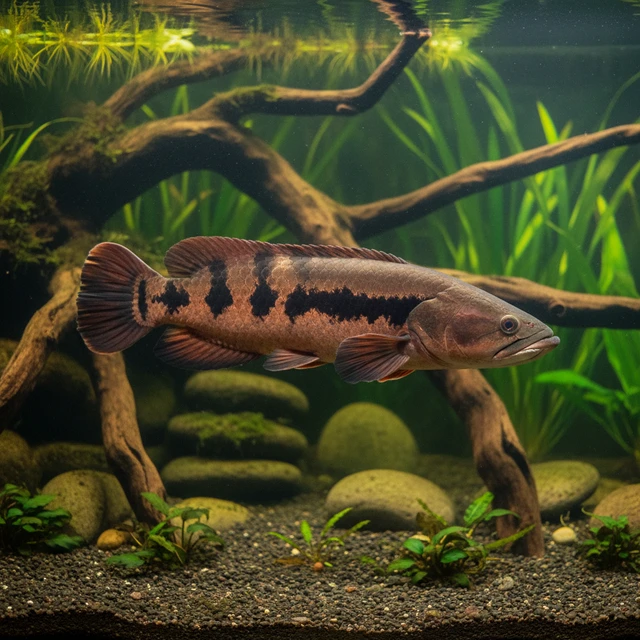
What Giant Snakehead look like
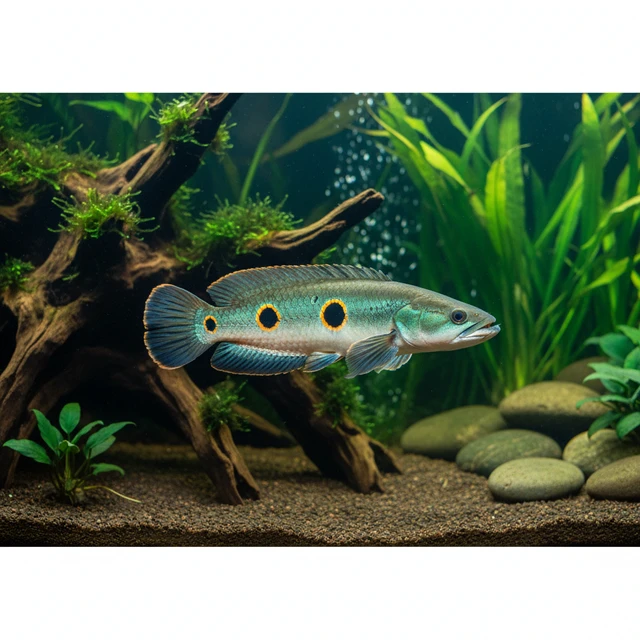
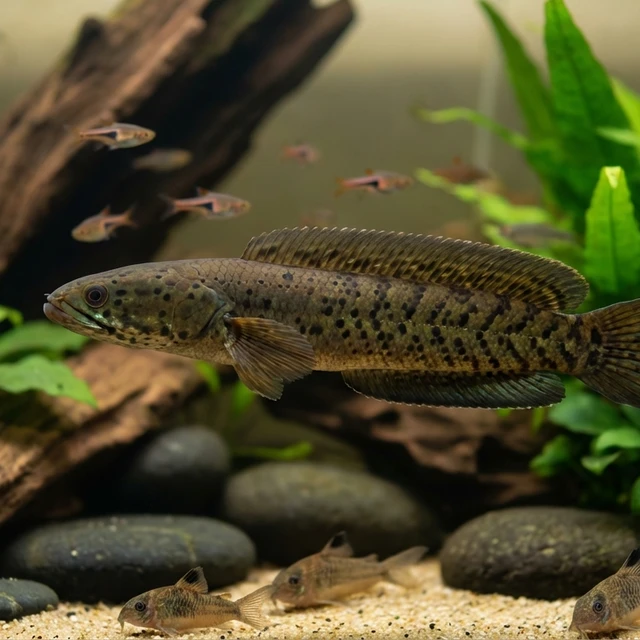
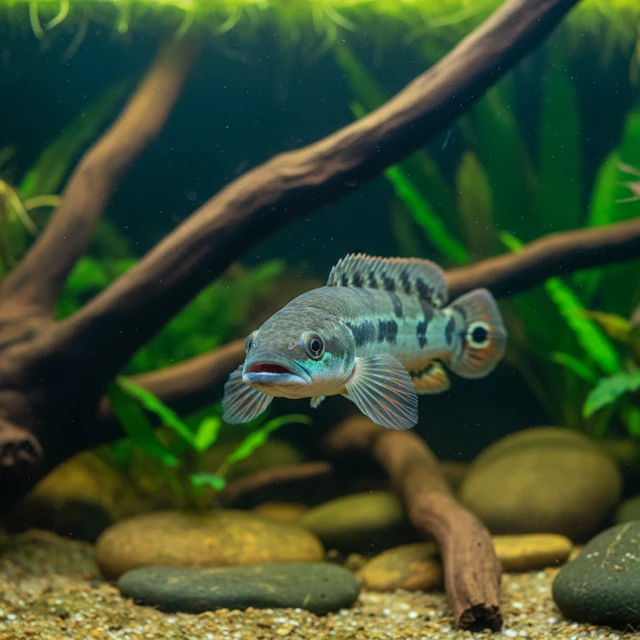
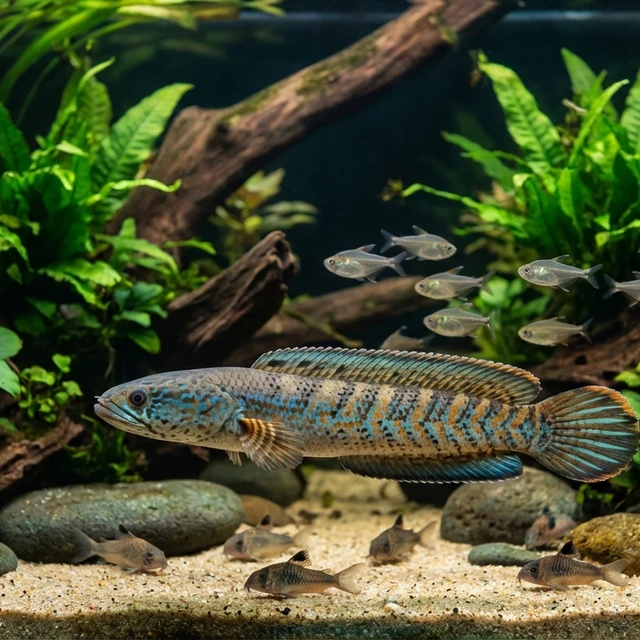
Channa micropeltes, commonly known as the Giant Snakehead, exhibits a robust and elongated body that can reach a maximum adult size of 36 inches (90 cm). The species is characterized by its laterally compressed, fusiform shape, which aids in its predatory lifestyle. Juveniles display a striking coloration of bright red-orange adorned with black and white lateral stripes, while adults transition to a more subdued dark olive-black hue, providing effective camouflage in their natural habitats. Sexual dimorphism is subtle, with males typically exhibiting slightly larger size and more pronounced coloration during breeding seasons. The head is notably massive, equipped with prominent, sharp teeth adapted for grasping and holding onto prey. Additionally, this species possesses an adipose fin and a well-developed lateral line system, which enhances its ability to detect vibrations in the water. An intriguing adaptation is its ability to traverse short distances on land, allowing it to escape unfavorable aquatic conditions or to hunt in shallow areas.
Behavior & temperament
The Giant Snakehead is primarily a solitary predator, exhibiting territorial behavior, especially during breeding periods. It typically occupies the benthic zone of freshwater habitats, such as swamps, marshes, and slow-moving rivers, where it can ambush prey. This species is known for its aggressive temperament, particularly towards conspecifics and other potential competitors. During the breeding season, females scatter eggs over vegetation, which the males subsequently guard, showcasing a form of parental care uncommon among many fish species. The Giant Snakehead's predatory nature and territoriality make it a dominant species in its ecosystem, often leading to hierarchical interactions with other fish.
Diet & feeding
In the wild, the Giant Snakehead is a carnivore, preying on smaller fish, amphibians, and crustaceans. In captivity, it requires a diet rich in protein, including high-quality pellets, live or frozen foods such as fish, shrimp, and worms to thrive.
Behind the name
Channa (from Sanskrit, meaning 'fish'); micropeltes (from Greek, 'micros' meaning 'small' and 'peltes' meaning 'shield', referring to the small scales of the fish).
Plan your tank
Check the numbers before you buy: tank volume, a stocking plan, cycle progress, water changes, and your ongoing care routine.
Keep reading
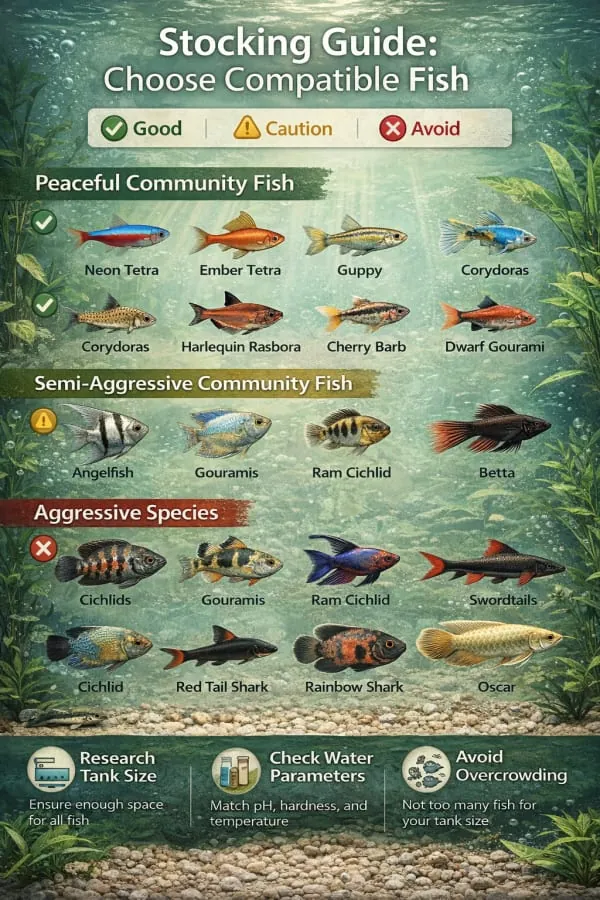
Choose compatible fish: school sizes, swimming zones, aggression, temperature and hardness matching, and honest bioload math for a peaceful community.
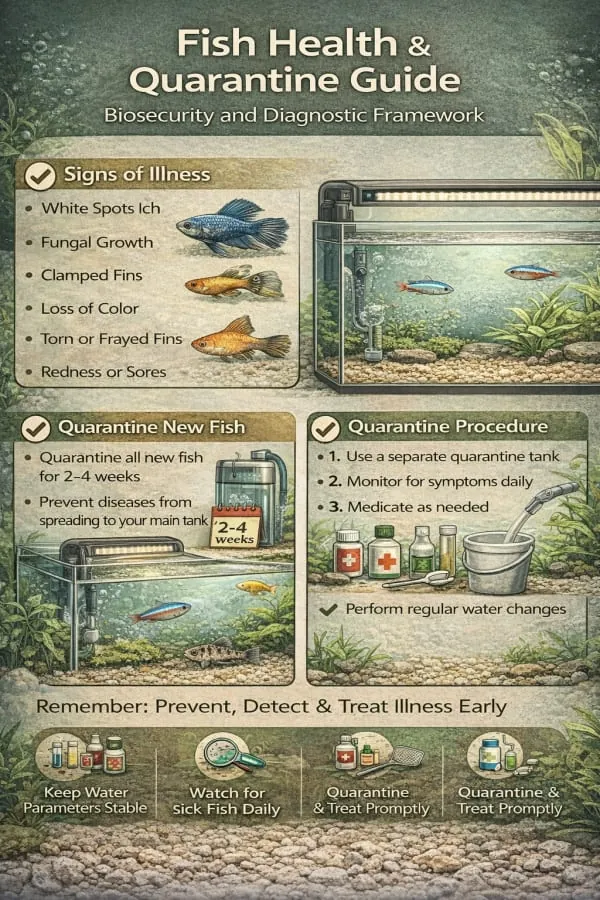
Quarantine new fish, spot the early warning signs, and treat disease without wrecking your tank. A practical freshwater fish health guide.
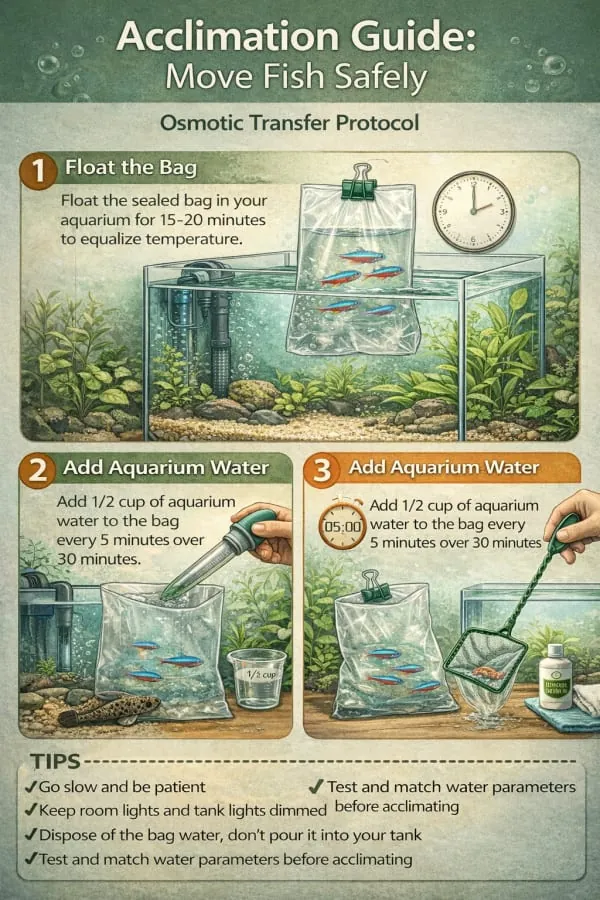
Acclimate new fish, shrimp, and coral safely: temperature floating, drip acclimation, plop-and-drop for shipped livestock, and the first 24 hours.
Keeping Giant Snakehead?
AquaLens identifies your fish and plants from a photo, tracks water chemistry, and flags health issues early — free on iOS and Android.