Gold Gourami Care Guide
Trichopodus trichopterus var. Gold · Freshwater Fish
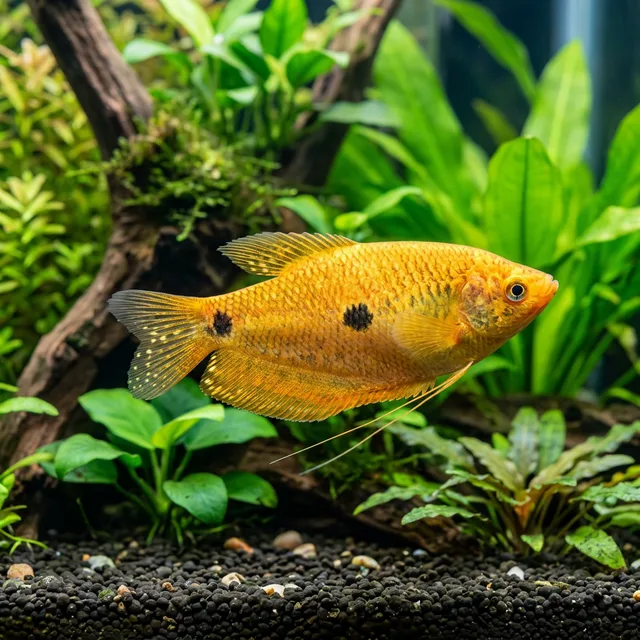
What Gold Gourami look like
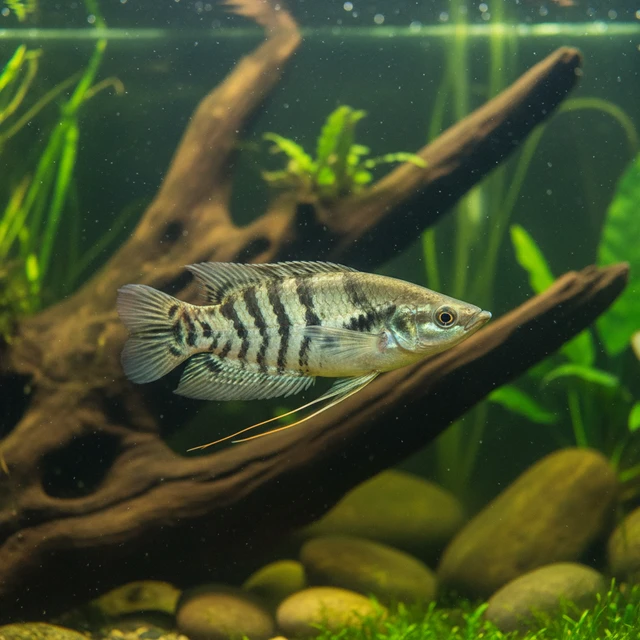
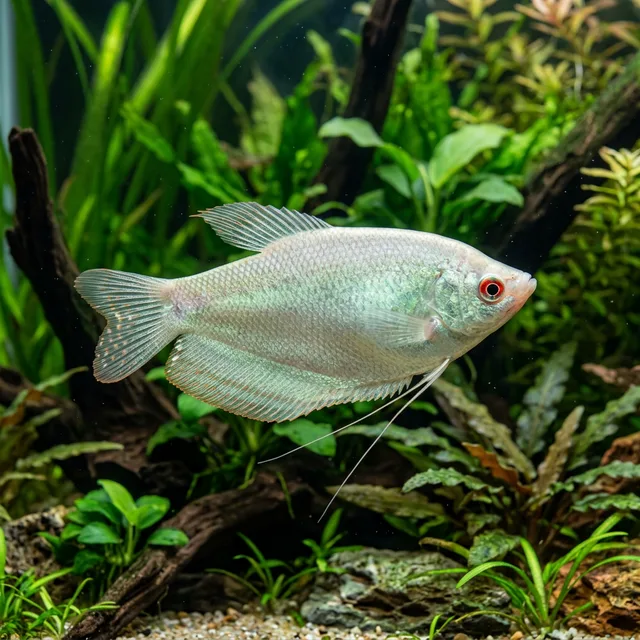
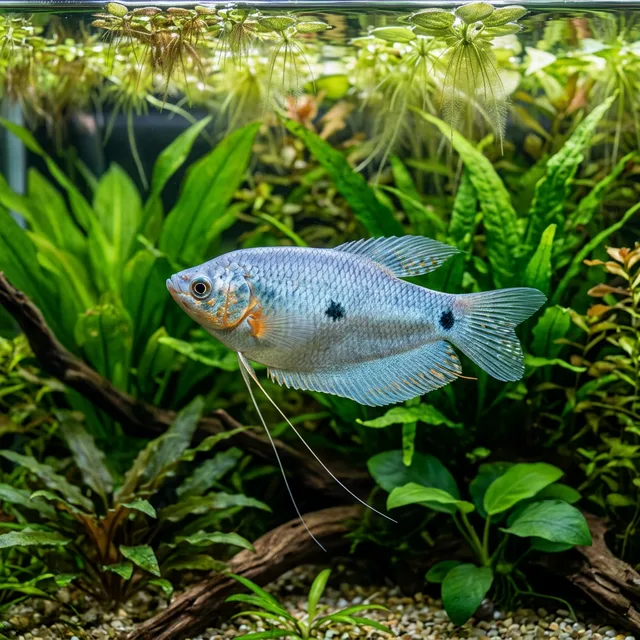
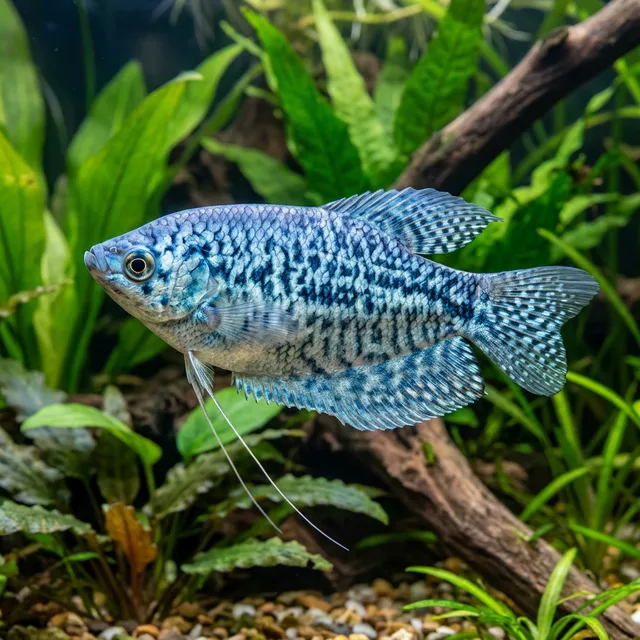
The Gold Gourami (Trichopodus trichopterus var. Gold) exhibits a distinctively vibrant golden hue, which is a result of selective breeding within the species. This variety can reach a maximum adult size of approximately 5 to 6 inches (12 to 15 cm) in length. The body is laterally compressed and somewhat oval, with a rounded snout and a broad, flat head. Sexual dimorphism is evident, as males typically display more intense coloration and elongated dorsal and anal fins compared to the more rounded fins of females. The species possesses a unique labyrinth organ, allowing it to extract oxygen from the air, which is crucial for survival in low-oxygen environments. Additionally, the Gold Gourami features a series of delicate, long pectoral fins that aid in maneuverability, and a small, adipose fin that contributes to its streamlined shape. The lateral line system is well-developed, facilitating sensory perception in its aquatic habitat.
Behavior & temperament
Gold Gouramis are generally peaceful and can be kept in community tanks, though they may exhibit territorial behavior, especially males during breeding. They are primarily mid-water dwellers, often found in the upper layers of the water column, where they can access both floating plants and open swimming space. This species is not an obligate schooler but tends to thrive in small groups, which can help reduce stress levels. Breeding behavior involves the construction of bubble nests by males, who will court females and engage in a display of courtship rituals. The species is known for its relatively calm temperament, though males may show aggression towards each other if space is limited or during the breeding season.
Diet & feeding
In the wild, Gold Gouramis are omnivorous, feeding on a varied diet that includes insects, crustaceans, and plant matter. In captivity, they thrive on a balanced diet of high-quality flake food, supplemented with live or frozen foods such as brine shrimp and daphnia, as well as blanched vegetables to ensure proper nutrition.
Behind the name
Trichopodus (hair foot); trichopterus (hair fin).
Plan your tank
Check the numbers before you buy: tank volume, a stocking plan, cycle progress, water changes, and your ongoing care routine.
Keep reading

Choose compatible fish: school sizes, swimming zones, aggression, temperature and hardness matching, and honest bioload math for a peaceful community.
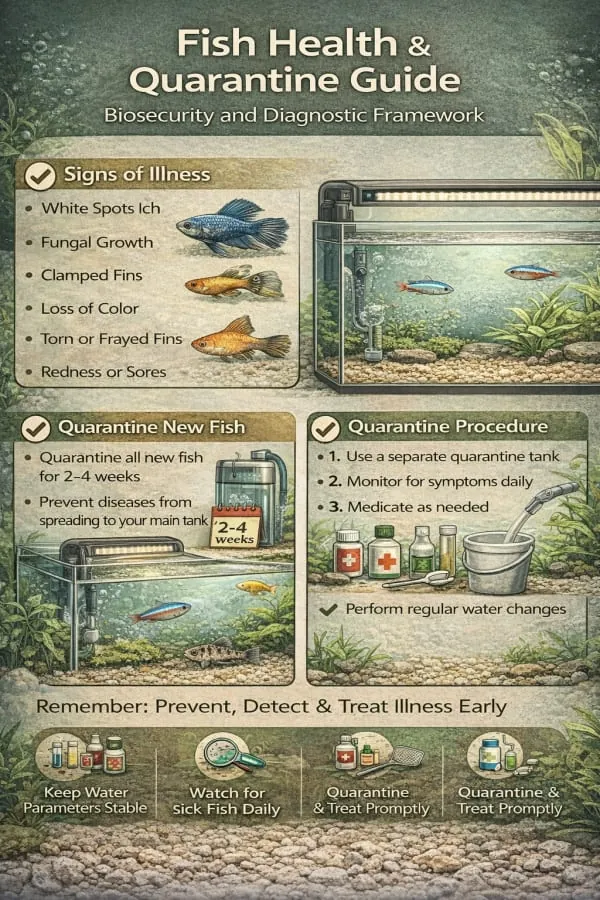
Quarantine new fish, spot the early warning signs, and treat disease without wrecking your tank. A practical freshwater fish health guide.
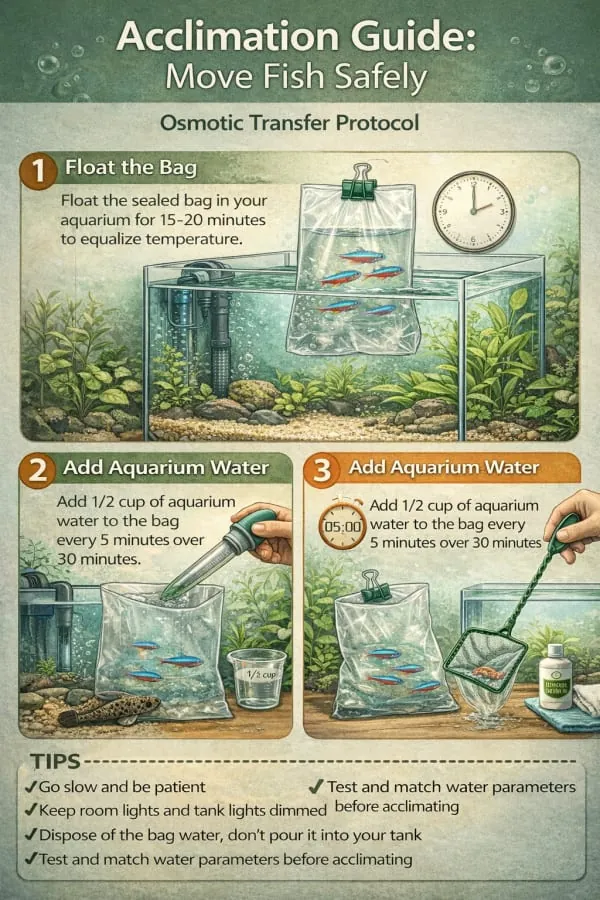
Acclimate new fish, shrimp, and coral safely: temperature floating, drip acclimation, plop-and-drop for shipped livestock, and the first 24 hours.
Keeping Gold Gourami?
AquaLens identifies your fish and plants from a photo, tracks water chemistry, and flags health issues early — free on iOS and Android.