Guineafowl Puffer Care Guide
Arothron meleagris · Saltwater Pufferfish
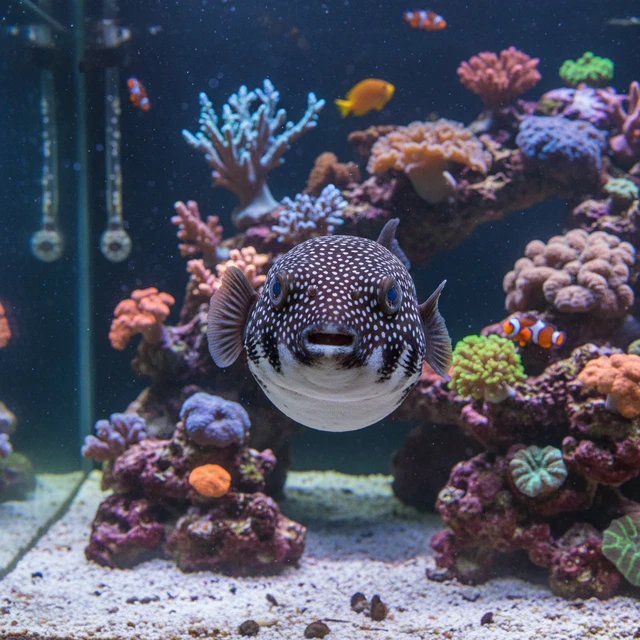
What Guineafowl Puffer look like
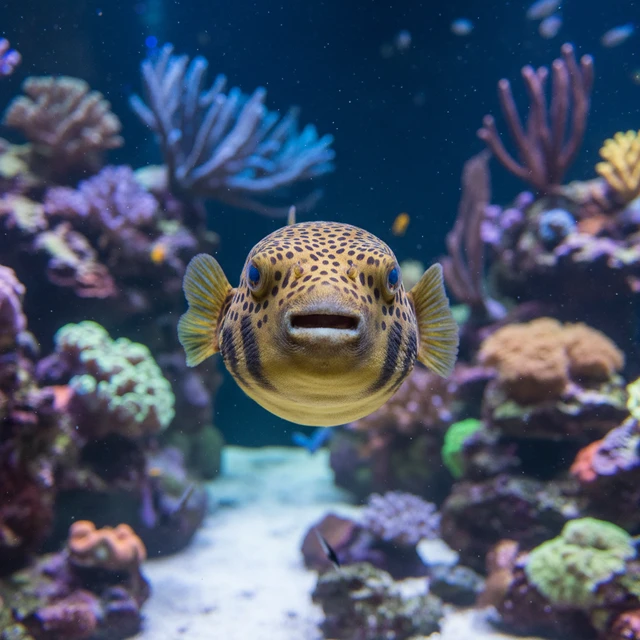
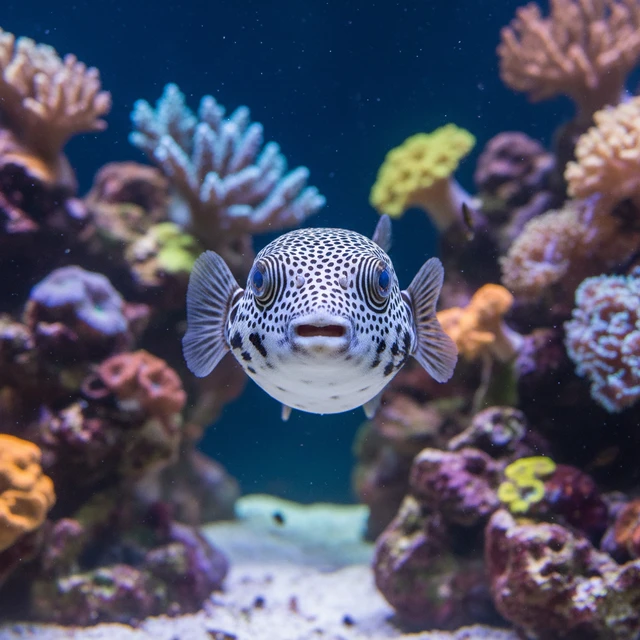
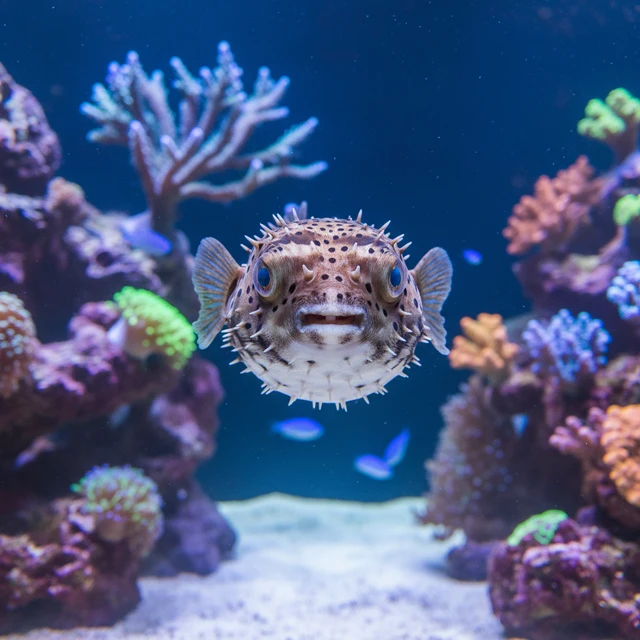
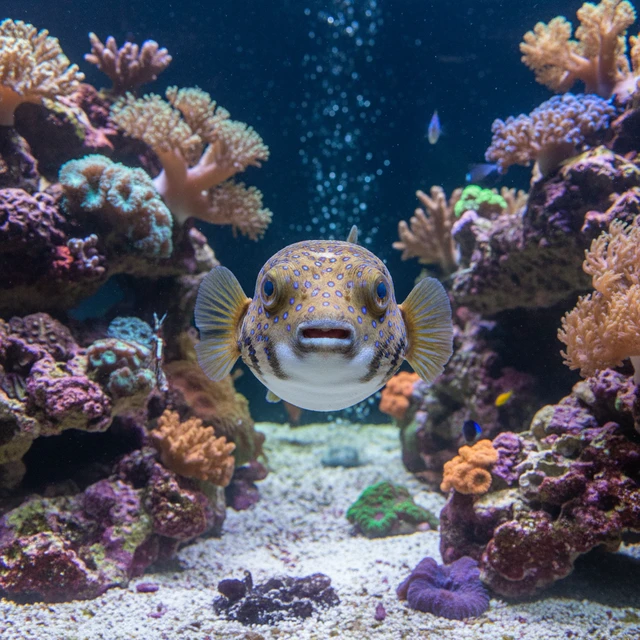
The Guineafowl Puffer (Arothron meleagris) exhibits a distinctive and robust body shape, characterized by its rounded, inflated form that can reach a maximum adult size of approximately 12 inches (30 cm) in length. Its skin is adorned with a unique pattern of dark spots and light coloration, resembling the plumage of a guineafowl, which serves as a form of camouflage against predators. Sexual dimorphism is subtle, with males typically displaying slightly more vibrant coloration during breeding seasons. This species possesses a beak-like dentition, consisting of fused teeth that enable it to crack open hard-shelled prey. Additionally, the Guineafowl Puffer has well-developed lateral lines that enhance its sensory perception in murky waters. When threatened, it can inflate its body significantly, utilizing its elastic skin as a defensive adaptation against predation.
Behavior & temperament
The Guineafowl Puffer is generally a solitary and territorial species, often found inhabiting shallow reefs and lagoons. It exhibits a peaceful temperament but can display aggression when defending its territory or during breeding. This species is primarily a benthic feeder, foraging along the substrate for crustaceans, mollusks, and algae. During courtship, males may engage in elaborate displays, including swimming in circles around females and showcasing their vibrant patterns. Their movement is characterized by a slow, deliberate swimming style, often hovering just above the substrate while searching for food. The Guineafowl Puffer is known to exhibit curious behavior, often investigating its surroundings and interacting with other reef inhabitants.
Diet & feeding
In the wild, the Guineafowl Puffer primarily feeds on hard-shelled invertebrates, such as crustaceans and mollusks, as well as algae. In captivity, it requires a varied diet that includes high-quality pellets, frozen or live foods like shrimp and clams, and occasional vegetable matter to maintain optimal health.
Behind the name
The genus name 'Arothron' is derived from the Greek words 'aro' meaning 'to be swollen' and 'thron' meaning 'spine', referring to the puffer's ability to inflate. The species name 'meleagris' is Latin for 'guineafowl', reflecting the fish's distinctive spotted appearance.
Plan your tank
Check the numbers before you buy: tank volume, salinity, salt mix, water changes, and your ongoing care routine. Keeping reef? Start from the Saltwater & Reef hub.
Keep reading
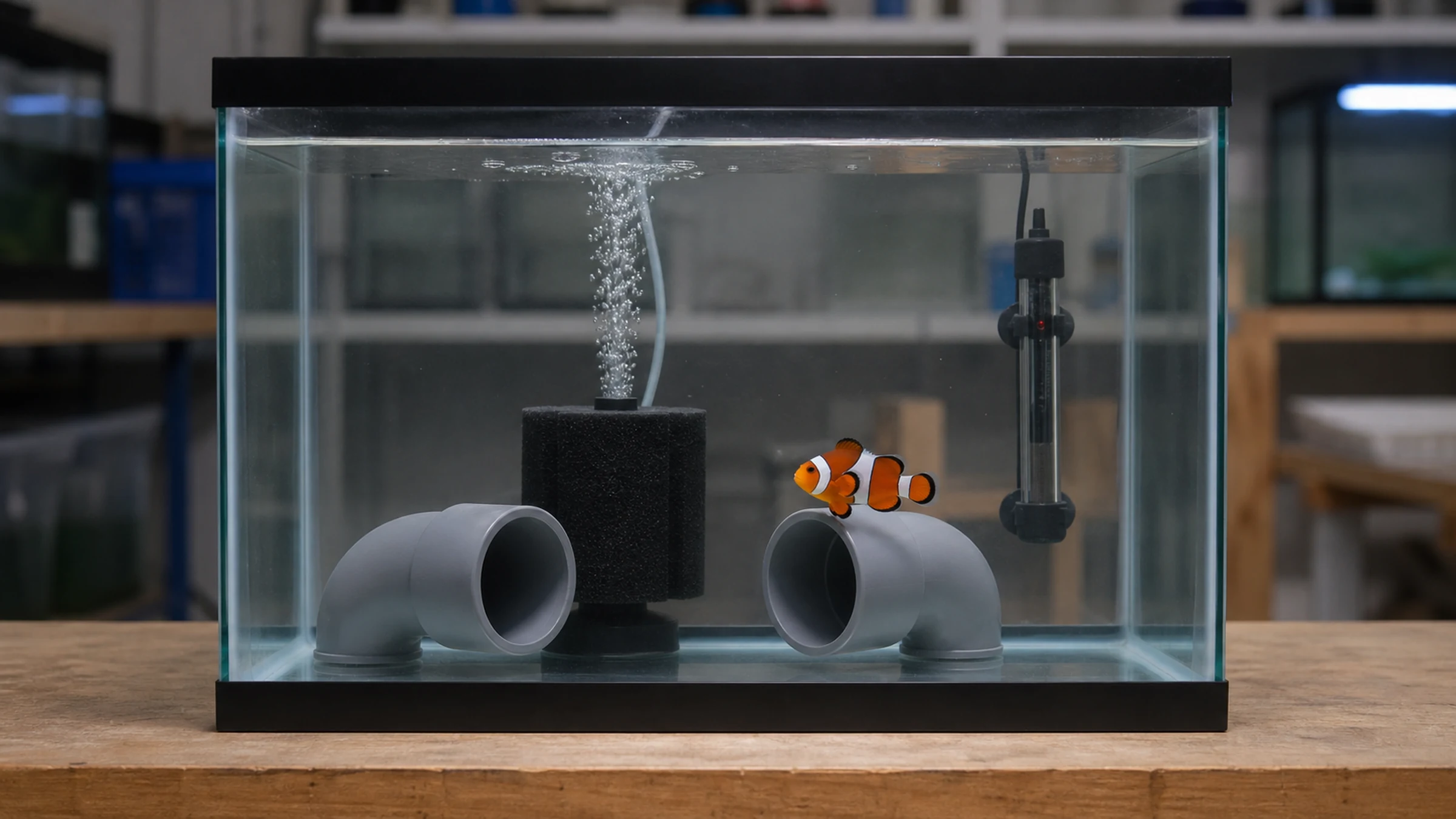
How to quarantine new saltwater fish against marine ich, velvet, and brooklynella: the QT tank, treatments, timelines, and the buy-clean shortcut.

What every reef parameter means and where to keep it: salinity, temperature, pH, alkalinity, calcium, magnesium, nitrate, and phosphate.

Choose compatible fish: school sizes, swimming zones, aggression, temperature and hardness matching, and honest bioload math for a peaceful community.
Keeping Guineafowl Puffer?
AquaLens identifies your fish and plants from a photo, tracks water chemistry, and flags health issues early — free on iOS and Android.