Hawaiian Feather Duster Care Guide
Sabellastarte spectabilis · Saltwater Feather Duster
What Hawaiian Feather Duster look like
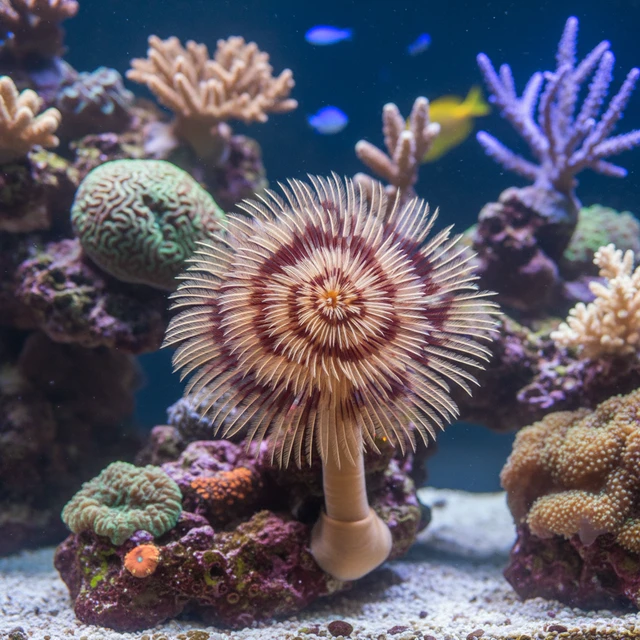
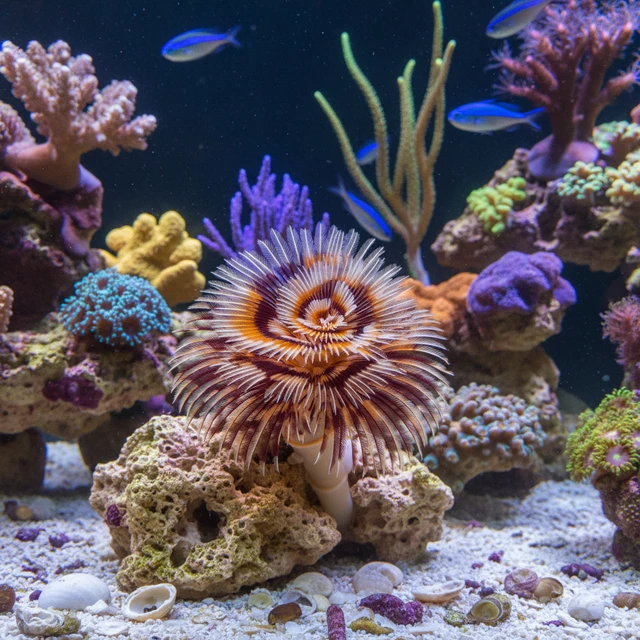
Sabellastarte spectabilis, commonly known as the Hawaiian Feather Duster, exhibits a striking morphology characterized by a segmented, elongated body that can reach up to 12 inches (30 cm) in length. The body is encased in a protective tube made of sand and organic particles, which can vary in color from beige to brown, providing camouflage against predators. The crown consists of numerous radioles, which are feather-like appendages that can extend up to 6 inches (15 cm) in diameter, displaying vibrant hues of blue, green, and purple. These radioles are equipped with cilia that facilitate feeding and respiration. Sexual dimorphism is not pronounced in this species; however, females may exhibit slightly larger body sizes. Defensive adaptations include the ability to retract rapidly into their tube when threatened, and the production of mucus to deter potential predators.
Behavior & temperament
The Hawaiian Feather Duster is a primarily solitary invertebrate that exhibits a passive lifestyle, often remaining anchored to substrates in sandy or rocky environments. It extends its radioles into the water column to capture plankton and detritus, showcasing a feeding behavior that is both opportunistic and selective. While generally non-aggressive, individuals may exhibit territoriality when competing for space on the reef. During breeding, they engage in a broadcast spawning strategy, releasing gametes into the water column to ensure fertilization. Their movement is minimal, relying on water currents for nutrient acquisition, and they can retract their radioles quickly to minimize exposure to potential threats.
Diet & feeding
In the wild, Sabellastarte spectabilis primarily feeds on plankton and organic detritus, utilizing its radioles to filter food particles from the water. In captivity, it requires a diet rich in phytoplankton and finely crushed marine foods to thrive.
Behind the name
The genus name 'Sabellastarte' is derived from the Latin 'sabella', meaning 'little sand', and 'starte', a reference to the star-like appearance of its radioles. The species name 'spectabilis' translates to 'remarkable' or 'spectacular', reflecting its vibrant coloration.
Plan your tank
Check the numbers before you buy: tank volume, salinity, salt mix, water changes, and your ongoing care routine. Keeping reef? Start from the Saltwater & Reef hub.
Keep reading
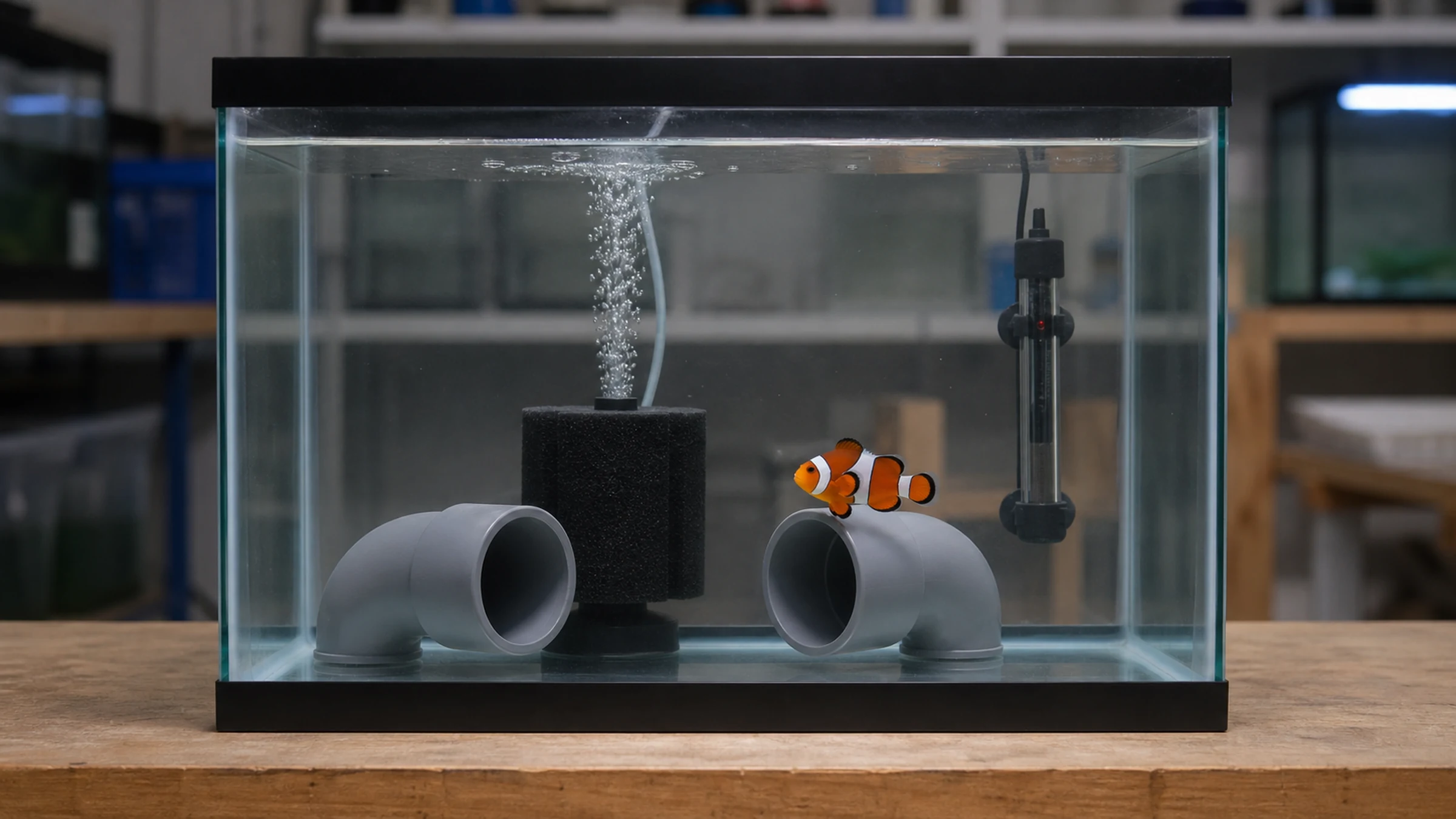
How to quarantine new saltwater fish against marine ich, velvet, and brooklynella: the QT tank, treatments, timelines, and the buy-clean shortcut.
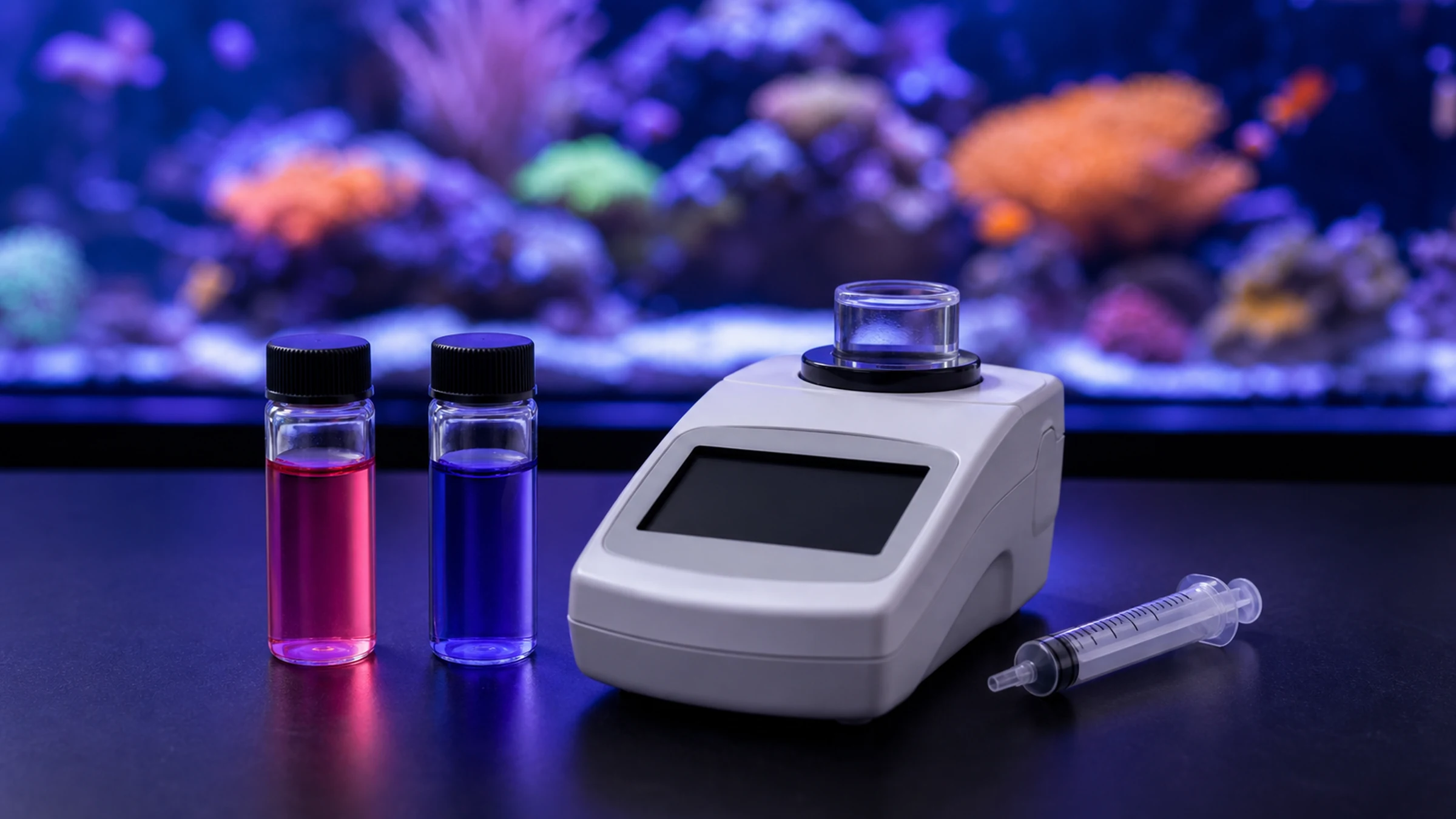
What every reef parameter means and where to keep it: salinity, temperature, pH, alkalinity, calcium, magnesium, nitrate, and phosphate.

Choose compatible fish: school sizes, swimming zones, aggression, temperature and hardness matching, and honest bioload math for a peaceful community.
Keeping Hawaiian Feather Duster?
AquaLens identifies your fish and plants from a photo, tracks water chemistry, and flags health issues early — free on iOS and Android.