Jack Dempsey Care Guide
Rocio octofasciata · Freshwater Fish
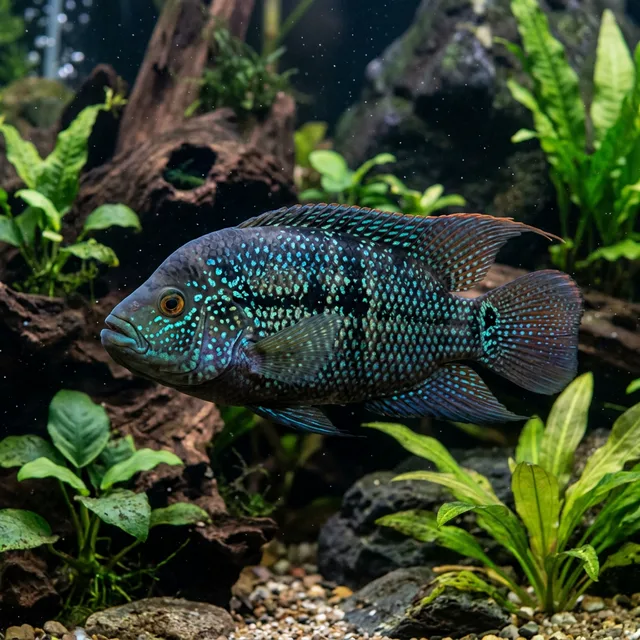
What Jack Dempsey look like
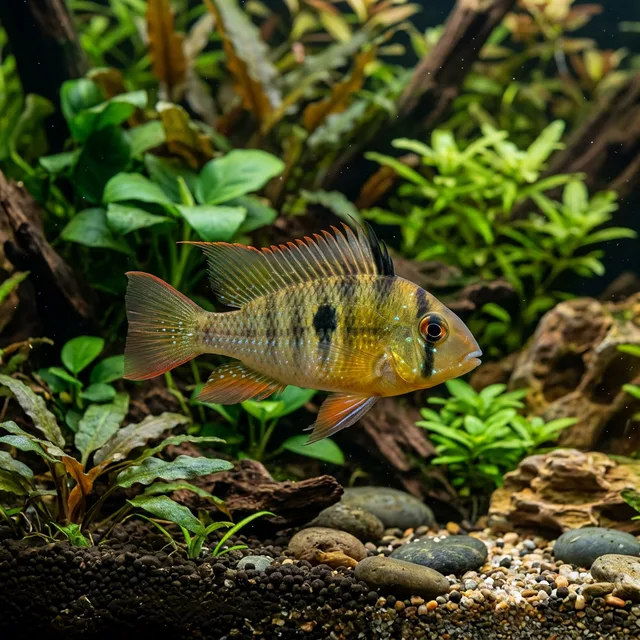
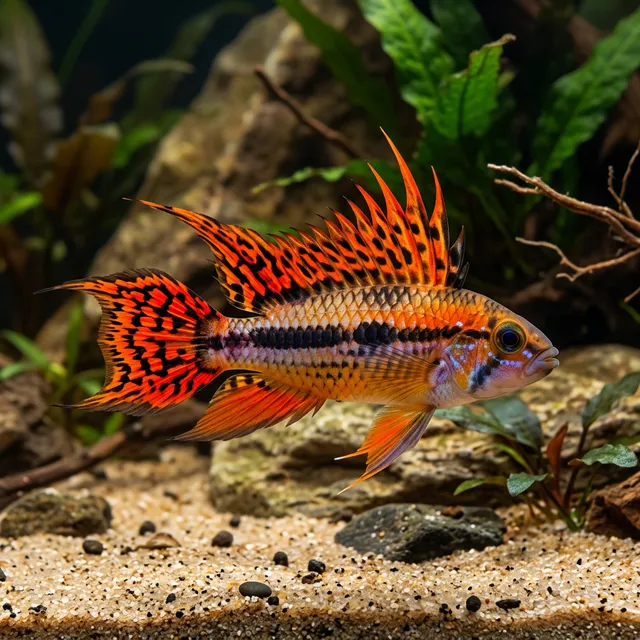
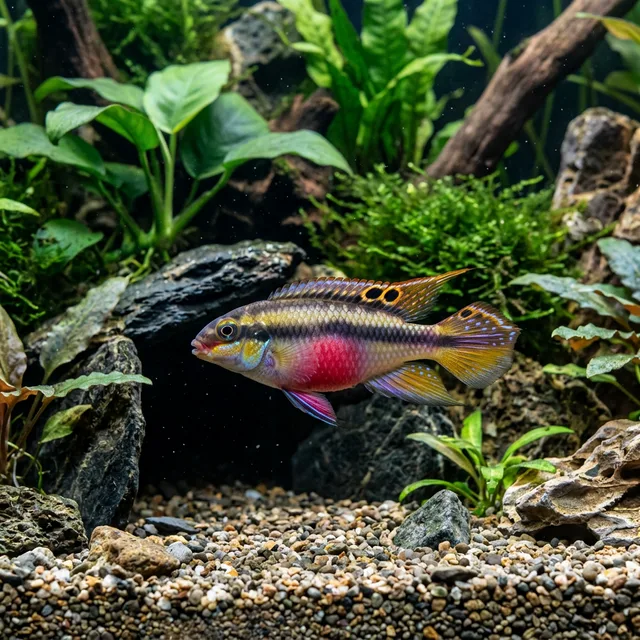
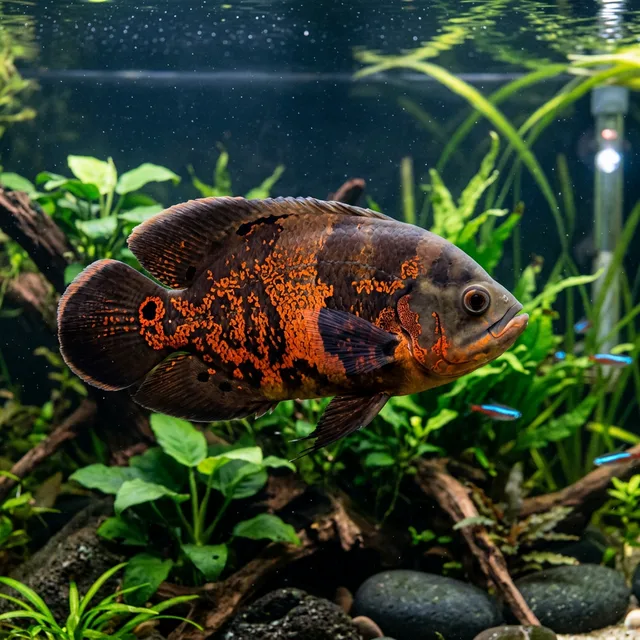
Rocio octofasciata, commonly known as the Jack Dempsey, exhibits a robust, laterally compressed body that can reach a maximum adult size of 5 to 15 inches (12.7 to 38.1 cm). This species displays pronounced sexual dimorphism; males are typically larger, more vibrantly colored, and possess elongated dorsal and anal fins, while females are smaller with a more subdued coloration. The body is adorned with eight distinct vertical black bars, which are more pronounced in males, and a striking iridescent sheen that can vary from blue to green depending on the lighting. Defensive adaptations include a strong, laterally positioned set of spines on the dorsal and anal fins, which can deter potential predators. Unique morphological features include a well-developed lateral line system, which aids in detecting vibrations in the water, and a set of conical teeth that are well-suited for an omnivorous diet, allowing them to consume both plant matter and smaller fish.
Behavior & temperament
The Jack Dempsey is known for its territorial and aggressive behavior, particularly during breeding seasons. This species is generally solitary or can be found in pairs, as they establish a clear hierarchy within their territory. They primarily inhabit the benthic and mid-water levels of their environment, often seeking shelter among rocks and vegetation. During breeding, they exhibit mouthbrooding behavior, where the female lays eggs on a flat surface and both parents guard the eggs and fry. Their temperament can be described as moderately aggressive, especially towards other fish that invade their territory, making them suitable for larger community tanks with caution.
Diet & feeding
In the wild, the Jack Dempsey is an omnivore, feeding on a varied diet that includes insects, crustaceans, and plant material. In captivity, they require a balanced diet consisting of high-quality pellets, live or frozen foods such as bloodworms and brine shrimp, and occasional vegetable matter to ensure optimal health.
Behind the name
The genus name 'Rocio' is derived from the Spanish word for 'dew', while 'octofasciata' translates from Latin as 'eight bands', referring to the eight vertical bars present on the fish's body.
Plan your tank
Check the numbers before you buy: tank volume, a stocking plan, cycle progress, water changes, and your ongoing care routine.
Keep reading

Choose compatible fish: school sizes, swimming zones, aggression, temperature and hardness matching, and honest bioload math for a peaceful community.

Quarantine new fish, spot the early warning signs, and treat disease without wrecking your tank. A practical freshwater fish health guide.

Acclimate new fish, shrimp, and coral safely: temperature floating, drip acclimation, plop-and-drop for shipped livestock, and the first 24 hours.
Keeping Jack Dempsey?
AquaLens identifies your fish and plants from a photo, tracks water chemistry, and flags health issues early — free on iOS and Android.